Canada's recent change to a Liberal government means Stephen Harper's legacy in oil gas is at risk. Change is coming.


"We won’t have to wait much longer to see how Prime Minister Justin Trudeau plans to apply his grand claim that 'we’re back' to the climate change file. Catherine McKenna, his Environment and Climate Change Minister, will be on point at the United Nations conference in Paris later this month to explain how Canada’s Conservative-era status as 'an emerging energy superpower' will transform to meet 'our international obligations to protect the planet.'"
"Whether it’s with a carbon tax, cap-and-trade or some hybrid system, the Liberals see the solution in a price on carbon emissions. This market-oriented strategy is suppose to encourage the energy sector to move away from carbon-intensive projects, such as the oil sands, and toward new green technologies. But whatever the plan, it’s unlikely that it will result in drastic cuts to fossil-fuel production. Instead, Big Oil will embrace big carbon."
Read the full story: Canada’s climate solution may offer more comfort than change
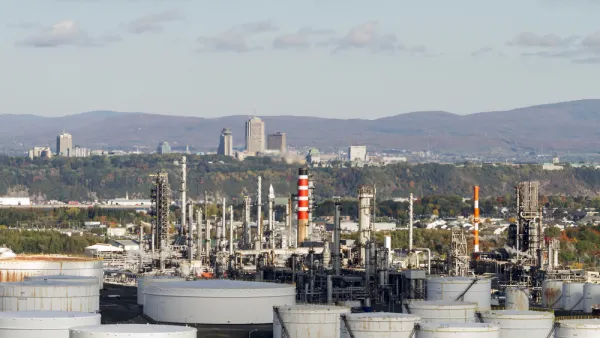
Prime Minister Trudeau Extends Carbon Pricing Throughout Canada
A carbon tax-and-dividend plan goes into effect on January 1 in the four Canadian provinces that don't price carbon emissions. Revenues will be rebated to residents, small businesses, and public institutions as Climate Action Incentive payments.
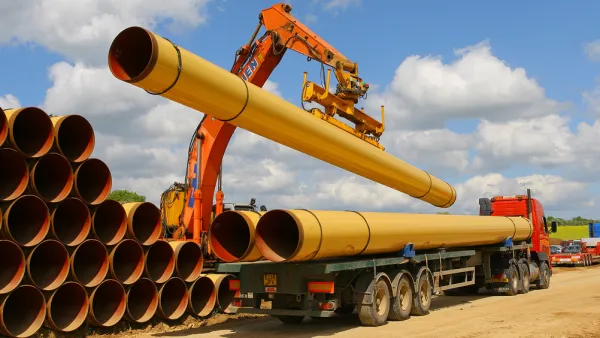
President Trump Approves Construction of Keystone XL Pipeline from Alberta to Nebraska
Following through on a January executive action, President Trump announced Friday that he was approving the oil pipeline that his predecessor had rejected over a year ago. Oil is already flowing from Steele City, Nebraska to Gulf Coast refineries.
Canadian Prime Minister Wins Award for Being Pro-Oil Sands and Pro-Environment
Prime Minister Justin Trudeau is treading a fine line between supporting the economy of oil-sands dependent western Canada and fighting climate change, as impossible as that might sound. His efforts were rewarded by the energy industry.

Desperate measures: Advocates weigh draining Lake Powell to fill Colorado River
Draining the reservoir could reduce evaporation losses by a couple hundred thousand acre-feet.

Eastern Nebraska is running out of electricity
Data centers and electrification are straining eastern Nebraska’s grid, throttling economic development.

Move over, LA: St. Louis gears up for Olympics, invests millions in downtown redevelopment
The Missouri city will host the 2028 Olympic soccer group stage and knockout matches.

Mass. votes against statewide minimum lot size for single-family homes
Over 2 million residents voted on Question 7; it was decided by just over 30,000 votes.

Maryland’s $15 billion bridge project gains key approval
The Maryland Transit Authority said the project will create over 60,000 jobs and add $23 billion to the local economy.

‘No clear next steps’ for Chicago's permanent festival grounds
Eleventh Ward Ald. Nicole Lee has suggested Soldier Field as a possible location for the permanent event space.

FREE Course: Walkable City 1: Why Walkability?
After describing his path towards focusing on walkability as the essence of good planning, Jeff Speck marches through his five principal reasons for making more walkable places.
Reinventing Malls: Planning Alchemy—Turning Gray Fields Into Gold
The course focuses on the opportunities and imperatives that shape reinvention of mall sites.

City of Rosemead
Rutgers University, Edward J. Bloustein School of Planning and Public Policy
One Hundred Miles
University of Michigan School for Environment and Sustainability (SEAS)
Hunter College, City University of New York (CUNY)
The Architects Foundation
City of Cambridge
The Pocatello Development Authority
The Urban Renewal Agency of the City of Pocatello