The Wrigleyville neighborhood of Chicago will have a national audience this week for the first time since 2003. The neighborhood has changed, and is poised for even more change.


Rachel Crosby describes the changes that have swept across the neighborhood of Wrigleyville in Chicago. Over a timeline of 30 years, a rough and tumble" neighborhood has given way to busy bars, flags that say "Cubs" and "W" lining the streets, and the smell of stale beer. On that later point, the proliferation of bars in the area is one of the noticeable changes described in the article.
At the enter of the neighborhood is Wrigley Field, home of the Chicago Cubs—the third most visited of all the ticketed places in the city. "Yet if Wrigley Field is the heart of Wrigleyville, the 80 or so neighboring bars and businesses are its lifeblood. They stretch down Clark and up Sheffield and are speckled farther out, in between houses and condos and apartments around Lakeview," writes Crosby.
But a $575 million development project is underway at the ballpark, which the teams can provide a catalytic development for the neighborhood. The hope is that the new development will inspire visitors to stay, rather than just visit.
The Cubs are doing their part in changing the perception of the neighborhood, by hosting games in the National League Championship Series. "Outside bars, signs on the street ask patrons to be quiet and respect neighbors. It's a problem that's grown parallel to the bar scene's evolution. But on days like Tuesday, when the Cubs clinched the National League Division Series for the first time at home, it's hard to hold back the celebration."
Read the full story: Wrigleyville on brink of new era
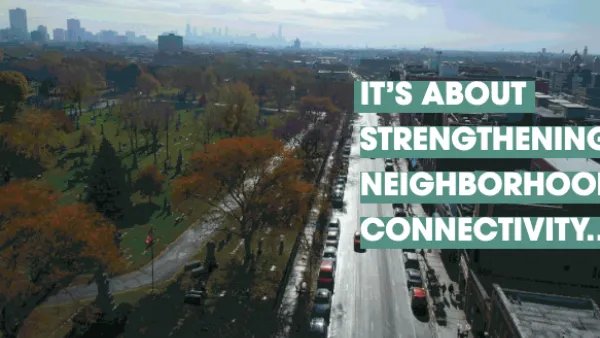
Chicago Seeks Public Input on Clark Street Improvements
The city is creating a strategy for improvements in the Clark Street corridor to improve the area's walkability and stimulate the local economy.
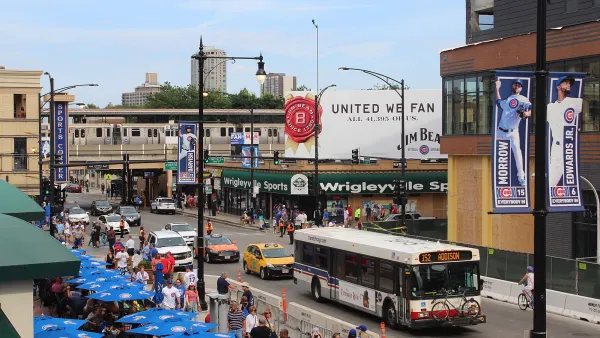
New Development Continues in Wrigleyville
New mixed-use projects bring residential units, retail, and entertainment venues to the neighborhood surrounding Chicago's Wrigley Field as stadium-adjacent development grows in popularity.
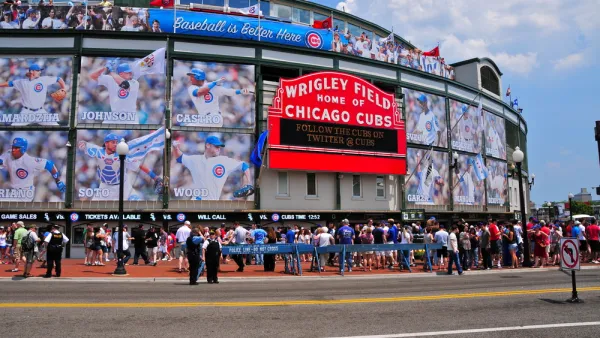
Dynamic Parking Prices Lack Political Will, Local Support Near Wrigley Field
Setting the example for the rest of city was too tough a pill to swallow for businesses located near Wrigley Field.

Planetizen Federal Action Tracker
A weekly monitor of how Trump’s orders and actions are impacting planners and planning in America.

Washington state to charge fee to drivers with fuel-efficient cars
Revenue from the fee will go towards supporting the state’s highways.

Illinois considers spending $1 billion in taxpayer money on data center
A quantum computing campus and data center are currently under construction in Chicago.

Senate passes bill overhauling permitting
The bill still needs to pass the House.

Did data centers change how voters cast their ballots?
Texas, Ohio, and Georgia all flipped party control. But in rural counties, the effect of local data centers was mixed.

Amtrak invests in eight new Airo trainsets
The new trainsets will begin serving passengers in 2031.

FREE Course: Walkable City 1: Why Walkability?
After describing his path towards focusing on walkability as the essence of good planning, Jeff Speck marches through his five principal reasons for making more walkable places.
Reinventing Malls: Planning Alchemy—Turning Gray Fields Into Gold
The course focuses on the opportunities and imperatives that shape reinvention of mall sites.

City of Charlotte
City of Rosemead
Rutgers University, Edward J. Bloustein School of Planning and Public Policy
University of Michigan School for Environment and Sustainability (SEAS)
Hunter College, City University of New York (CUNY)
The Architects Foundation
University District Partnership