Current housing policies at the local and national level have tried to make housing more affordable while at the same time increasing the value of homes, recognizing them as a personal investment.



Writing in City Observatory, Daniel Hertz identifies the often conflicting goals of housing policy around the country. The "confused" policy recognizes the need for affordable housing in many areas, but at the same time seeks to maintain the existing housing market, with the goal of increasing housing value because it has become one of the primary investment tools of the American middle-class. Restricting the increase in value of a property would therefore ultimately hurt the individual homeowner who has used the investment as "a path to wealth building." Hertz offers two ideas as potential solutions:
First, the "robust production of housing that isn’t priced by the market, and therefore isn’t affected by rising market prices;" and
Second, "having a wide variety of housing types and sizes can also make room for people of a wide variety of incomes." As an example, Hertz cites his own neighborhood in Chicago, which includes a mix of single-family homes, condo buildings, older multi-family unit buildings, and a few single room occupancy buildings.
Read the full story: Why America can’t make up its mind about housing

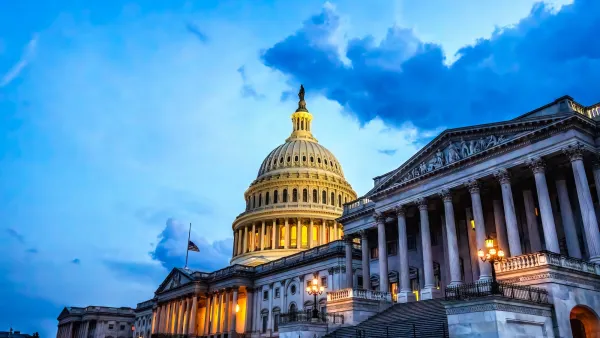
US Senate Passes Housing Bill With Focus on Financing, Deregulation
The proposal would ease regulations, allow banks to invest more in affordable housing, and change a rule that has been holding back manufactured housing.

House Bill Would Incentivize Housing Near Transit
The Build HUBS Act intends to make federal funding for TOD more available and streamline permitting for transit-adjacent housing.
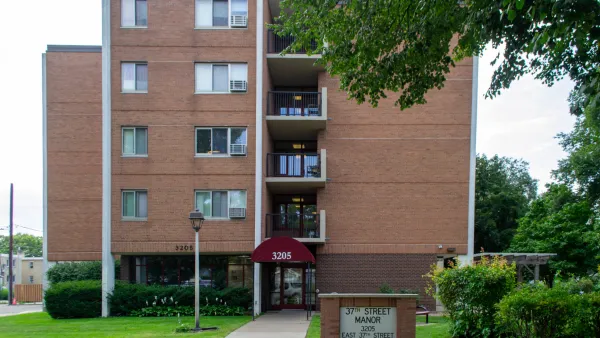
HUD to Investigate Minneapolis Over Allegations of ‘Racial and Ethnic Favoritism’ in Housing Policy
The Trump administration says the city’s housing policies and support of ‘cultural districts’ are racially discriminatory, while city leaders call the investigation politically motivated.

Planetizen Federal Action Tracker
A weekly monitor of how Trump’s orders and actions are impacting planners and planning in America.

Amtrak, CN end decades-long dispute with eight-year agreement
The new operating agreement establishes an updated framework for the companies to work together, including processes to resolve disputes.

Northwest rail fans eager for Sept. 30 debut of Amtrak’s Airo fleet
Get ready for that new train smell and more seats. But they won’t go faster or run more frequently on the Cascades route in Washington and Oregon.

NYCHA’s green future? Officials open ‘showroom’ apartment with sustainable features
Heat pumps, inductions stoves and infrared heating panels: these are a few of the climate-friendly upgrades being installed at some public housing developments, with more to come, officials said Tuesday.

Newsom kills bill requiring polluting factories near schools to undergo environmental review
In his veto letter, Newsom wrote that protecting communities and strengthening manufacturing “were not mutually exclusive.”

Brightline Florida files for bankruptcy
The transit company is over $5 billion in debt.

FREE Course: Walkable City 1: Why Walkability?
After describing his path towards focusing on walkability as the essence of good planning, Jeff Speck marches through his five principal reasons for making more walkable places.
Reinventing Malls: Planning Alchemy—Turning Gray Fields Into Gold
The course focuses on the opportunities and imperatives that shape reinvention of mall sites.

City of Thousand Oaks
City of Wisconsin Rapids
Harvard University Graduate School of Design
The Architects Foundation
University of Cincinnati Online
The Pocatello Development Authority
The Urban Renewal Agency of the City of Pocatello