A rapidly changing population might make Nevada a more thorough exemplar of the challenges and opportunities presented by the "diversity explosion" than its neighboring state to the west.


According to an article by Alan Greenblatt, "it’s Nevada that, perhaps more than any other state, offers a glimpse into the future. The change that has occurred so rapidly there -- from having a population that was overwhelmingly white to one that will soon be mostly people of color -- is under way in most of the nation, or will be in the coming decades. The Census Bureau has predicted the country as a whole will be majority nonwhite by the year 2043."
The demographic trends underway in Nevada are emblematic of what William Frey has described as the diversity explosion. But part of what makes Nevada a worthy case study on this subject is how it has so far failed to provide its new Latino populations from achieving the same kinds of success as the state's Caucasian population. According to Greenblatt, "[b]y nearly any measure you can think of -- unemployment, high school graduation rates, use of food stamps -- Hispanics aren’t faring as well as Caucasians in Nevada. They also lag behind Hispanics in other Mountain West states, according to a study published last year by the Guinn Center for Policy Priorities."
It's not just Latinos struggling to gain a foothold in Las Vegas; the fastest growing population, Asians and Pacific-Islanders, are also struggling. The article assigns blame to Nevada's poor service infrastructure, which is "starting at the bottom," among other political realities. On education, for instance, the state's policies are described as "just starting to react, 20 years too late" with regard to demographic changes.
Greensplatt connects the state's sluggish policy responses with the incredible rate of growth experienced in the state's metropolitan areas over the past several decades. Greensplatt quotes Betsy Fretwell, Las Vegas city manager, to describe the effect of growth on government policy: "When you’re tripling the number of park acres and going from eight firehouses to 18…a lot of attention gets focused on growth and the development needs of the community."
All of these challenges set aside, Las Vegas still has the rare opportunity to build on the human capital provided by these new immigrant populations—like New York or Chicago of previous centuries.
Read the full story: Nevada Shines Light Onto America's Future

Is the built environment partly to blame for population decline?
The way communities are designed could be contributing to lower birth rates.
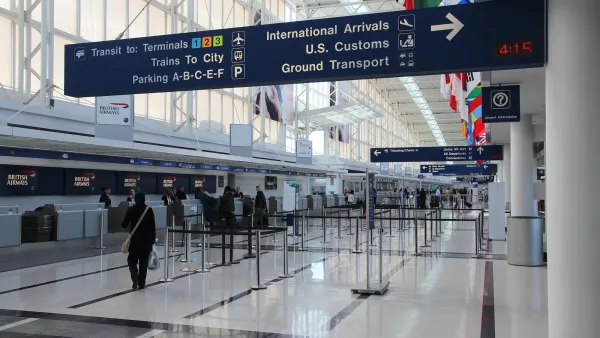
US Population Growth Slowest Since 2020 Due to Declining Immigration
Net international migration dropped from 2.7 million to 1.3 million in the year spanning July 2024 to July 2025.
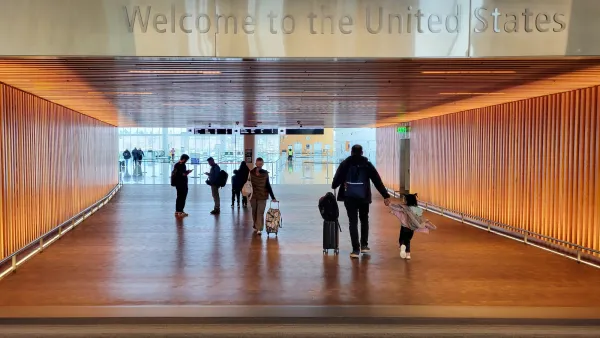
Adult Immigration to the US Dropped by Over 1.4M in 2025
Mass deportations and stricter immigration restrictions are causing a drop in new immigrants.

Planetizen Federal Action Tracker
A weekly monitor of how Trump’s orders and actions are impacting planners and planning in America.

Washington state to charge fee to drivers with fuel-efficient cars
Revenue from the fee will go towards supporting the state’s highways.

Illinois considers spending $1 billion in taxpayer money on data center
A quantum computing campus and data center are currently under construction in Chicago.

Senate passes bill overhauling permitting
The bill still needs to pass the House.

Did data centers change how voters cast their ballots?
Texas, Ohio, and Georgia all flipped party control. But in rural counties, the effect of local data centers was mixed.

Amtrak invests in eight new Airo trainsets
The new trainsets will begin serving passengers in 2031.

FREE Course: Walkable City 1: Why Walkability?
After describing his path towards focusing on walkability as the essence of good planning, Jeff Speck marches through his five principal reasons for making more walkable places.
Reinventing Malls: Planning Alchemy—Turning Gray Fields Into Gold
The course focuses on the opportunities and imperatives that shape reinvention of mall sites.

City of Charlotte
City of Rosemead
Rutgers University, Edward J. Bloustein School of Planning and Public Policy
University of Michigan School for Environment and Sustainability (SEAS)
Hunter College, City University of New York (CUNY)
The Architects Foundation
University District Partnership