A new law makes it impossible for property owners delinquent on their property taxes to bid in a foreclosure auction to keep their homes. Larger, commercial interests are benefitting from the change.


"Each September, Wayne County puts up for auction tens of thousands of properties whose owners are more than three years behind on their property taxes," according to a post by Kriston Capps.
The occasion is something of an anti-holiday in Wayne County, according to Capps, because of how many owners and tenants lose their homes in the process. "This year’s auction—which…runs through September 24—includes more than 8,000 homes occupied by an owner or a tenant, according to the county’s own records." The 8,000 residents losing their homes are casualties in the city's record-high 75,000 tax foreclosures this year. Capps notes that the majority of those foreclosures happen in Detroit.
But, Capps is careful to explain, those numbers don't tell the whole story. The foreclosures indicate a real threat to equity in the county and the city: "Recent changes to the law mean that it’s harder for occupant-owners to bid to save their homes—and easier for buyers to take or keep scores of properties for investment purposes." The bulk of the article is devoted to unpacking the change in the law that regulated tax foreclosures as well as the consequences of those changes.
FULL STORY: How Detroit's Foreclosure Auction Fails Homeowners

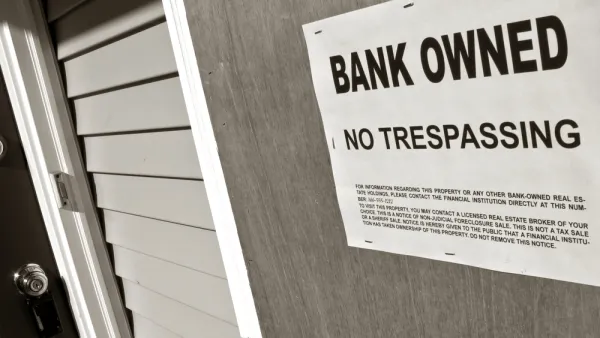
Detroit Program Keeps Homeowners Facing Foreclosure Housed
The buyback plan diverts properties from Wayne County's tax foreclosure auction, keeping them in government hands until residents can repay the purchase price.
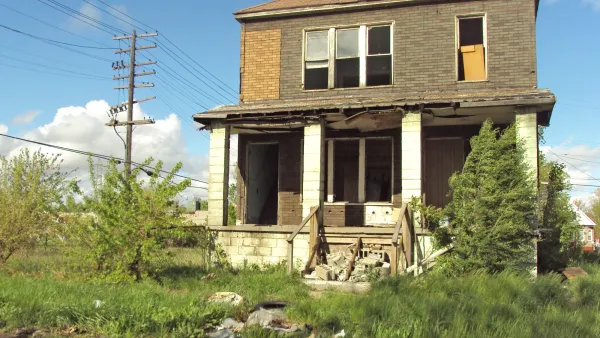
In Detroit, Continuing the Legacy of Land Banks
While the Detroit Land Bank has had its ups and downs, it has made significant progress in a city with no shortage of vacant and delinquent properties.
Detroit Greenlights Plans for New and Old Jails
A city-county land swap will allow Dan Gilbert to reimagine a former jail, plus build an entirely new one.

The state-sanctioned urbicide of Austin
People don’t kill cities. Freeways do.

US to reduce Colorado River water deliveries to Mexico
A new Colorado Treaty amendment reduces Mexico’s Colorado River water allocation by 250,000 acre feet.

New Jersey’s second-largest city bans standalone data centers
Jersey City will continue to allow co-location facilities, such as those meant for research institutions that store their own data.

Amtrak not solely to blame for New Jersey commuter rail's unreliability, report finds
A new study from the Garden State Initiative found that NJ Transit’s budget grew 20% across a 4 year period, but reliability declined significantly over the same period.

EPA erases limits on planet-warming pollution from power plants
Under Monday’s plan, power plants would still have some limits on how much mercury, arsenic and other contaminants they can emit.

Phoenix announces new on-demand transit service, more frequent RAPID buses
Both new services will launch in October, and are part of Phoenix's Project Effective Access Solutions for Easing Congestion.

FREE Course: Walkable City 1: Why Walkability?
After describing his path towards focusing on walkability as the essence of good planning, Jeff Speck marches through his five principal reasons for making more walkable places.
Reinventing Malls: Planning Alchemy—Turning Gray Fields Into Gold
The course focuses on the opportunities and imperatives that shape reinvention of mall sites.

Eagle County Government
Harvard University Graduate School of Design
Nashville Planning Department
The Architects Foundation
University of Cincinnati Online
The Pocatello Development Authority
The Urban Renewal Agency of the City of Pocatello
Journal of the American Planning Association