An algorithm developed in Sweden adds an extra layer of reliability for rail commuters.


"Mathematicians in Sweden have developed a new algorithm that can predict when trains will be delayed, letting commuters avoid delays and better plan their travel," reports Andrew Liszewski.
"These days the exact position and location of commuter trains are tracked to give passengers an accurate ETA of when one will be rolling into a station," Liszewski notes, but the new algorithm does one better. "Stockholmståg has found a way to use that data to also predict the ripple effect a single delay has on its entire system." Short of predicting an accident, the algorithm can help commuters make the most of the days when things aren’t going according to plan.
Read the full story: A New Algorithm Can Predict Subway Delays Two Hours Before They Happen

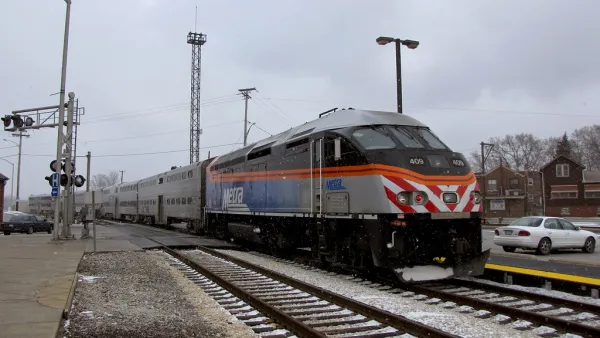
Opinion: Improved Commuter Rail Services Would Better Serve Chicago’s South Side Residents
The city’s South Side residents need more transit options, but an extension of the Chicago Transit Authority’s Red Line would be a costly and less effective alternative.
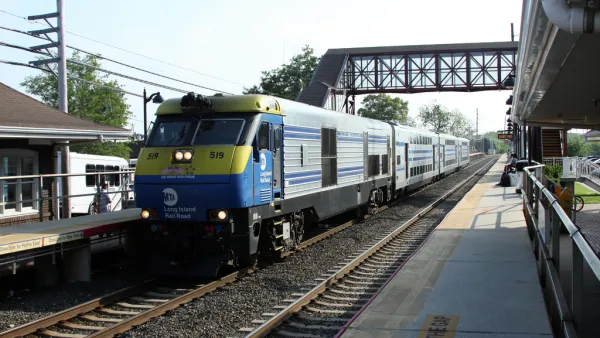
New York Wants More Riders on Commuter Rail
What kind of service improvements would commuters need to shift rides away from the MTA subway and onto commuter rail systems like the Long Island Rail Road?
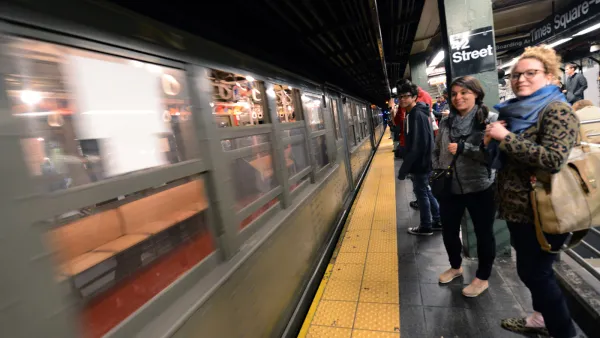
An Investigation into Subway Delays Identifies a New Culprit
An investigative report digs into the causes of delays on the New York subway and finds that the official company line might not square with reality.

Planetizen Federal Action Tracker
A weekly monitor of how Trump’s orders and actions are impacting planners and planning in America.

The state-sanctioned urbicide of Austin
People don’t kill cities. Freeways do.

Colorado’s Largest Data Center Could Rise Next to Homes — Without a Public Hearing
The proposed campus would consume 11 times the power of Denver International Airport; as it has across the country, opposition mounts.

Data centers are consuming nearly 25% of Oregon’s power
The state has 111 data centers, with 32 more either planned or under construction.

A third of Texas cities must update their zoning codes to comply with new housing law
Texas municipalities are now required to allow manufactured housing in at least one residential zoning district.

Nation's most wind-powered state turns to coal as data centers increase energy demand
For the first time in decades, Iowa has increased its generation of coal power.

FREE Course: Walkable City 1: Why Walkability?
After describing his path towards focusing on walkability as the essence of good planning, Jeff Speck marches through his five principal reasons for making more walkable places.
Reinventing Malls: Planning Alchemy—Turning Gray Fields Into Gold
The course focuses on the opportunities and imperatives that shape reinvention of mall sites.

Greater Baltimore Committee
Eagle County Government
Harvard University Graduate School of Design
The Architects Foundation
University of Cincinnati Online
The Pocatello Development Authority
The Urban Renewal Agency of the City of Pocatello
Journal of the American Planning Association