A massive redevelopment project moving forward in Pittsburgh would provide in-demand office and tech space near local universities. An innovative transportation infrastructure project could be a part of the deal.


"Pittsburgh officials hope to advance plans for a new transportation corridor linking Oakland with the city’s biggest undeveloped parcel, the former LTV Steel site on the Monongahela River," reports Jon Schmitz.
The transportation corridor plan has evolved since it was first introduced in 2009. Gone is the plan for rail, and in its place is a proposal for "rubber-tire shuttles"—perhaps even autonomous vehicles under development at Carnegie Mellon University.
Schmitz reports that the Urban Redevelopment Authority approved an application for a state grant of $3 million, which would help pay for the estimated costs of $7.2 million for the first phase of the transportation corridor project.
The transportation corridor is considered a key component necessary for the success of a redevelopment proposal for the Almono site, as the former steel site is now called. "The Almono site...is owned by four regional foundations and its development is being managed by RIDC Corp. Some site work and a long-range mixed-use development plan have been prepared, but transportation connections are inadequate," according to the article.
Read the full story: Pittsburgh seeking money for transit link between Oakland, Hazelwood development site
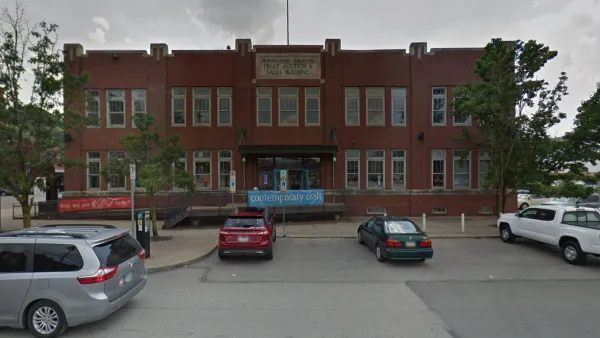
Tax Increment Financing a Possibility for Big Pittsburgh Redevelopment Project
A $125 million adaptive reuse project is looking for help with infrastructure improvements. Pittsburgh's Urban Redevelopment Authority is considering tax increment financing to fund street improvements.

Pittsburgh Revitalization Plans Stuck on Blight
The Pittsburgh Post-Gazette recently published an investigation of the city's efforts to buy and rehabilitate vacant properties in the troubled neighborhood of Homewood.
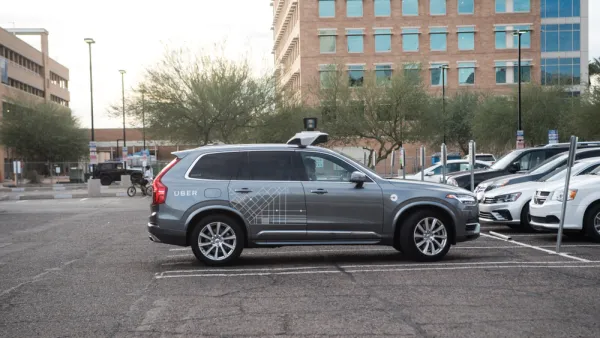
Advocates Press for Harder Questions While Pittsburgh Experiments With Self-Driving Cars
Five self-driving car companies are currently operating in Pittsburgh, without much critical rigor in asking about the consequences of the technology to the city.

Planetizen Federal Action Tracker
A weekly monitor of how Trump’s orders and actions are impacting planners and planning in America.

California plans to bury El Niño’s downpour
If the state plays its cards right, it may be able to store a billion acre-feet of El Niño’s water in aquifers.

Desperate measures: Advocates weigh draining Lake Powell to fill Colorado River
Draining the reservoir could reduce evaporation losses by a couple hundred thousand acre-feet.

Housing is the top priority of Seattle’s sole new councilmember
Jenks campaigned on building 1,000 new units of affordable housing.

New tax cuts may slash $1.5 billion in funding for Miami transit, public parks
Amendment 3 will save Miami-Dade homeowners $2,700 in 2028.

Arizona, Wisconsin, Pennsylvania hope to finally advance climate goals post-midterms
The three states have spent years under Republican or divided control.

FREE Course: Walkable City 1: Why Walkability?
After describing his path towards focusing on walkability as the essence of good planning, Jeff Speck marches through his five principal reasons for making more walkable places.
Reinventing Malls: Planning Alchemy—Turning Gray Fields Into Gold
The course focuses on the opportunities and imperatives that shape reinvention of mall sites.

City of Rosemead
Rutgers University, Edward J. Bloustein School of Planning and Public Policy
One Hundred Miles
University of Michigan School for Environment and Sustainability (SEAS)
Hunter College, City University of New York (CUNY)
The Architects Foundation
City of Cambridge
Montrose County
The Pocatello Development Authority