A lawsuit in Boise could decide the future of one policy response to homelessness—making it illegal to sleep in public.


"The U.S. Justice Department on Thursday urged a judge to block enforcement of an anti-camping ordinance in Boise, Idaho," reports Gale Holland.
Ryan J. Reilly also provides coverage of the Justice Department position. Here's how he explains the opinion of the Justice Department:
"Attorneys in the Justice Department's Civil Rights Division argued that 'the conduct of sleeping in a public place is indistinguishable from the status of homelessness' and that it should be 'uncontroversial that punishing conduct that is a universal and unavoidable consequence of being human' violates the Eighth Amendment. They noted that 'finding a safe and legal place to sleep can be difficult or even impossible' for many homeless people."
Gale Holland's implies the potential national reach of any decision that could arise from this development. According to Holland, "the outcome in Boise could reverberate in Los Angeles -- where officials are considering resuming enforcement of the city's own anti-camping ordinance, considered among the strictest in the country." The Los Angeles ordinance "bans sleeping, sitting or lying on sidewalks and other public property."
The Justice Department was responding the ongoing litigation in the case of Bell vs. City of Boise, brought by a group of homeless individuals in 2009 in response to the city's anti-camping ordinance. George Prentice reports on the local reaction to the Justice Department's statement.
FULL STORY: Justice Department asks judge to block enforcement of homeless camping ban

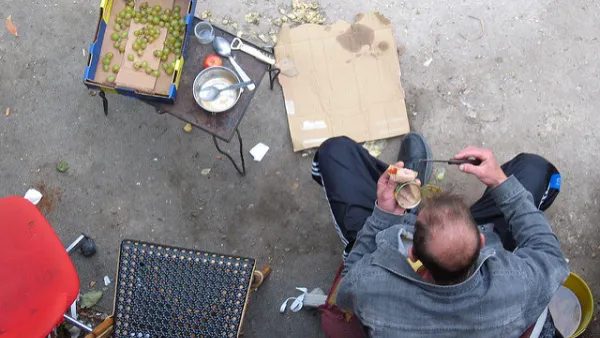
Will Appeal of Landmark Appeals Court Ruling Allow for Clearing of Tent Cities?
If the Supreme Court hears an appeal of a landmark U.S. Ninth Circuit Court case settled in April, the ruling would have widespread implications for dealing with homeless encampments throughout the West, perhaps nowhere more so than Los Angeles.
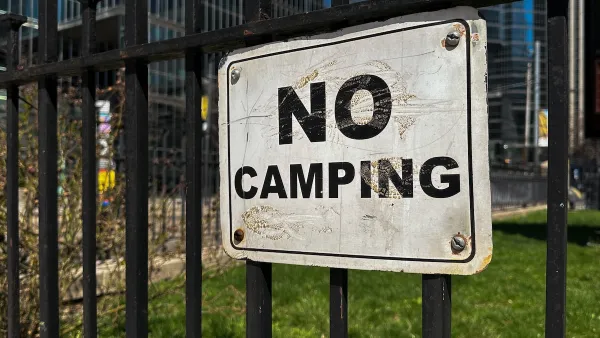
Nevada Cities Pass Punitive Anti-Homeless Laws
State legislators rejected a proposed bill that would have enshrined a “Homeless Person’s Bill of Rights” in state law.
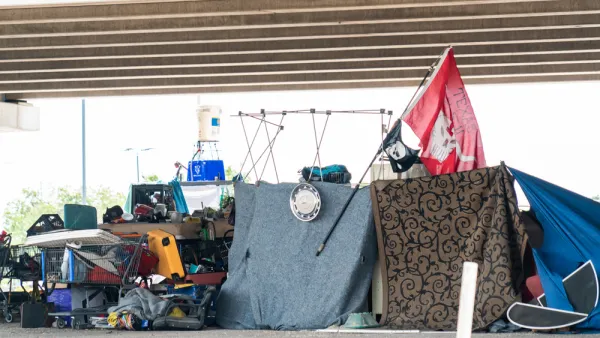
Unhoused Austin Population Spikes Under Reinstated Camping Ban
The Texas capital is struggling to house its unsheltered residents even as the city commits more resources to building and acquiring more affordable housing units.

The state-sanctioned urbicide of Austin
People don’t kill cities. Freeways do.

US to reduce Colorado River water deliveries to Mexico
A new Colorado Treaty amendment reduces Mexico’s Colorado River water allocation by 250,000 acre feet.

New Jersey’s second-largest city bans standalone data centers
Jersey City will continue to allow co-location facilities, such as those meant for research institutions that store their own data.

Amtrak not solely to blame for New Jersey commuter rail's unreliability, report finds
A new study from the Garden State Initiative found that NJ Transit’s budget grew 20% across a 4 year period, but reliability declined significantly over the same period.

EPA erases limits on planet-warming pollution from power plants
Under Monday’s plan, power plants would still have some limits on how much mercury, arsenic and other contaminants they can emit.

Phoenix announces new on-demand transit service, more frequent RAPID buses
Both new services will launch in October, and are part of Phoenix's Project Effective Access Solutions for Easing Congestion.

FREE Course: Walkable City 1: Why Walkability?
After describing his path towards focusing on walkability as the essence of good planning, Jeff Speck marches through his five principal reasons for making more walkable places.
Reinventing Malls: Planning Alchemy—Turning Gray Fields Into Gold
The course focuses on the opportunities and imperatives that shape reinvention of mall sites.

Eagle County Government
Harvard University Graduate School of Design
Nashville Planning Department
The Architects Foundation
University of Cincinnati Online
The Pocatello Development Authority
The Urban Renewal Agency of the City of Pocatello
Journal of the American Planning Association