Urban planning is front in center in Nashville, with a general plan update underway and a mayoral election looming on August 6. One candidate took to the editorial pages of The Tennessean to lay out a housing and transit agenda.


An op-ed by Bill Freeman, a mayoral candidate in Nashville, argues for an agenda that would kill two birds with one stone by addressing affordable housing and mass transit. Freeman first notes that soaring cost of living in the city, where over 60 percent of the residents are spending more than half of theory income on housing and transportation costs, then he notes two of the traditional approaches to these challenges:
"We can build all of the affordable housing we want, but if it’s at the edge of the county, without connected sidewalks or bike lanes, mass transit will remain more of a hassle than a help."
And:
"Conversely, if we focus solely on building a robust mass transit system around Nashville, but are still pricing residents out of their homes and forcing them into neighboring counties, is that worth it?"
Freeman goes onto lay out the beginnings of a comprehensive transportation plan and a goal of adding 10,000 affordable housing units over the next four years.
Read the full story: Fix Nashville mass transit, affordable housing at once
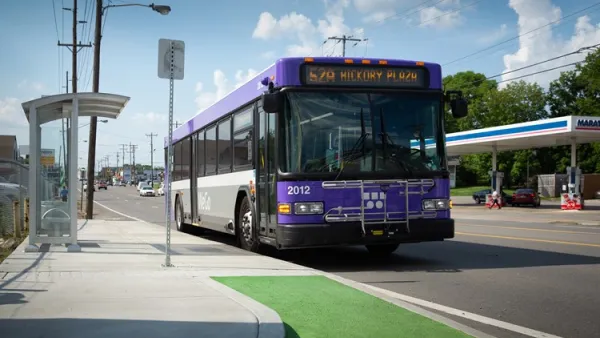
Nashville Proposes $3.1B Plan to Expand Bus System
The plan will hinge on voter approval of a half-cent sales tax increase on the November ballot.
Planning Year in Review 2023: Zoning Reform, a Rail Revolution, and Climate Realities
Last year’s most talked-about planning issues and news.
Atlanta Housing Targets 10,000 Affordable Units in Five Years
Atlanta Housing plans to use a combination of development and preservation to ensure 10,000 affordable housing units in the next five years.

Desperate measures: Advocates weigh draining Lake Powell to fill Colorado River
Draining the reservoir could reduce evaporation losses by a couple hundred thousand acre-feet.

Eastern Nebraska is running out of electricity
Data centers and electrification are straining eastern Nebraska’s grid, throttling economic development.

Malls are becoming the midtowns of the future
Mall and office park redevelopments are a generational opportunity to create new nodes of urbanity.

NYC breaks ground on anti-flooding infrastructure project
New York City's new system will reduce stormwater flows to local sewers by 90%.

One Kentucky town’s secret to affordable housing
The Smoketown Community Land Trust has already built seven affordable homes for community members.

Houston gains petal-shaped cooling infrastructure to make streets more ‘delightful’
The city has installed the pavilions along 15 blocks in Houston.

FREE Course: Walkable City 1: Why Walkability?
After describing his path towards focusing on walkability as the essence of good planning, Jeff Speck marches through his five principal reasons for making more walkable places.
Reinventing Malls: Planning Alchemy—Turning Gray Fields Into Gold
The course focuses on the opportunities and imperatives that shape reinvention of mall sites.

City of Rosemead
Rutgers University, Edward J. Bloustein School of Planning and Public Policy
One Hundred Miles
University of Michigan School for Environment and Sustainability (SEAS)
Hunter College, City University of New York (CUNY)
The Architects Foundation
City of Cambridge
Montrose County
The Pocatello Development Authority