Maps are still an important tool in teaching kids to be global citizens.


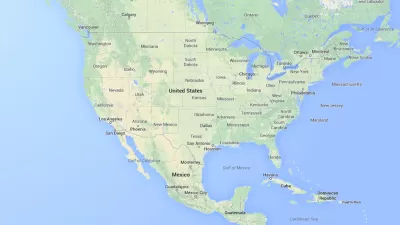
"Being able to read a map, and to orient your brain as to where you are and which direction you need to head is a very important skill," writes Parenting blogger Sherri Kuhn. Yet her teenage daughter can make the longest trip of her driving career without knowing east from west.
While map-reading skills may seem irrelevant in the smart-phone world, geographic literacy is vital to understanding the world around us. National Geographic defines geographic literacy as "the ability to use geographic understanding and geographic reasoning to make far-reaching decisions." It is a critical knowledge base in many career fields, including planning. Hana Baba reports for KALW:
"Companies like Google and Yahoo hire GIS specialists. The military needs them for strategic planning. Commercial real estate planners hire them to decide where to build stores. Transportation departments, city and environmental planning departments - all are in need of geographers. But they’re hard to find, because most U.S. Schools don’t seriously teach geography."
There is hope for concerned parents like Kuhn. Efforts to include Geography funding in the reauthorization of the "No Child Left Behind Act" failed in the previous Congressional term, but appear to be back on the table with the currently re-branded "Every Child Achieves Act of 2015."
FULL STORY: My daughter can't read a map. And your kid probably can't either

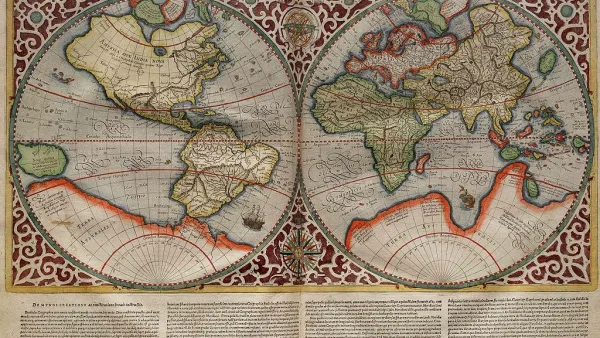
Map-Correcting App Shows 'The True Size Of' Places
Typical world maps badly misrepresent the size of countries; a new web app shows their true scale.
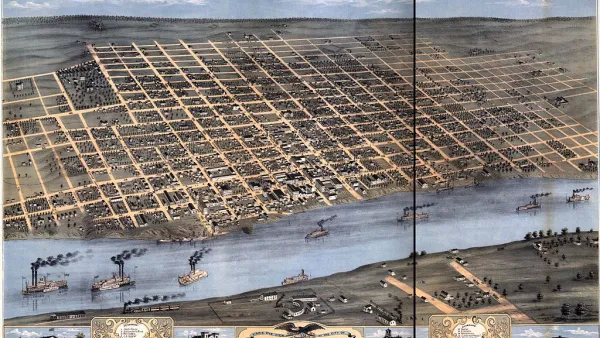
Mapped: Every Building in the United States
Using data from Microsoft, the New York Times has published an online map showing the placement of every building in the country, in a simple black and white format.
GAO Study Highlights Need for Geography Education Funding
K-12 geography proficiency has not improved since 1994.

Planetizen Federal Action Tracker
A weekly monitor of how Trump’s orders and actions are impacting planners and planning in America.

The state-sanctioned urbicide of Austin
People don’t kill cities. Freeways do.

US to reduce Colorado River water deliveries to Mexico
A new Colorado Treaty amendment reduces Mexico’s Colorado River water allocation by 250,000 acre feet.

5 New England states march closer to 800 megawatt wind energy project
Securing federal approval for the project may be complicated under the Trump administration, which has historically been hostile towards domestic wind power.

Baltimore to break ground on $50 million Transit Priority Project
The project will bring faster bus trips, safer streets and better bike connections to Baltimore.

Airbnb launches $250 million 'last-dollar financing' housing accelerator, makes first investment in Austin
The company will put $6.4 million towards affordable housing development in Texas’ capital.

FREE Course: Walkable City 1: Why Walkability?
After describing his path towards focusing on walkability as the essence of good planning, Jeff Speck marches through his five principal reasons for making more walkable places.
Reinventing Malls: Planning Alchemy—Turning Gray Fields Into Gold
The course focuses on the opportunities and imperatives that shape reinvention of mall sites.

Eagle County Government
Harvard University Graduate School of Design
Nashville Planning Department
The Architects Foundation
University of Cincinnati Online
The Pocatello Development Authority
The Urban Renewal Agency of the City of Pocatello
Journal of the American Planning Association