The good news is that middle-class suburbs are becoming increasingly integrated. However, a closer look at the migration patterns of whites and minorities reveals a more complex picture, rife with racism.


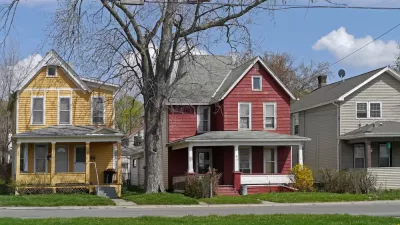
In a post for Wonkblog, Emily Badger describes the town of Oak Park, a small suburb just beyond the western city limits of Chicago. While efforts made across the country have been successful at diversifying traditionally white neighborhoods, the challenges faced by the Oak Park Regional Housing Center illustrate how race-based preferences of white house-hunters keep traditionally black neighborhoods isolated.
"People walk in with mental maps and memories of stories they saw on a blog and rumors they’ve once been told. Don’t live on the east side of Oak Park," Badger writes. Research shows that it is no coincidence that the undesirable east side of Oak Park is predominantly black. Dan Keating presents a wealth of comparable findings in cities such as St. Louis, Detroit, and Washington, D.C. "Many major cities have great disparities between the trend of whites living in more diverse neighborhoods and blacks living with persistent segregation," Keating writes.
According to sociologists Maria Krysan and Michael D. M. Bader, these preferences are based on racial blind spots. In their recent study, participants were asked to watch a video clip that panned the streets of a middle-class neighborhood in Detroit. They employed white and black actors to populate the neighborhood. "In the study, whites were more likely to positively rate a neighborhood with white residents in it than they did the identical neighborhood when the people collecting the morning paper or walking the sidewalks were black."
The Oak Park non-profit works to help white professionals look beyond their racial blind spots by introducing them to safe and affordable neighborhoods they may not previously have been aware of. Indeed, the Krysan-Bader study finds "strong evidence that community knowledge is shaped by race—both of the resident and of the target community." Desegregation policies may be helping minorities to have access to white neighborhoods, but the approach taken in Oak Park goes one step further. "It's not costly and controversial new construction. It's marketing. It’s about, among other things, being publicly explicit that a community wants diversity."
FULL STORY: How race still influences where we choose to live


Black-White Segregation Decreasing, Slowly
Segregation is decreasing, even in America’s most segregated big cities.

How Policymakers Are Grappling With the Racist Legacy of Urban Freeways
In Michigan, the state's Department of Transportation is looking for ways to mitigate the damage caused by decades of urban renewal policies and reconnect neighborhoods cut off from amenities and opportunities by highway projects.
Racism Has Shaped Public Transit, and It’s Riddled with Inequities
Former Houston METRO Board Member Christof Spieler highlights the racism embedded even in the way transit agencies were created.

Planetizen Federal Action Tracker
A weekly monitor of how Trump’s orders and actions are impacting planners and planning in America.

The state-sanctioned urbicide of Austin
People don’t kill cities. Freeways do.

US to reduce Colorado River water deliveries to Mexico
A new Colorado Treaty amendment reduces Mexico’s Colorado River water allocation by 250,000 acre feet.

5 New England states march closer to 800 megawatt wind energy project
Securing federal approval for the project may be complicated under the Trump administration, which has historically been hostile towards domestic wind power.

Baltimore to break ground on $50 million Transit Priority Project
The project will bring faster bus trips, safer streets and better bike connections to Baltimore.

Airbnb launches $250 million 'last-dollar financing' housing accelerator, makes first investment in Austin
The company will put $6.4 million towards affordable housing development in Texas’ capital.

FREE Course: Walkable City 1: Why Walkability?
After describing his path towards focusing on walkability as the essence of good planning, Jeff Speck marches through his five principal reasons for making more walkable places.
Reinventing Malls: Planning Alchemy—Turning Gray Fields Into Gold
The course focuses on the opportunities and imperatives that shape reinvention of mall sites.

Eagle County Government
Harvard University Graduate School of Design
Nashville Planning Department
The Architects Foundation
University of Cincinnati Online
The Pocatello Development Authority
The Urban Renewal Agency of the City of Pocatello
Journal of the American Planning Association