Research from the Urban Institute identifies market and demographic trends that could mean a future housing market that will stand in stark contrast to the "subprime mania of the early 2000s."


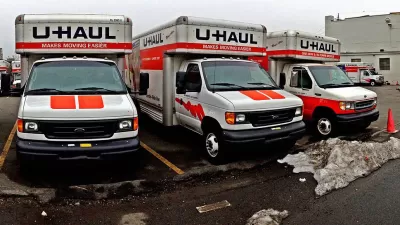
"Last decade’s housing crisis could give way to a new one in which many families lack the incomes or savings needed to buy homes, creating a surge of renters and a shortage of affordable housing," according to an article by Nick Timiraos.
The article follows research fro the Urban Institute, "which predicts homeownership will continue to slip for at least 15 years" due to demographic trends that will see more households created by minorities with lower incomes, less wealth, and lower homeownership rates than average. "The downtrend would push homeownership below 62% in 2020, and it would hold the rate near 61% in 2030, below the lowest level since records began in 1965."
The flipside of a downward trend in homeownership rates is an increased number of renters, which leads to higher rents as a response to the increased demand.
Timiraos also notes that economists at Goldman Sachs dissent from the predictions of the Urban Institute. "They noted in an April report that even though Hispanics, for example, have lower homeownership rates than non-Hispanic whites, those rates have been rising for the past four decades. They see the homeownership rate stabilizing next year after it falls to 63.5%."
Read the full story: New Housing Headwind Looms as Fewer Renters Can Afford to Own

Home Prices, Demand on Downward Trajectory
The once-overheated housing market continues to cool as rising interest rates reduce demand.

Seven Charts Highlight the Strangeness of the Housing Market
The unique conditions created during the last few years have upended the U.S. housing market and led to some unusual trends.
Austin Metro Home Sales Slow Dramatically
After a whirlwind of rising costs and sharply spiking demand for housing in smaller cities, the housing market is cooling down to pre-pandemic levels.

Planetizen Federal Action Tracker
A weekly monitor of how Trump’s orders and actions are impacting planners and planning in America.

Amtrak, CN end decades-long dispute with eight-year agreement
The new operating agreement establishes an updated framework for the companies to work together, including processes to resolve disputes.

Judges permit Denver to divert 77,000 acre feet from the Colorado River for reservoir expansion
Overuse and climate change have caused the Colorado River’s water levels to plummet.

NYC DOT wants faster, more permanent street upgrades
The city is examining ways to build more concrete infrastructure without getting entangled in 'decades-long' projects.

'Something we’ve never seen before:' rising utility rates could strain city finances nationwide
Data centers, climate change and other factors have caused utility rates in the United States to increase by 38% since 2020.

Trump to overrule local leaders, lease millions of acres of America’s Pacific Island territories’ seafloors to mining companies
International law says that the Indigenous people of America’s territories have a right to prior and informed consent regarding projects that impact their countries.

FREE Course: Walkable City 1: Why Walkability?
After describing his path towards focusing on walkability as the essence of good planning, Jeff Speck marches through his five principal reasons for making more walkable places.
Reinventing Malls: Planning Alchemy—Turning Gray Fields Into Gold
The course focuses on the opportunities and imperatives that shape reinvention of mall sites.


Harvard University Graduate School of Design
KFH Group Inc.
Greater Baltimore Committee
The Architects Foundation
University of Cincinnati Online
The Pocatello Development Authority
The Urban Renewal Agency of the City of Pocatello