Not every building can be a winner, and some buildings that aspired to greatness fall short in public esteem. Yet maybe some of the buildings that world loves to hate deserve a second look.



Alexandra Lange shares the thoughts of seven of the world's leading architects asked to defend the "world's most hated buildings." The question explored by the exercise: "Can the field’s top minds change the way we think about a doomed housing project in Naples or the most abhorred skyscraper in Paris?"
The cavalcade of equivocations features Daniel Libeskind, on behalf of Tour Montparnasse in Paris, France; Zaha Hadid, on behalf of the Orange County Government Center in Goshen, New York; Annabelle Selldorf, on behalf of the Empire State Plaza in Albany, New York; Ada Tolla, on behalf of Vele di Scampia in Naples, Italy; Norman Foster, on behalf of the Tempelhof Airport in Berlin, Germany; Amande Levete, on behalf of the BT Tower in London, United Kingdom; and Vincent van Duysen, on behalf of Centre Pompidou in Paris, France.
Read the full story: Seven Leading Architects Defend the World's Most Hated Buildings

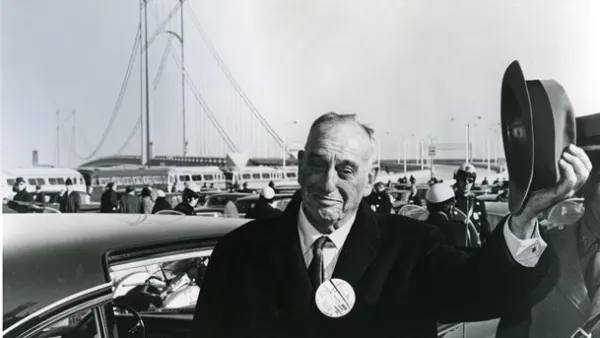
Robert Moses Takes to the Stage in 'Straight Line Crazy,' Starring Ralph Fiennes
The popular fascination with Robert Moses, "master builder of New York" and one of the most prominent figures in planning history, continues.

AIA Updates Ethics Code to Prohibit Design of Facilities Used for Solitary Confinement, Execution
Advocates in the design industries have been pushing for years for the American Institute of Architects to take a stance on how prisons are designed.

Robert Moses Inspires 'Motherless Brooklyn'
A new movie starring Edward Norton, based on the novel of the same name by Lionel Essrog, gives a central role to a Robert Moses doppelgänger, as portrayed by Alec Baldwin.

Planetizen Federal Action Tracker
A weekly monitor of how Trump’s orders and actions are impacting planners and planning in America.

California plans to bury El Niño’s downpour
If the state plays its cards right, it may be able to store a billion acre-feet of El Niño’s water in aquifers.

Chicago breaks ground on $3 billion megadevelopment
The new neighborhood, titled Foundry Park, will one day host 3,700 residences.

California High-Speed Rail Authority CEO resigns after $600,000 scandal
Under Ian Choudri, the authority used taxpayer dollars to fund first class flights and trips to nightclubs.

Want to study the Missouri River? Soon, you may need unanimous approval from 10 states
Legislation would require 10 governors’ permission to study or build projects moving water outside the basin.

Desperate measures: Advocates weigh draining Lake Powell to fill Colorado River
Draining the reservoir could reduce evaporation losses by a couple hundred thousand acre-feet.

FREE Course: Walkable City 1: Why Walkability?
After describing his path towards focusing on walkability as the essence of good planning, Jeff Speck marches through his five principal reasons for making more walkable places.
Reinventing Malls: Planning Alchemy—Turning Gray Fields Into Gold
The course focuses on the opportunities and imperatives that shape reinvention of mall sites.

City of Rosemead
Rutgers University, Edward J. Bloustein School of Planning and Public Policy
One Hundred Miles
Hunter College, City University of New York (CUNY)
The Architects Foundation
University of Cincinnati Online
City of Cambridge
Montrose County
The Pocatello Development Authority