Vancouver, British Columbia's Heritage Action Plan went into effect in January of this year. According to an article in the Vancouver Courier, the policy has failed to achieve its intended goals.


Allen Garr reports on the results from the first few months of Vancouver, British Columbia's "character home" policy (also known by its official title: the Heritage Action Plan), which is intended as a preservation measure for historic homes around the city. Garr explains the policy before revealing its initial results:
"There was a demolition moratorium in one section of Shaughnessy. But for the rest of Vancouver, the city offered density bonuses for owners who chose to renovate rather than remove pre-1940 character homes. Builders were also offered a break if they chose to 'deconstruct' those houses and recycle the building materials rather than shredding them."
Unfortunately for the goals of the policy, Garr reports that demolitions have only increased: "In the first four months of this year the city issued 342 demolition permits. That is an increase of 20 per cent over 2014." The remainder of the article offers local preservationists the chance to describe the current wave of demolitions and the implications for current development practices on residential neighborhoods in Vancouver.
Kerry Gold also covered the Heritage Action Plan earlier this year, providing more insight on the intended outcomes of the policy. For the record, Elizabeth Murphy warned of the potential for the Heritage Action Plan to fail its expectations at the time of the policy's adoption in June of 2014.
Read the full story: City of Vancouver's anti-demolition policy is a failure


Study: Where Land Values Soar, Houses Come Down
Soaring land values are leaving an indelible mark on the building stock of Vancouver, British Columbia.

Budget constraints threaten light rail for Oregon, Washington’s new bridge
The current proposal includes only the infrastructure for the light rail, without funding for the train and tracks.
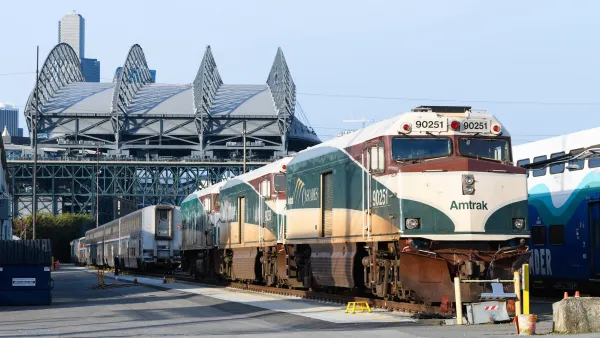
Amtrak opens border preclearance facility for travelers entering US from Vancouver
The first-of-its-kind facility streamlines the border crossing experience, eliminating long waits.

Planetizen Federal Action Tracker
A weekly monitor of how Trump’s orders and actions are impacting planners and planning in America.

Amtrak, CN end decades-long dispute with eight-year agreement
The new operating agreement establishes an updated framework for the companies to work together, including processes to resolve disputes.

Nation's most wind-powered state turns to coal as data centers increase energy demand
For the first time in decades, Iowa has increased its generation of coal power.

Alabama scores up to $2.5 billion federal loan for largest infrastructure project in state’s history
The Mobile River Bridge and Bayway Project aims to ease congestion at Alabama’s worst bottleneck.

Trump is considering data centers on 6 states' public land — some state officials say they had no idea
If the administration approves the proposed projects, data center and data center-related developments will cover 17,600 acres of public land.

Despite court ruling, Trump is keeping nearly all wind projects in the US on hold
At least 110 wind energy projects have not heard from the government since a federal judge ruled that the Trump administration's freeze on wind turbine clearances was likely illegal.

FREE Course: Walkable City 1: Why Walkability?
After describing his path towards focusing on walkability as the essence of good planning, Jeff Speck marches through his five principal reasons for making more walkable places.
Reinventing Malls: Planning Alchemy—Turning Gray Fields Into Gold
The course focuses on the opportunities and imperatives that shape reinvention of mall sites.

KFH Group Inc.
Greater Baltimore Committee
Eagle County Government
The Architects Foundation
University of Cincinnati Online
The Pocatello Development Authority
The Urban Renewal Agency of the City of Pocatello