The cities of the Rust Belt don't get much good news these days as they suffer the effects of de-industrialization. But things may be turning around in Cincinnati, where a major investment by General Electric may herald a downtown revival.



In the 20th century, the fortunes of the cities of the East Coast and Midwest often rose and fell along with those of major industrial employers. In recent decades, those fortunes fell more often than they rose. History may be repeating itself in Cincinnati.
General Electric, one of the poster children for 20th century prosperity, recently announced the development of its Global Operations Center, which will bring at least 1,800 highly paid workers to downtown Cincinnati. Other office buildings are under development nearby, as is a a new 3.6-mile streetcar line. There's a growing "consumer science" sector, specializing in marketing and branding. Much of this activity is credited to the nonprofit developer Cincinnati Center City Development Corporation, which has invested hundreds of millions of dollars in the downtown area already.
The new influx of business comes with promises to invest further in the city: "The city’s big companies, in collaboration with Cincinnati and Hamilton County, also developed plans and investment funds for park reconstruction, business investments and new office and residential construction, all aimed at coaxing residents to live downtown and to establish more high-paying jobs."
Read the full story: Downtown Cincinnati Thrives as Riots’ Memories Recede

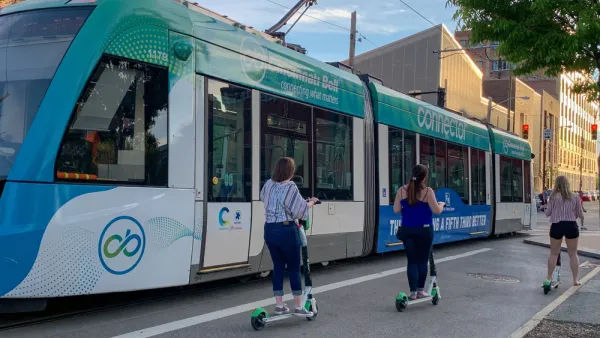
Cincinnati Streetcar Sets Monthly Ridership Record
The Cincinnati Streetcar, now known as the Cincinnati Connector, has come so far.
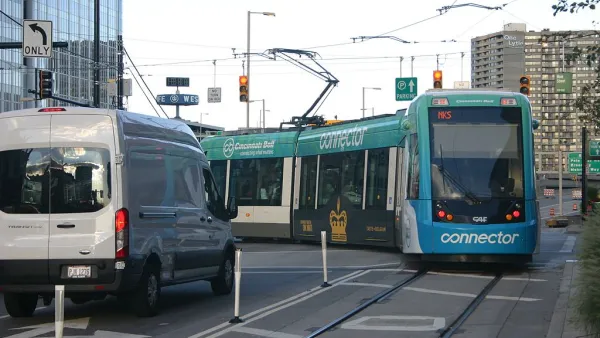
Streetcar Facing $1.4 Million Budget Deficit in Cincinnati
The Cincinnati Streetcar, now known as the Bell Connector, weathered numerous controversies on the way to completion. Now it faces the prospect of balancing its budget less than three years after launching.
The Cincinnati Streetcar Is Failing
Mechanical failures and understaffing have contributed to plummeting ridership for the Cincinnati Bell Connector.

Planetizen Federal Action Tracker
A weekly monitor of how Trump’s orders and actions are impacting planners and planning in America.

Data reveals that NYC’s bet on congestion pricing has paid off
After almost two years of the program, reports show positive impacts on traffic and air quality and no disruptions to parking.

HUD modernizes 50-year-old manufactured housing framework
The Next Generation Manufactured Housing Action Plan establishes new energy-efficiency standards for manufactured homes, and new guidelines for anchoring them.

Chicago city vehicles are on the hunt for illegally-parked cars
Cameras on the vehicles can automatically issue tickets to drivers who park their cars in bus or bike lanes.

Small single-family homes are illegal in most of MA. Voters can change that
Most land zoned for single-family housing in Massachusetts requires at least 40,000 square feet of land per house.

Public steps inside U.S.’s first battery-powered train
Metra’s groundbreaking train feature modern seats and a futuristic battery car.

FREE Course: Walkable City 1: Why Walkability?
After describing his path towards focusing on walkability as the essence of good planning, Jeff Speck marches through his five principal reasons for making more walkable places.
Reinventing Malls: Planning Alchemy—Turning Gray Fields Into Gold
The course focuses on the opportunities and imperatives that shape reinvention of mall sites.


One Hundred Miles
County of Mendocino
planning NEXT
The Architects Foundation
University of Cincinnati Online
Montrose County
Northern Illinois Transit Authority (NITA)
The Pocatello Development Authority