Vancouver created its MX zone as a solution to a persistent challenge for planners—how to retain industrial jobs and affordable housing in downtowns.


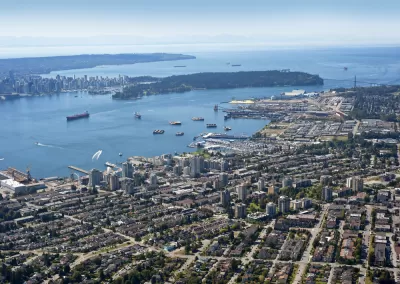
An article by Frances Bula examines an unusual Vancouver development: "the city’s first effort to combine industrial and residential space in a single building in an industrial zone near the port."
The development is the first to take advantage of a new "MX" zone, namely: "[Vancouver] has designated only a small strip along East Hastings, bordering the port industrial zone a few kilometres east of the central business district, for this new combination of condos with a sector of industrial called PDR – production, design and repair."
The concept of weaving industrial and residential together has been practiced in San Francisco and is also under consideration in New York. According to Bula "[the] tricky part in Vancouver, where land and housing prices have skyrocketed to unprecedented levels, is to ensure that any new zoning doesn’t set off a frenzy of land speculation, as developers bet on the possibility of industrial land being converted to residential."
Read the full story: Industrial grit meets residential glass in Vancouver

Missoula Approves Zoning Reform Emphasizing More Diverse Housing, Walkability
The city’s new zoning code, map, and development standards will guide more expansive housing options and improved walkability.
Vancouver Set to Adopt Game-changing Citywide Development Plan
To comply with new provincial law, Vancouver will adopt a new city plan aimed at guiding development for the next three decades.
NYC's Plan to add 9500+ Housing Units to Midtown
The city council approved a rezoning plan that will allow high-density mixed-use development in a formerly manufacturing-only district.

Planetizen Federal Action Tracker
A weekly monitor of how Trump’s orders and actions are impacting planners and planning in America.

Amtrak, CN end decades-long dispute with eight-year agreement
The new operating agreement establishes an updated framework for the companies to work together, including processes to resolve disputes.
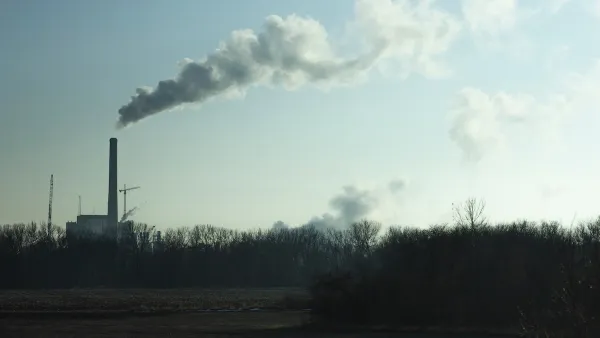
Nation's most wind-powered state turns to coal as data centers increase energy demand
For the first time in decades, Iowa has increased its generation of coal power.

Alabama scores up to $2.5 billion federal loan for largest infrastructure project in state’s history
The Mobile River Bridge and Bayway Project aims to ease congestion at Alabama’s worst bottleneck.

Trump is considering data centers on 6 states' public land — some state officials say they had no idea
If the administration approves the proposed projects, data center and data center-related developments will cover 17,600 acres of public land.

Despite court ruling, Trump is keeping nearly all wind projects in the US on hold
At least 110 wind energy projects have not heard from the government since a federal judge ruled that the Trump administration's freeze on wind turbine clearances was likely illegal.

FREE Course: Walkable City 1: Why Walkability?
After describing his path towards focusing on walkability as the essence of good planning, Jeff Speck marches through his five principal reasons for making more walkable places.
Reinventing Malls: Planning Alchemy—Turning Gray Fields Into Gold
The course focuses on the opportunities and imperatives that shape reinvention of mall sites.

KFH Group Inc.
Greater Baltimore Committee
Eagle County Government
The Architects Foundation
University of Cincinnati Online
The Pocatello Development Authority
The Urban Renewal Agency of the City of Pocatello