The designs of architecture's most famous practitioners inspire the most public forms of attention and criticism. A recent column in Slate doesn't shy away from the latter.


Kriston Capps has compiled a list of lowlights from the year in architecture. The list follows the example of Frank Gehry, who earlier this year berated 98 percent of the world's architecture. Capps's critique, however, is directed toward the architecture that begs to be seen, as such, he describes the list "as a plea for 2015: Leave Frank Gehry alone."
Capps writes that the "dubious designs and blustering egos collected here all make a strong case for the worst architecture of 2014," describing them all as "worse than Gehry’s Fondation Louis Vuitton, which opened this fall and may in fact be the best building of 2014."
The list includes multiple mentions for Zaha Hadid, multiple mentions for George Lucas, multiple buildings in Los Angeles, and all 1,715 Designs in the Guggenheim Helsinki Contest.
Read the full story: The 11 Worst Buildings of 2014
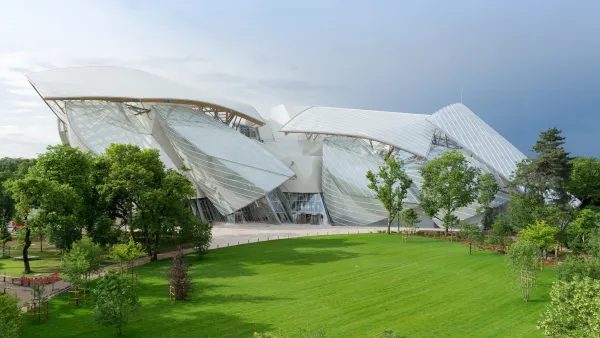
Op-Ed: Starchitecture Fails the Future
An addiction to spectacle and fad, says Peter Buchanan, has set architecture adrift in a sea of meaningless forms. And real design problems go ignored.
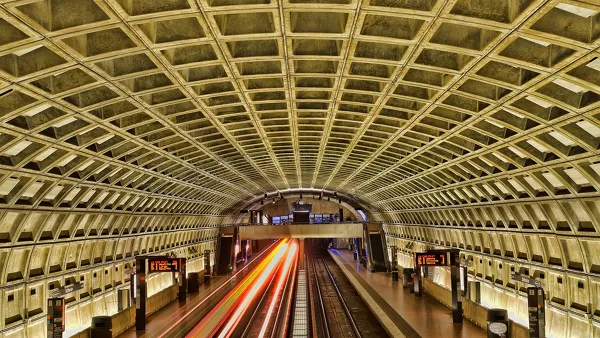
Friday Funny: A Sarcastic List for Why D.C. Metro is the 'Best'
A community user of Buzzfeed has clearly had it up to here with the daily frustrations of using transit on the Washington Metropolitan Area Transit Authority.
Abu Dhabi Forges Ahead With Plans to Create a Cultural World Capital
Abu Dhabi today reaffirmed its commitment to completing the long-delayed project to build a $27 billion cultural and tourism project known as Saadiyat Island.

Planetizen Federal Action Tracker
A weekly monitor of how Trump’s orders and actions are impacting planners and planning in America.

California plans to bury El Niño’s downpour
If the state plays its cards right, it may be able to store a billion acre-feet of El Niño’s water in aquifers.

Desperate measures: Advocates weigh draining Lake Powell to fill Colorado River
Draining the reservoir could reduce evaporation losses by a couple hundred thousand acre-feet.

In Texas, data centers are swallowing promised parkland
Residents who moved to Taylor, Texas for a rural community now have to contend with three data centers in their backyard.

How a Chicago-sized wind farm beat the odds and powered on
The project spanned five presidential administrations and a standoff with a U.S. military base.

MTA gives itself 30 days to transform pit into basketball court
The site has been under construction since 2022; the city originally estimated it would finish the court in 2024.

FREE Course: Walkable City 1: Why Walkability?
After describing his path towards focusing on walkability as the essence of good planning, Jeff Speck marches through his five principal reasons for making more walkable places.
Reinventing Malls: Planning Alchemy—Turning Gray Fields Into Gold
The course focuses on the opportunities and imperatives that shape reinvention of mall sites.

City of Rosemead
Rutgers University, Edward J. Bloustein School of Planning and Public Policy
One Hundred Miles
Hunter College, City University of New York (CUNY)
The Architects Foundation
University of Cincinnati Online
City of Cambridge
Montrose County
The Pocatello Development Authority