Jonathan Waterman describes a kayaking trip into Lake Powell—the "reservoir formed by the confluence of the San Juan and the Colorado Rivers and the holding power of Glen Canyon Dam" above the Grand Canyon.


Due to a persistent drought and the growing demands of industry and population, Lake Powell is now at half of its capacity. Jonathan Waterman kayaked in to describe this reversal of fate for the land once flooded by the river: "in place of a majestic reservoir, we saw only the thin ribbon of a reemergent river channel, which had been inundated for most of the past three decades by the lake. We called this new channel the San Powell, combining the name of the river and the lake."
The empty lake is also a recovered landscape: "Within a decade or two at the most, if the drought persists, we can expect to see hundreds of inundated ancient Anasazi ruins rising above the drying reservoir. Archaeologists will be delighted, just as kayakers like us delight at the reemergence of a river."
In addition to describing the re-emerged river channel, the article provides background on the lake's situation as well as the current policy discussions about how to maintain the water supply of the American Southwest.
FULL STORY: Record Drought Reveals Stunning Changes Along Colorado River

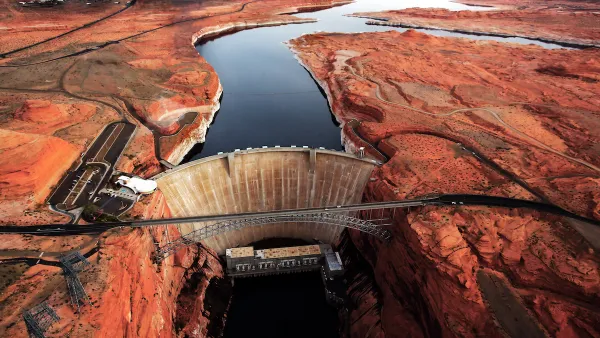
Calls Grow for ‘One-Dam Solution’ on Colorado River
California growers and others in the river’s Lower Basin want the federal government to consider draining Lake Powell to conserve more water downstream.
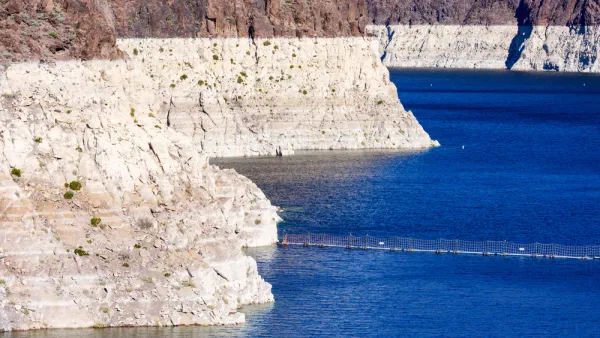
Colorado River Water Crisis Deepens
The states that rely on the Colorado’s water must make drastic cuts in water usage to maintain use of the West’s most important—and most threatened—water source.
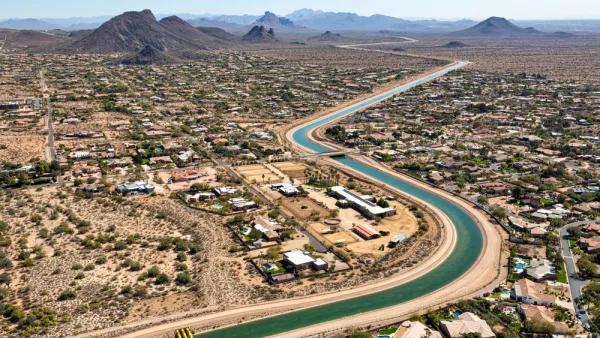
Booming Arizona Must Confront its Water Problem
Even as more people and companies flock to the state for its climate and economic opportunities, Arizona's water supplies are facing historic shortages.

Planetizen Federal Action Tracker
A weekly monitor of how Trump’s orders and actions are impacting planners and planning in America.

The state-sanctioned urbicide of Austin
People don’t kill cities. Freeways do.

US to reduce Colorado River water deliveries to Mexico
A new Colorado Treaty amendment reduces Mexico’s Colorado River water allocation by 250,000 acre feet.

LA Metro’s ultimatum: no extra buses for LA28 if federal funding isn’t imminently secured
If Metro does not provide additional buses, LA28 organizers will have to find a new way to manage Olympic traffic. LA28’s budget does not include a line item for transit.

Colorado’s Largest Data Center Could Rise Next to Homes — Without a Public Hearing
The proposed campus would consume 11 times the power of Denver International Airport; as it has across the country, opposition mounts.

5 New England states march closer to 800 megawatt wind energy project
Securing federal approval for the project may be complicated under the Trump administration, which has historically been hostile towards domestic wind power.

FREE Course: Walkable City 1: Why Walkability?
After describing his path towards focusing on walkability as the essence of good planning, Jeff Speck marches through his five principal reasons for making more walkable places.
Reinventing Malls: Planning Alchemy—Turning Gray Fields Into Gold
The course focuses on the opportunities and imperatives that shape reinvention of mall sites.

Eagle County Government
Harvard University Graduate School of Design
Nashville Planning Department
The Architects Foundation
University of Cincinnati Online
The Pocatello Development Authority
The Urban Renewal Agency of the City of Pocatello
Journal of the American Planning Association