Henry Grabar writes of the movement to design better sounds for urban environments.


Henry Grabar cites the arguments of Joel Beckerman, the founder of Man Made Music and composer of jingles for AT&T, CBS and the author of “The Sonic Boom” to make the case that planners, politicians, and urban designers can do a better job considering the aural experience of cities. "Bad sound, according to Beckerman, is 'as detrimental to quality of life as bad streetlights or poor sidewalks.' (Like the high hat in a pop song, once you hear it, it can’t be unheard.)"
According to Grabar, Beckerman argues in favor of "sonic humanism": "an awareness of our sonic environment, and a cognizance that we can change it if we want to." Grabar also quotes artists Bruce Odland and Sam Auinger to further advance the point: "All infrastructure is designed…Our ears were simply not part of the design brief."
Grabar cites a few examples where cities have given sound more of the attention it demands: "In 2004, London adopted a comprehensive sonic strategy. The 'Sounder City' initiative, outlined in this 280-page manual [pdf], was intended to fight noise pollution. It suggested improvements to everything from flight paths to utility company repairs to canal traffic."
FULL STORY: The sounds of our lives suck! How to make cities better by ending the blight of noise


Tech Partnerships Seek Greater Mobility for the Disabled
Tech-focused civic partnerships may be one way to unlock greater urban mobility for disabled people. Tools in the works include navigation apps with specialized sound cues and "smart canes" that interact with invisible paint.
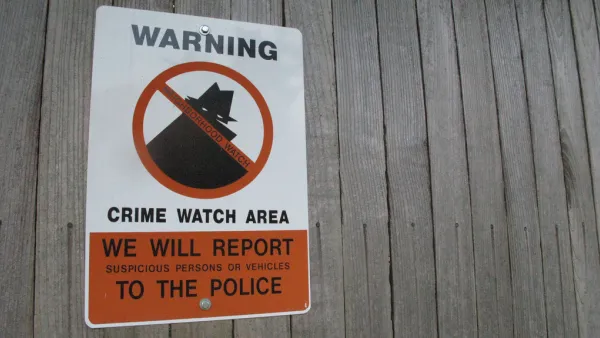
Research Finds Strong Links Between Urban Characteristics and Local Drug Trade
New research has found a link between drug dealing and certain urban environments, which researchers believe can lead to better policing strategies.
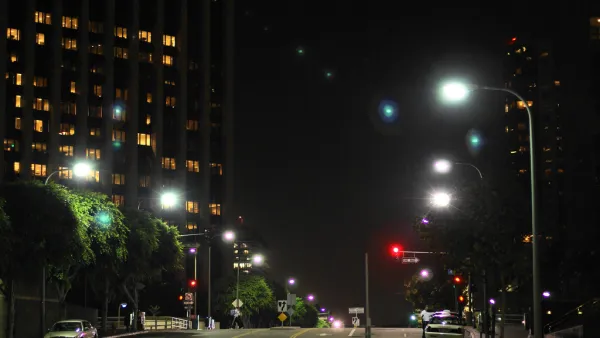
Los Angeles Changes Color
Adam Rogers chronicles Los Angeles' long and intimate relationship with the electric light. The city's recent choice to adopt LED streetlights has transformed a classic nighttime into something new.

Planetizen Federal Action Tracker
A weekly monitor of how Trump’s orders and actions are impacting planners and planning in America.

The state-sanctioned urbicide of Austin
People don’t kill cities. Freeways do.

US to reduce Colorado River water deliveries to Mexico
A new Colorado Treaty amendment reduces Mexico’s Colorado River water allocation by 250,000 acre feet.

5 New England states march closer to 800 megawatt wind energy project
Securing federal approval for the project may be complicated under the Trump administration, which has historically been hostile towards domestic wind power.

Baltimore to break ground on $50 million Transit Priority Project
The project will bring faster bus trips, safer streets and better bike connections to Baltimore.

Airbnb launches $250 million 'last-dollar financing' housing accelerator, makes first investment in Austin
The company will put $6.4 million towards affordable housing development in Texas’ capital.

FREE Course: Walkable City 1: Why Walkability?
After describing his path towards focusing on walkability as the essence of good planning, Jeff Speck marches through his five principal reasons for making more walkable places.
Reinventing Malls: Planning Alchemy—Turning Gray Fields Into Gold
The course focuses on the opportunities and imperatives that shape reinvention of mall sites.

Eagle County Government
Harvard University Graduate School of Design
Nashville Planning Department
The Architects Foundation
University of Cincinnati Online
The Pocatello Development Authority
The Urban Renewal Agency of the City of Pocatello
Journal of the American Planning Association