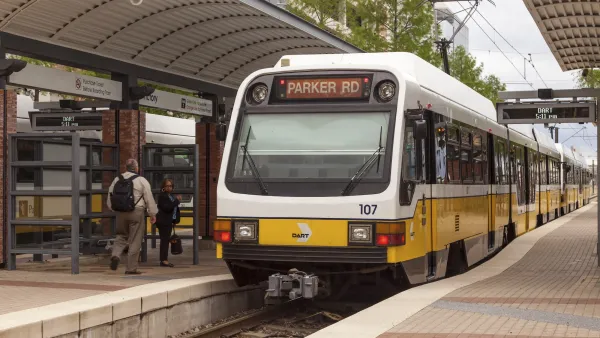
After expanding its light rail system until it was the largest system in the United States, Dallas Area Rapid Transit still finds itself struggling to attract cities to join the agency, even as rival agencies are emerging as competitors.


"Now that Dallas Area Rapid Transit has built the nation’s longest light-rail network, its officials have their sights set on a goal that has eluded them for 31 years: enticing new cities to join the agency," report Brandon Formby and Ray Leszcynski.
The objective of adding new agencies has taken on new urgency in recent years as once-rural agencies now offer viable public transit, positioning themselves as DART competitors.
As for why that's a problem: "Area officials fear that if suburbs just outside the current service area continue to eschew DART, regional public transit will become a jumbled patchwork instead of a seamless system. And that, they surmise, could suppress transit usage from North Texans who don’t have the patience for a complicated transit structure."
Causing some of the resistance on the part of potential member cities is the one-cent sales tax that funds DART, according to the article (a similar one-cent sales tax in Houston was recently lauded as a potential model for other cities.)
Read the full story: As DART struggles to lure new members, other agencies emerge


Dallas area transit prepares for World Cup, asks locals to drive
DART is adding a special shuttle service and creating back-up mechanisms to ensure it can serve all of this summer's World Cup attendees.
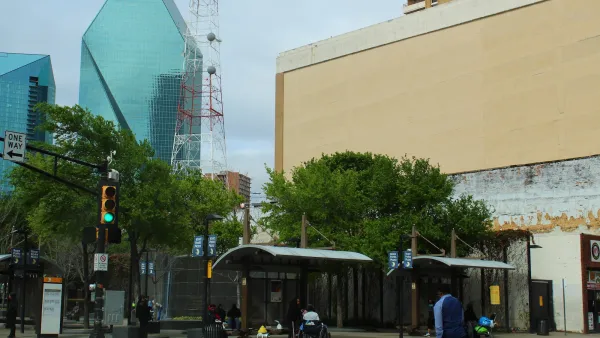
Dallas transit to invest up to $71.5M in upgraded bus shelters
The new shelters will feature solar-powered lighting and materials designed to protect riders from extreme weather.
Dallas Sacrifices DART Majority Control in Bid to Keep Suburbs in Transit System
The city would give up majority control of the regional transit system for the first time in its 40-year history.

Planetizen Federal Action Tracker
A weekly monitor of how Trump’s orders and actions are impacting planners and planning in America.

‘Going backwards:’ Baltimore mayor, students rally against state's transit funding plan
Maryland's proposed six-year plan provides no funding for Baltimore’s BMORE bus program and reduces its road maintenance funding.

Detroit to transform waterfront with $2.2 billion investment
Developers will convert about 18 acres of unused parking lot space into civic spaces.

Senate bill would ‘overhaul’ environmental permitting laws
Under the proposed act, government agencies would also not be able to suspend or rescind permits after granting them.

Exemption applications for NYC’s pied-à-terre tax see 55% success rate
The city sent nearly 40% of its initial pied-à-terre tax warnings erroneously.

MTA invests $1.1 billion in ‘nearly-impossible’-to-evade fare gates
The new technology marks the Metropolitan Transit Authority's first turnstile redesign in decades.

FREE Course: Walkable City 1: Why Walkability?
After describing his path towards focusing on walkability as the essence of good planning, Jeff Speck marches through his five principal reasons for making more walkable places.
Reinventing Malls: Planning Alchemy—Turning Gray Fields Into Gold
The course focuses on the opportunities and imperatives that shape reinvention of mall sites.

One Hundred Miles
County of Mendocino
planning NEXT
The Architects Foundation
University of Cincinnati Online
Montrose County
Northern Illinois Transit Authority (NITA)
The Pocatello Development Authority