A new tech startup, incubated at Harvard University, assists municipalities in unlocking the potential of their fallow, or "lazy," real estate assets.


According to an article by Lisa Prevost, the startup, called OpportunitySpace, is "helping municipalities with a task at which they are notoriously deficient: managing and marketing their real estate portfolios."
To do so, "the start-up works with municipal governments to put their publicly owned real estate holdings in a public online database. Specifics about each property, such as square footage, assessed value and delinquent taxes, are linked to its address. The parcels are mapped geographically."
OpportunitySpace is "nearing the end of its incubation phase at the Harvard Innovation Lab," but the startup has already been put to the test in Providence, Rhode Island, where the "city’s inventory — 1,363 publicly owned parcels, including parks and recreational areas — is now posted online." Lousiville, Kentucky has also worked with OpportunitySpace to showcase Louisville Gardens, a vacant arena built in 1905 and "ripe for redevelopment."
Read the full story: A Start-Up Helps Towns Market Their Property
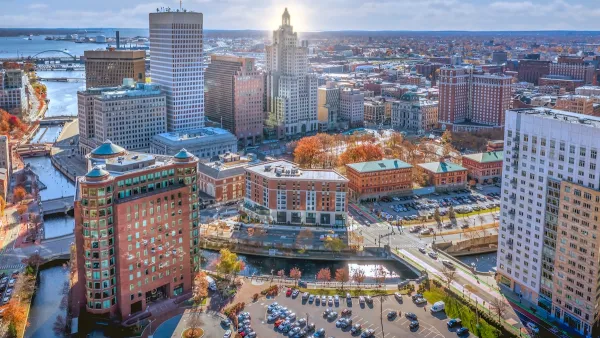
From Plan to Place: Providence’s Downtown Renaissance
Providence’s downtown is transforming from plan to place. Decades of strategic planning, zoning reforms, & investment are paying off, creating a more vibrant, walkable urban core. Here’s how thoughtful policy and design are shaping the city’s future.
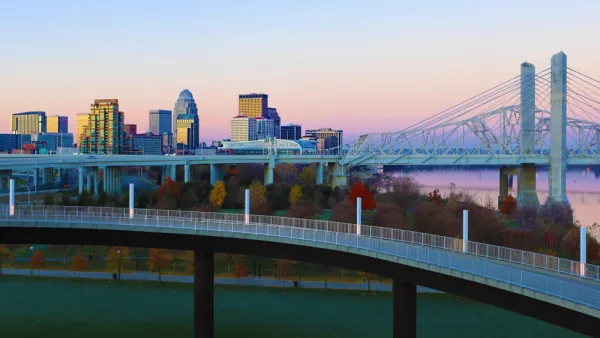
Seeking 'Opportunity Zones' Investments
The city of Louisville is making the most of the Opportunity Zone program in the early stages of the new federal program.
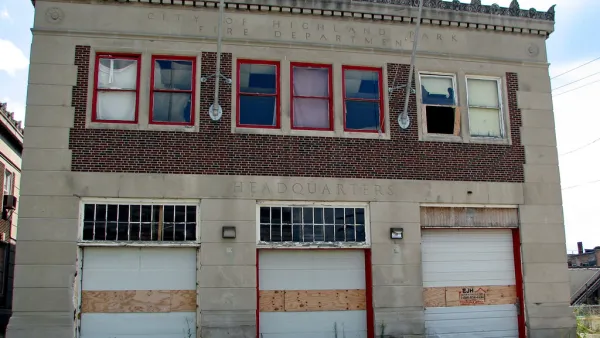
A Rejuvenation Plan for Detroit's Highland Park
Along with Hamtramck, Highland Park is one of two tiny cities entirely surrounded by the city of Detroit. Here's how its leaders want its center to develop over the next five to ten years.

Desperate measures: Advocates weigh draining Lake Powell to fill Colorado River
Draining the reservoir could reduce evaporation losses by a couple hundred thousand acre-feet.

Eastern Nebraska is running out of electricity
Data centers and electrification are straining eastern Nebraska’s grid, throttling economic development.

Malls are becoming the midtowns of the future
Mall and office park redevelopments are a generational opportunity to create new nodes of urbanity.

NYC breaks ground on anti-flooding infrastructure project
New York City's new system will reduce stormwater flows to local sewers by 90%.

One Kentucky town’s secret to affordable housing
The Smoketown Community Land Trust has already built seven affordable homes for community members.

Houston gains petal-shaped cooling infrastructure to make streets more ‘delightful’
The city has installed the pavilions along 15 blocks in Houston.

FREE Course: Walkable City 1: Why Walkability?
After describing his path towards focusing on walkability as the essence of good planning, Jeff Speck marches through his five principal reasons for making more walkable places.
Reinventing Malls: Planning Alchemy—Turning Gray Fields Into Gold
The course focuses on the opportunities and imperatives that shape reinvention of mall sites.

City of Rosemead
Rutgers University, Edward J. Bloustein School of Planning and Public Policy
One Hundred Miles
University of Michigan School for Environment and Sustainability (SEAS)
Hunter College, City University of New York (CUNY)
The Architects Foundation
City of Cambridge
Montrose County
The Pocatello Development Authority