New Yorkers for Parks released a study earlier this month finding that the Department of Parks and Recreation is one of the city's slowest when it comes to finishing projects on a reasonable timeframe.


Lisa Foderaro writes of the frustration of many New Yorkers—politicians and citizens—with the slow delivery pace of parks and open space projects in New York City.
"With many small- to medium-size projects financed by council members and borough presidents, the delays are not merely frustrating for park users. They also threaten the well-primed spigot of money that flows from lawmakers’ discretionary funds into neighborhood parks. Often, elected officials miss out on the political payoff of their contributions: a ribbon-cutting with beaming constituents," writes Foderaro.
New Yorkers for Parks released a study earlier this month finding that the Department of Environmental Protection, the School Construction Authority, and the Economic Development Corporation all have a much speedier track record than the Department of Parks and Recreation.
The city's new parks commissioner, Mitchell Silver, has publicly recognized the need to improve the department's performance. According to Foderaro, "Mr. Silver said he was meeting with his staff to address the problem and would issue recommendations by late summer."
Read the full story: Report Assails Parks Dept. Over Slowness in Finishing Projects
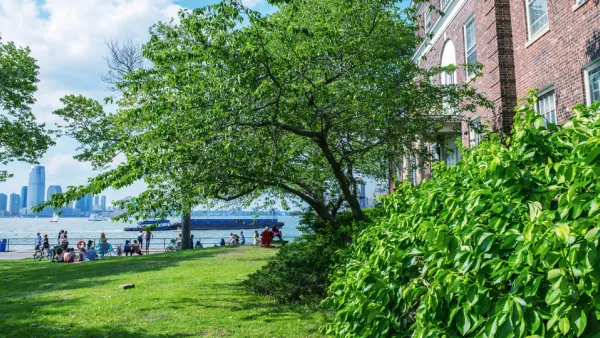
Even Parks Are Going Online During the Pandemic
Parks departments in New York City and Pittsburgh are offering videos and livestreams to cooped-up residents.
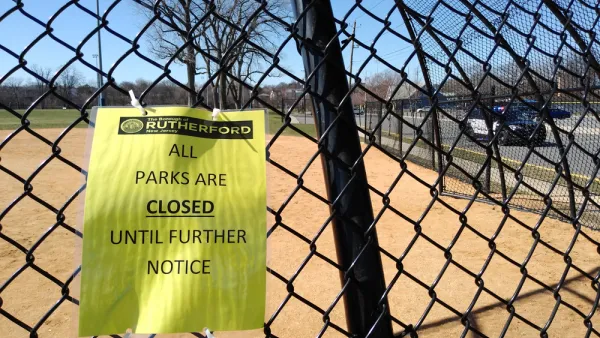
Frontlines of the Social Distancing Effort Shifts to Parks and Open Space
Too many people have been seeking normalcy on parks and on trails. This isn’t a normal time.
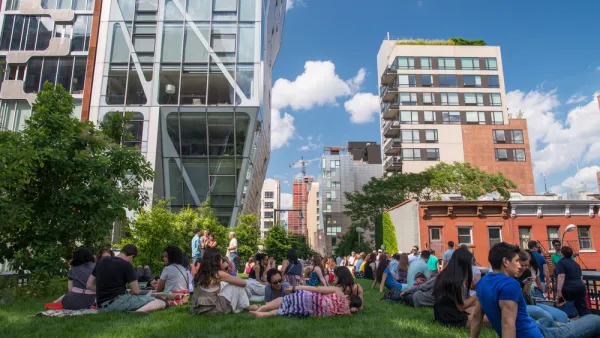
Ten Years of the High Line—Time to Reflect
As the High Line turns ten, a debate about the costs and benefits of urban revitalization continues.

Planetizen Federal Action Tracker
A weekly monitor of how Trump’s orders and actions are impacting planners and planning in America.

California plans to bury El Niño’s downpour
If the state plays its cards right, it may be able to store a billion acre-feet of El Niño’s water in aquifers.

Desperate measures: Advocates weigh draining Lake Powell to fill Colorado River
Draining the reservoir could reduce evaporation losses by a couple hundred thousand acre-feet.

Los Angeles just elected an urban planner as its mayor
Transportation analysts are optimistic that Raman will be more aggressive in addressing transit issues than Bass.

Mamdani’s pied-à-terre tax survives legal challenge
A panel of judges found that the plaintiffs failed to demonstrate injury as a result of New York City's implementation of the tax.

Eastern Nebraska is running out of electricity
Data centers and electrification are straining eastern Nebraska’s grid, throttling economic development.

FREE Course: Walkable City 1: Why Walkability?
After describing his path towards focusing on walkability as the essence of good planning, Jeff Speck marches through his five principal reasons for making more walkable places.
Reinventing Malls: Planning Alchemy—Turning Gray Fields Into Gold
The course focuses on the opportunities and imperatives that shape reinvention of mall sites.

City of Rosemead
Rutgers University, Edward J. Bloustein School of Planning and Public Policy
One Hundred Miles
University of Michigan School for Environment and Sustainability (SEAS)
Hunter College, City University of New York (CUNY)
The Architects Foundation
City of Cambridge
Montrose County
The Pocatello Development Authority