The strange-but-true idea for "Breakwater Chicago" has two things going for it so far—attention from the press and $38,180 in Kickstarter funding.


"The crowdfunding campaign spearheaded by Plainfield native Beau D’Arcy to raise money for his multimillion-dollar project, Breakwater Chicago, reached its goal of $30,000 within about 36 hours last week, D'Arcy said. By Tuesday night, the campaign had received well over its goal with $38,180 pledged on Kickstarter," reports Michelle Manchir.
"D'Arcy's plan includes a floating 300-foot vessel with sun decks, restaurants, a swimming pool and room for boats to dock. He told the Tribune last week he sees the project potentially being Chicago's' 'next Bean,' a reference to Millennium Park's popular Cloud Gate sculpture."
The final estimated cost of the proposal could be around $23 million, but the larger challenge might be winning the approval of regulators. According to the earlier report by Mitch Smith, "[in] addition to lots of cash, D’Arcy’s ambition will need the blessing of more than a few regulators. The facility, which he said be anchored about a mile from the shore during the summer and towed to the beach in the winter, will need permits from the Coast Guard, state and city."
Read the full story: Crowdfunding for proposed Breakwater Chicago complex exceeds goal

Chicago voters approve permanent festival grounds, penalty for vacant property owners
Currently, major summer and fall festivals take over public parks for weeks at a time, drawing criticism from nearby residents
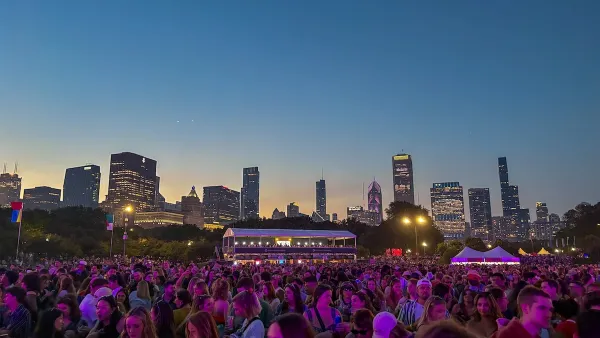
Non-stop party: Chicago voters weigh permanent festival grounds
A stable place for bleachers, stages and drainage may streamline the setup and teardown of large events.
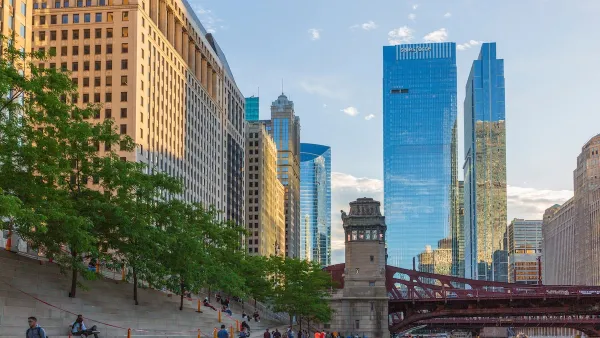
Chicago Avenue bridge construction delays enrages city leaders
The bridge has been closed since 2025. The city originally aimed to re-open it in December, and now expects to finish construction in 2027.

Planetizen Federal Action Tracker
A weekly monitor of how Trump’s orders and actions are impacting planners and planning in America.

California plans to bury El Niño’s downpour
If the state plays its cards right, it may be able to store a billion acre-feet of El Niño’s water in aquifers.

Desperate measures: Advocates weigh draining Lake Powell to fill Colorado River
Draining the reservoir could reduce evaporation losses by a couple hundred thousand acre-feet.

Housing is the top priority of Seattle’s sole new councilmember
Jenks campaigned on building 1,000 new units of affordable housing.

New tax cuts may slash $1.5 billion in funding for Miami transit, public parks
Amendment 3 will save Miami-Dade homeowners $2,700 in 2028.

Arizona, Wisconsin, Pennsylvania hope to finally advance climate goals post-midterms
The three states have spent years under Republican or divided control.

FREE Course: Walkable City 1: Why Walkability?
After describing his path towards focusing on walkability as the essence of good planning, Jeff Speck marches through his five principal reasons for making more walkable places.
Reinventing Malls: Planning Alchemy—Turning Gray Fields Into Gold
The course focuses on the opportunities and imperatives that shape reinvention of mall sites.

City of Rosemead
Rutgers University, Edward J. Bloustein School of Planning and Public Policy
One Hundred Miles
University of Michigan School for Environment and Sustainability (SEAS)
Hunter College, City University of New York (CUNY)
The Architects Foundation
City of Cambridge
Montrose County
The Pocatello Development Authority