The question: "Why are there so many damn banks? Why did we even download this sweet banking app that's supposed to do everything short of pushing cash out of the headset jack?"


Lauren Evans laments the expansion of TD Banks in New York City—with 15 new locations by the end of the year, TD Banks will bring its "Empire" to 126 branches. Just so we're completely clear on Evans's political allegiances, TD Bank is described as an "unstoppable homogenizer of a city once fertile with independent businesses."
Evans argues that many branch services can be replaced by smartphone technology, and that the expansion of TD Bank service branches "involves razing time-honored city treasures to make way for another soulless green edifice…"
An email Chris Giamo, regional president for TD's New York metro area, explaining the benefits of the expansion sparked Evans's ire. Unfortunately the email is not shared in full, but Evans finds Giamo's explanations for the bank's expansion to be lacking a desired apology.
Not mentioned in Evans's analysis of the expansion of TD Banks are data on how many of the new banks are located in one of the state's Banking Development Districts, created to provide incentives for banks to locate branches in low-income neighborhoods. Nor does the article describe the nuances of the ongoing debate about the usefulness of ATMs for under-banked, low-income populations. Nor does the article examine the merits of claims that many banks are spreading branches to the outer boroughs because that's where a large population of under-served immigrant entrepreneurs lives and works.
Read the full story: TD Exec Explains Why NYC Needs So Many TD Banks
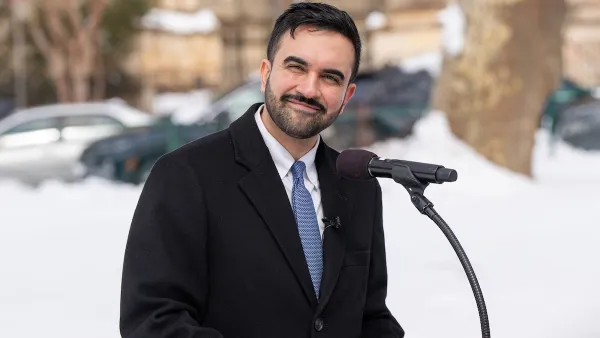
Mamdani’s pied-à-terre tax survives legal challenge
A panel of judges found that the plaintiffs failed to demonstrate injury as a result of New York City's implementation of the tax.
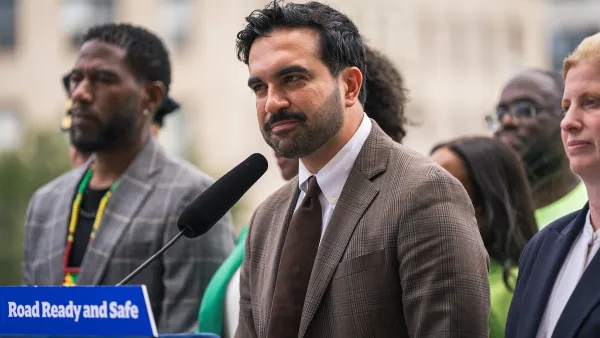
NYC votes to cut outdoor dining red tape, speed up permitting
New York City also voted to allow the Department of Transportation to begin work on urgent projects before notifying elected officials.
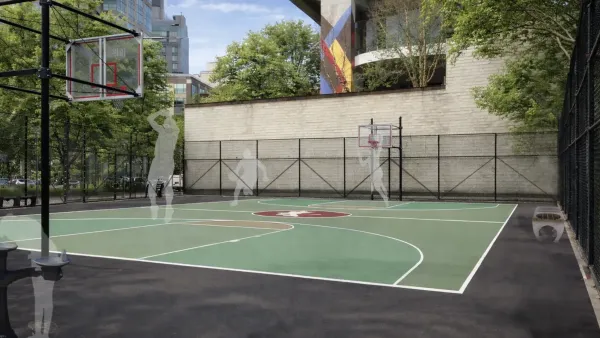
MTA gives itself 30 days to transform pit into basketball court
The site has been under construction since 2022; the city originally estimated it would finish the court in 2024.

Planetizen Federal Action Tracker
A weekly monitor of how Trump’s orders and actions are impacting planners and planning in America.

California plans to bury El Niño’s downpour
If the state plays its cards right, it may be able to store a billion acre-feet of El Niño’s water in aquifers.

Desperate measures: Advocates weigh draining Lake Powell to fill Colorado River
Draining the reservoir could reduce evaporation losses by a couple hundred thousand acre-feet.

Los Angeles just elected an urban planner as its mayor
Transportation analysts are optimistic that Raman will be more aggressive in addressing transit issues than Bass.

Mamdani’s pied-à-terre tax survives legal challenge
A panel of judges found that the plaintiffs failed to demonstrate injury as a result of New York City's implementation of the tax.

Eastern Nebraska is running out of electricity
Data centers and electrification are straining eastern Nebraska’s grid, throttling economic development.

FREE Course: Walkable City 1: Why Walkability?
After describing his path towards focusing on walkability as the essence of good planning, Jeff Speck marches through his five principal reasons for making more walkable places.
Reinventing Malls: Planning Alchemy—Turning Gray Fields Into Gold
The course focuses on the opportunities and imperatives that shape reinvention of mall sites.

City of Rosemead
Rutgers University, Edward J. Bloustein School of Planning and Public Policy
One Hundred Miles
University of Michigan School for Environment and Sustainability (SEAS)
Hunter College, City University of New York (CUNY)
The Architects Foundation
City of Cambridge
Montrose County
The Pocatello Development Authority