As Portland accepts comments for its Comprehensive Plan update, one writer asks why so much of the city's zoning prohibits multi-family housing—especially as the cost of rent has increased by double-digit percentages in the past year.


Michael Andersen starts a recent post examining rising cost of rent in the city of Portland to the all-important number seven—the number of miles people are willing to travel by bike to commute.
Anderson is concerned that as rents rise in Portland (11 percent in the past year), zoning in the city's central core (especially its central seven miles) prevents the type of multi-family housing that benefits most by cycling (and vice versa). According to Anderson: "Here's one factor at play in one of the country's most persistent urban rental shortages: in two-thirds of Portland's central seven miles, it's illegal to build a multi-family building."
The post goes on to examine the different benefits of upzoning—the limited benefit for those living in poverty as compared to, for example, a prospective Portland State student. The question of zoning is especially pertinent given the city's ongoing process to update its Comprehensive Plan.
Read the full story: Maybe this is why you can't afford to rent in the central city

The Fallacy of the Millennial Housing Shortage
A dissenting argument claims that the efforts of "affluent urban pioneers" to increase supply in the most desirable urban areas will do more harm than good.
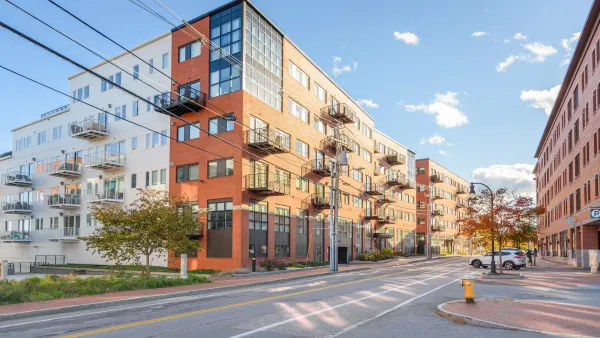
Portland approved a record number of homes last year — but far fewer got built
The bulk of new permits are part of large projects that may never actually get built.
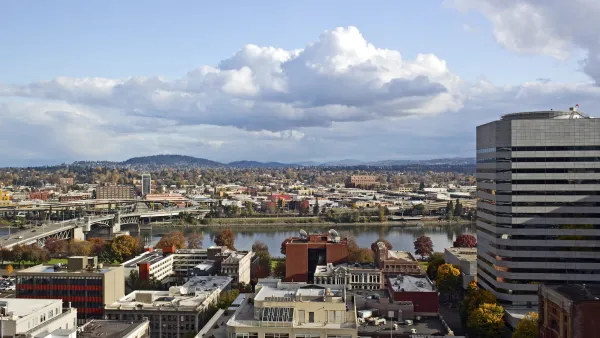
Portland approves expedited permitting for multifamily housing on the Eastside
A city council resolution requires staff to prepare a plan for speeding up rezoning for multifamily projects.

Planetizen Federal Action Tracker
A weekly monitor of how Trump’s orders and actions are impacting planners and planning in America.

Amtrak, CN end decades-long dispute with eight-year agreement
The new operating agreement establishes an updated framework for the companies to work together, including processes to resolve disputes.

Judges permit Denver to divert 77,000 acre feet from the Colorado River for reservoir expansion
Overuse and climate change have caused the Colorado River’s water levels to plummet.

NYC DOT wants faster, more permanent street upgrades
The city is examining ways to build more concrete infrastructure without getting entangled in 'decades-long' projects.

'Something we’ve never seen before:' rising utility rates could strain city finances nationwide
Data centers, climate change and other factors have caused utility rates in the United States to increase by 38% since 2020.

Trump to overrule local leaders, lease millions of acres of America’s Pacific Island territories’ seafloors to mining companies
International law says that the Indigenous people of America’s territories have a right to prior and informed consent regarding projects that impact their countries.

FREE Course: Walkable City 1: Why Walkability?
After describing his path towards focusing on walkability as the essence of good planning, Jeff Speck marches through his five principal reasons for making more walkable places.
Reinventing Malls: Planning Alchemy—Turning Gray Fields Into Gold
The course focuses on the opportunities and imperatives that shape reinvention of mall sites.

Harvard University Graduate School of Design
KFH Group Inc.
Greater Baltimore Committee
The Architects Foundation
University of Cincinnati Online
The Pocatello Development Authority
The Urban Renewal Agency of the City of Pocatello