A decade of subterranean excavations on the Third Water Tunnel, the Second Avenue Subway, and the Long Island Rail Road’s East Side Access Project has provided geologists with unprecedented access to New York City’s physical structure.


Sam Roberts provides a glimpse of the excitement experienced by geologists in recent years as they’ve explored the subterranean levels of New York City. Quoted int he article is Tony Hiss, the author of The Experience of Place, who describes what’s so exciting about New York’s foundation: “New York’s deepest and darkest secret, its oldest and most violent and previously only vaguely glimpsed history is finally coming to light — the schist that formed three-quarters of a billion years ago, when colliding continents compressed an ancient ocean; the even more elusive amphibolite, three times harder than concrete, that’s a slow-cooked remnant of islands as big as Japan off the New York shoreline.”
New York City's geology has also had a marked impact on the country’s most famous real estate market: “The application of that theory illustrates why skyscrapers historically sprouted downtown and in Midtown, but not in between. The bedrock — the formidable Manhattan Schist on which their concrete foundations rest — is closest to the surface in those two areas, though, nowadays, the technology exists to build almost anywhere.”
Read the full story: Geologists Glimpse a Heaven Below
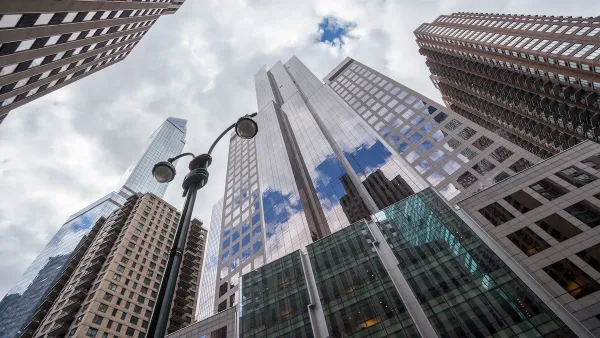
Midtown Manhattan Rezoning Proposal Could Yield Almost 10,000 Housing Units
A plan to alter zoning for parts of Midtown would permit new housing and make it easier to convert office buildings to residential units.
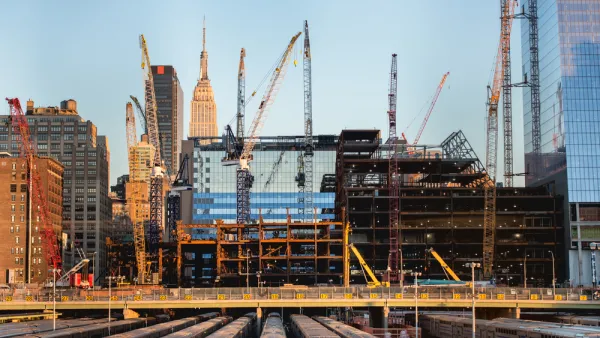
NYC Mayor Adams Proposes Ambitious Housing Agenda in State of the City Address
Housing is one of four “pillars” proposed by Mayor Eric Adams in his “Working People’s Agenda.”
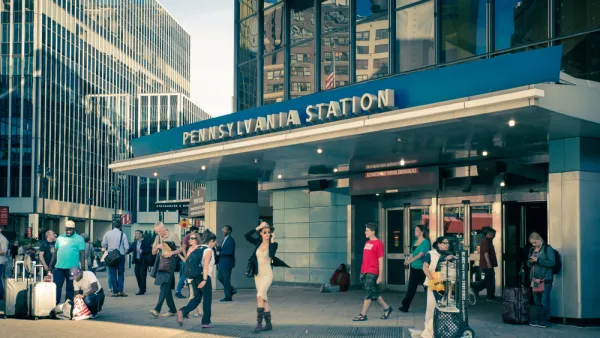
Penn Station Redevelopment Moves Forward
Empire State Redevelopment unanimously voted to support the planned redevelopment of Midtown Manhattan’s much-maligned Penn Station.

Planetizen Federal Action Tracker
A weekly monitor of how Trump’s orders and actions are impacting planners and planning in America.

California plans to bury El Niño’s downpour
If the state plays its cards right, it may be able to store a billion acre-feet of El Niño’s water in aquifers.

Desperate measures: Advocates weigh draining Lake Powell to fill Colorado River
Draining the reservoir could reduce evaporation losses by a couple hundred thousand acre-feet.

Los Angeles just elected an urban planner as its mayor
Transportation analysts are optimistic that Raman will be more aggressive in addressing transit issues than Bass.

Mamdani’s pied-à-terre tax survives legal challenge
A panel of judges found that the plaintiffs failed to demonstrate injury as a result of New York City's implementation of the tax.

Eastern Nebraska is running out of electricity
Data centers and electrification are straining eastern Nebraska’s grid, throttling economic development.

FREE Course: Walkable City 1: Why Walkability?
After describing his path towards focusing on walkability as the essence of good planning, Jeff Speck marches through his five principal reasons for making more walkable places.
Reinventing Malls: Planning Alchemy—Turning Gray Fields Into Gold
The course focuses on the opportunities and imperatives that shape reinvention of mall sites.

City of Rosemead
Rutgers University, Edward J. Bloustein School of Planning and Public Policy
One Hundred Miles
University of Michigan School for Environment and Sustainability (SEAS)
Hunter College, City University of New York (CUNY)
The Architects Foundation
City of Cambridge
Montrose County
The Pocatello Development Authority