During the nightly blackouts designed to protect London from aerial attack during World War II, authorities used white paint as a cheap tool for making the city navigable in the darkness. Could London offer lessons for building resilient cities?


With streets, buildings, and vehicles substantially darkened to hide London from Nazi bombers, authorities had to devise a solution for making the city navigable at night. "A meticulous and detailed re-painting of everyday objects and landmarks was thus launched," recounts Geoff Manaugh, "with everything from curbs to clothing getting rhythmic white bands and stripes added to them for easier detection."
"That this surreal and temporary redesign of the city was motivated by war—or, more specifically, by the terror of avoiding Nazi obliteration from above—should not take away from the possible urban lessons such a remaking of the city might offer us today," he continues. "These are simple design alterations that make the city resilient, safe, and navigable during power cuts, and, in many cases, require nothing more than a patterned coat of paint and some specially designed outerwear."
Read the full story: How London Was Redesigned To Survive Wartime Blackouts

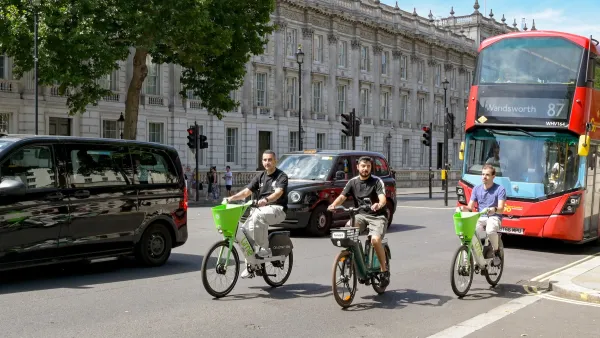
Bike use in London grew by 43% since 2019, but car use remains roughly the same
The city's efforts to reduce car use have stalled despite ambitious programs like congestion pricing and low-traffic neighborhoods.

Beavers save London Tube station from flooding
A small group of beavers is increasing biodiversity and creating cost-free flood mitigation infrastructure.

Can Robotaxis Handle London's Famously Tangled Streets?
Black Cab drivers say autonomous cars won’t be able to handle London’s unique conditions.

Planetizen Federal Action Tracker
A weekly monitor of how Trump’s orders and actions are impacting planners and planning in America.

‘Going backwards:’ Baltimore mayor, students rally against state's transit funding plan
Maryland's proposed six-year plan provides no funding for Baltimore’s BMORE bus program and reduces its road maintenance funding.

Detroit to transform waterfront with $2.2 billion investment
Developers will convert about 18 acres of unused parking lot space into civic spaces.

HUD modernizes 50-year-old manufactured housing framework
The Next Generation Manufactured Housing Action Plan establishes new energy-efficiency standards for manufactured homes, and new guidelines for anchoring them.

New CA housing laws tear down development red tape
Recently-signed legislation makes building starter homes and ADUs cheaper and faster in California.

Metrolink finishes first expansion in 20 years
The transit agency is now one of very few in the United States to connect two major airports.

FREE Course: Walkable City 1: Why Walkability?
After describing his path towards focusing on walkability as the essence of good planning, Jeff Speck marches through his five principal reasons for making more walkable places.
Reinventing Malls: Planning Alchemy—Turning Gray Fields Into Gold
The course focuses on the opportunities and imperatives that shape reinvention of mall sites.

County of Mendocino
planning NEXT
City of Thousand Oaks
The Architects Foundation
University of Cincinnati Online
Montrose County
Northern Illinois Transit Authority (NITA)
The Pocatello Development Authority