As Chicago's population surged in the second decade of the 20th century, one dominant single-family housing type spread across the city. Over the next year the Historic Chicago Bungalow Association will celebrate these distinctive homes.


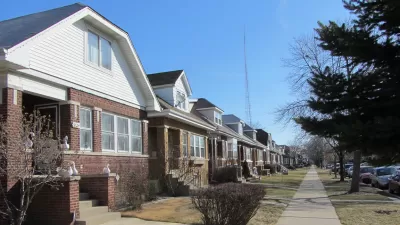
"Other places have their bungalows -- California, Michigan, Milwaukee," observes Robin Amer. "But in Chicago a bungalow has come to mean a single-family home, one-and-a-half stories tall, longer than it is wide, built between 1910 and 1940. It is made of brick -- yellow ochre, russet, deep red, whatever -- usually with stone trim. It has a low-pitched roof with overhanging eaves, a full basement and a front entrance that's set off to the side."
"There are more than 80,000 bungalows in Chicago, making them a critical part of the city's architectural landscape as well as accounting for 'nearly one-third of the city's single-family housing stock,'" adds Amer.
With a series of exhibitions to be held this spring, the Historic Chicago Bungalow Association will celebrate the 100th birthday of the city's ubiquitous housing type.
Read the full story: 100 years of Chicago bungalows

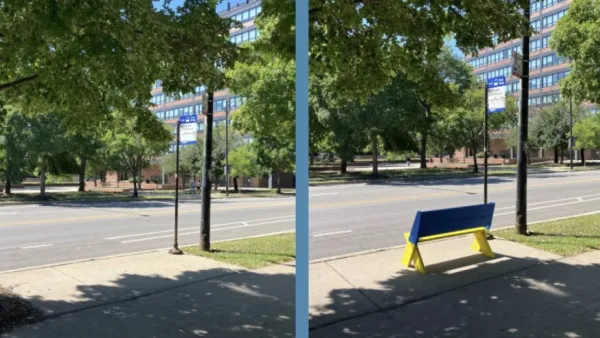
Guerilla urbanists are building DIY bus stop benches in Chicago
The new benches are not officially sanctioned or permitted, but the residents who placed them hope they will be the start of a network of DIY benches across the city.
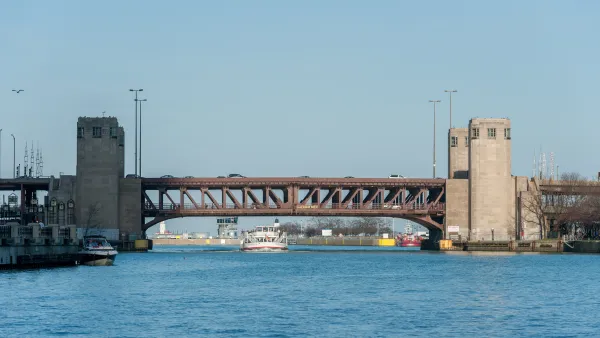
Extreme heat is paralyzing Chicago’s moveable bridges
If moveable bridges are raised during heatwaves, the metal can expand and jam the bridge's mechanisms, preventing it from lowering.
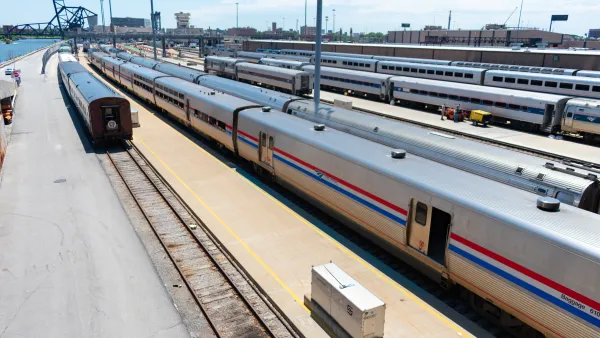
Chicago Amtrak funding makes way for new White Sox stadium
The new funding is the first step in Amtrak vacating its 14th Street rail yard, the future development site of a new baseball stadium.

Planetizen Federal Action Tracker
A weekly monitor of how Trump’s orders and actions are impacting planners and planning in America.

The state-sanctioned urbicide of Austin
People don’t kill cities. Freeways do.

US to reduce Colorado River water deliveries to Mexico
A new Colorado Treaty amendment reduces Mexico’s Colorado River water allocation by 250,000 acre feet.

Nation's most wind-powered state turns to coal as data centers increase energy demand
For the first time in decades, Iowa has increased its generation of coal power.

NYC cools commuters with city's first rain garden above a bus stop
New York City officials say the plants in the rain garden can absorb 16 gallons of rainwater during heavy storms.

Brightline West’s future may rely on $6 billion federal loan
The company has until Nov. 2 to make a $400 million equity investment into its proposed high-speed rail line.

FREE Course: Walkable City 1: Why Walkability?
After describing his path towards focusing on walkability as the essence of good planning, Jeff Speck marches through his five principal reasons for making more walkable places.
Reinventing Malls: Planning Alchemy—Turning Gray Fields Into Gold
The course focuses on the opportunities and imperatives that shape reinvention of mall sites.

Greater Baltimore Committee
Eagle County Government
Harvard University Graduate School of Design
The Architects Foundation
University of Cincinnati Online
The Pocatello Development Authority
The Urban Renewal Agency of the City of Pocatello
Journal of the American Planning Association