A 2005 Federal Railroad Administration rule change that requires engineers to blare their horns at at-grade rail crossings is threatening the quality of life and economic future of communities across the Denver area.


Across the Front Range, blaring train horns mandated by an FRA rule change are "killing sleep and the potential for much-needed economic development," reports Monte Whaley.
"You have rail traffic sounding off at 2 a.m. and 4 a.m. anymore, like clockwork," Loveland Mayor Cecil Gutierrez said. "If we're going to add and increase the density of the housing in the downtown area, which is one of our goals, then how do you deal with that train horn noise in the middle of the night?"
Unfortunately, as much as the railroad might sympathize with the concerns, reducing the noise requires more than simply asking nicely.
"Fort Collins is one of several Front Range communities weighing spending millions of dollars to create 'quiet zones,' where trains could pass safely without disturbing the peace," notes Whaley. "But quieting train noise under Federal Railroad Administration rules requires communities to show that the revised crossings will prevent vehicles from entering while a locomotive is coming through."
The Federal Railroad Administration is scheduled to hold hearings next year to examine relaxing the train horn rules.
Read the full story: Train noise deafening residents, economic development
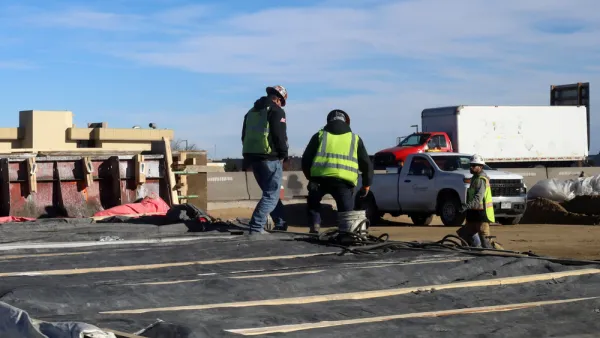
Road and Highway Construction Plan Expected to Take a $250 Million Hit in Colorado
The Colorado Department of Transportation might be building fewer roads than they had originally planned after the coronavirus recedes. A few projects already underway have been able to speed up.
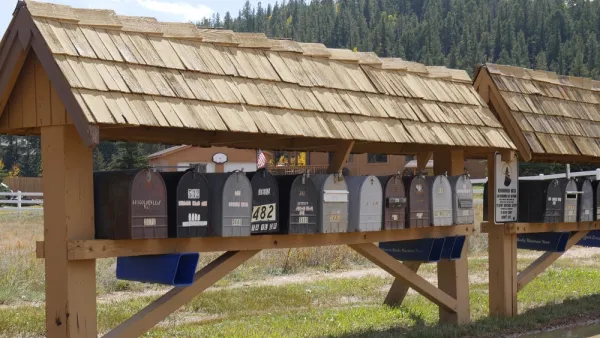
Colorado Tax Mandates Will Continue to Hurt Rural Areas
When home values rise, the state constitution requires cuts to residential tax rates that severely impact less-developed areas.
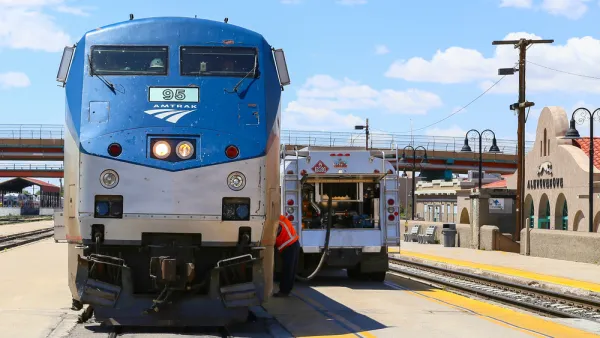
An Amtrak Train Runs Through Them
Efforts to ensure that Amtrak's Southwest Chief continues its current route through three states has united more than 20 small communities in New Mexico, Colorado, and Kansas.

Desperate measures: Advocates weigh draining Lake Powell to fill Colorado River
Draining the reservoir could reduce evaporation losses by a couple hundred thousand acre-feet.

Eastern Nebraska is running out of electricity
Data centers and electrification are straining eastern Nebraska’s grid, throttling economic development.

Malls are becoming the midtowns of the future
Mall and office park redevelopments are a generational opportunity to create new nodes of urbanity.

NYC breaks ground on anti-flooding infrastructure project
New York City's new system will reduce stormwater flows to local sewers by 90%.

One Kentucky town’s secret to affordable housing
The Smoketown Community Land Trust has already built seven affordable homes for community members.

Houston gains petal-shaped cooling infrastructure to make streets more ‘delightful’
The city has installed the pavilions along 15 blocks in Houston.

FREE Course: Walkable City 1: Why Walkability?
After describing his path towards focusing on walkability as the essence of good planning, Jeff Speck marches through his five principal reasons for making more walkable places.
Reinventing Malls: Planning Alchemy—Turning Gray Fields Into Gold
The course focuses on the opportunities and imperatives that shape reinvention of mall sites.

City of Rosemead
Rutgers University, Edward J. Bloustein School of Planning and Public Policy
One Hundred Miles
University of Michigan School for Environment and Sustainability (SEAS)
Hunter College, City University of New York (CUNY)
The Architects Foundation
City of Cambridge
Montrose County
The Pocatello Development Authority