A new report by U.S. PIRG and the Frontier Group gives further credence to, and provides a more complete picture of, America's driving decline.


"In 99 of the nation’s 100 largest regions — the cities and suburbs that are home to more than half the U.S. population — fewer people got to work in a private vehicle in 2010 than in 2000," writes Tanya Snyder. "In the vast majority of those areas, households are shedding cars while more people are getting on the bus and taking up biking."
These are among the key findings of a new report from U.S. PIRG and the Frontier Group that details Americans' changing transportation habits.
Because a paucity of data prevented apples-to-apples comparisons for some categories that the researchers investigated, Snyder argues that "states and cities need to monitor [transportation behavior] far more closely to get a grip on how to set policy."
"More importantly," she adds, "they need to change how they plan and build transportation systems, before they waste too much more money on antiquated infrastructure."
Read the full story: Study: All Across America, Car Commuting Is Dropping

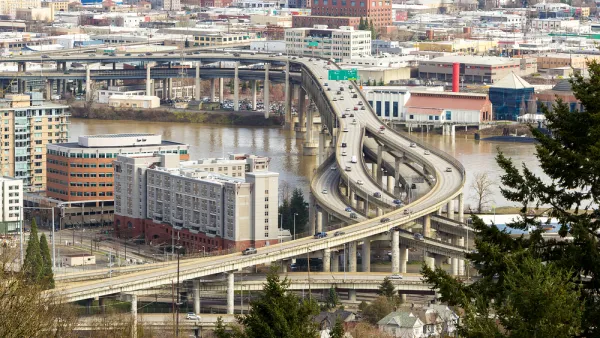
The Biggest Highway Boondoggles in the United States
Frontier Group and U.S. PIRG have released the fifth edition of its Highway Boondoggles report.
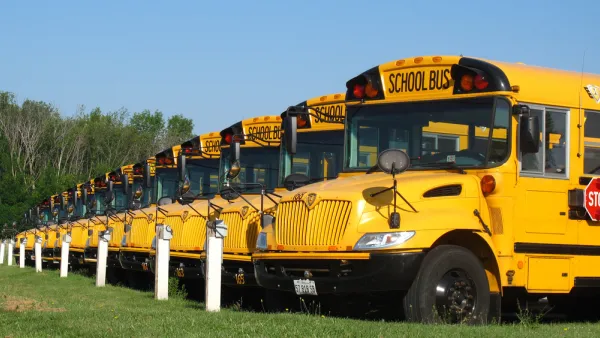
Campaign Launched to Electrify School Buses
U.S. PIRG wants states to use funding from multi-billion dollar Volkswagen settlements to convert the nation's school bus fleet, 95% of which is diesel-powered, to zero-emission buses to reduce children's exposure to toxic air pollution.
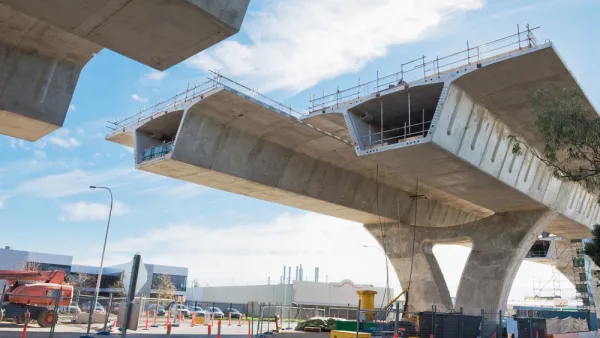
PIRG Releases Third Highway Boondoggles Report
A new report from the U.S. Public Interest Research Group and the Frontier Group indicates that highway boondoggles have been getting bigger, more costly, with the benefits more limited. Nine projects are analyzed in "Highway Boondoggles 3."

Planetizen Federal Action Tracker
A weekly monitor of how Trump’s orders and actions are impacting planners and planning in America.

California plans to bury El Niño’s downpour
If the state plays its cards right, it may be able to store a billion acre-feet of El Niño’s water in aquifers.

Chicago breaks ground on $3 billion megadevelopment
The new neighborhood, titled Foundry Park, will one day host 3,700 residences.

One of Denver’s busiest corridors to gain BRT
The project will span 18 miles and contain 74 bus rapid transit stations.

275,000 bus trips are at stake on Seattle's ballot
If passed, the Seattle Transit Measure would trigger a 0.3% sales tax and raise an average of $138 million per year to maintain and expand Seattle’s bus services.

Texas may pay Israeli company billions to ease water woes
Texas awarded IDE Technologies the contract for its Harbor Island project, which is slated to become the Western Hemisphere's largest desalination plant.

FREE Course: Walkable City 1: Why Walkability?
After describing his path towards focusing on walkability as the essence of good planning, Jeff Speck marches through his five principal reasons for making more walkable places.
Reinventing Malls: Planning Alchemy—Turning Gray Fields Into Gold
The course focuses on the opportunities and imperatives that shape reinvention of mall sites.

City of Rosemead
Rutgers University, Edward J. Bloustein School of Planning and Public Policy
One Hundred Miles
Hunter College, City University of New York (CUNY)
The Architects Foundation
University of Cincinnati Online
City of Cambridge
Montrose County
The Pocatello Development Authority