Declining demand for zoning-mandated underground condominium parking has Toronto developers and architects talking about ways to design flexible sub-surface spaces to accommodate the possibility of alternate future uses.


“Gridlock has become so crippling — and the cost of keeping a car in the city so crazy — that developers are increasingly finding the lowly parking spot not only a tough sell, but an undesirable amenity, in many urban condo projects,” writes Susan Pigg.
“That’s why [architect Leslie] Klein has started urging some developers, with projects still in the planning stages, to consider adding light and height to each parking level, beyond the two-metre height minimum required by city planners.”
“’Down the road, empty space could be converted to, say, meeting and storage facilities or even…light manufacturing space or artists’ studios,'” says Klein.
Read the full story: COST OF GRIDLOCK: Is that condo parking spot becoming an albatross?

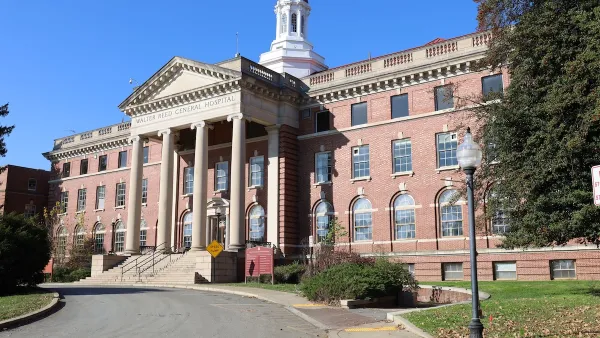
Former DC Army Garage Gets New Life
The fortress-like underground structure posed unique challenges to engineers redeveloping a former U.S. Army complex.
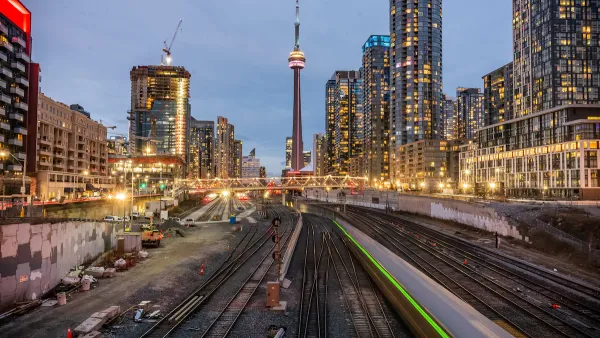
Toronto to Explore Potential High Line-Style Park
City staff will study options for transforming a defunct rail corridor into a linear park.
Adapting the Curb for Adaptive Reuse
The rise in conversions of office buildings to housing and other uses raises questions about curb management and parking.

Planetizen Federal Action Tracker
A weekly monitor of how Trump’s orders and actions are impacting planners and planning in America.

Amtrak, CN end decades-long dispute with eight-year agreement
The new operating agreement establishes an updated framework for the companies to work together, including processes to resolve disputes.

Judges permit Denver to divert 77,000 acre feet from the Colorado River for reservoir expansion
Overuse and climate change have caused the Colorado River’s water levels to plummet.

NYC DOT wants faster, more permanent street upgrades
The city is examining ways to build more concrete infrastructure without getting entangled in 'decades-long' projects.

'Something we’ve never seen before:' rising utility rates could strain city finances nationwide
Data centers, climate change and other factors have caused utility rates in the United States to increase by 38% since 2020.

Trump to overrule local leaders, lease millions of acres of America’s Pacific Island territories’ seafloors to mining companies
International law says that the Indigenous people of America’s territories have a right to prior and informed consent regarding projects that impact their countries.

FREE Course: Walkable City 1: Why Walkability?
After describing his path towards focusing on walkability as the essence of good planning, Jeff Speck marches through his five principal reasons for making more walkable places.
Reinventing Malls: Planning Alchemy—Turning Gray Fields Into Gold
The course focuses on the opportunities and imperatives that shape reinvention of mall sites.

Harvard University Graduate School of Design
KFH Group Inc.
Greater Baltimore Committee
The Architects Foundation
University of Cincinnati Online
The Pocatello Development Authority
The Urban Renewal Agency of the City of Pocatello