Creating a culture of transit in Los Angeles will require more than just expanding the area's train and bus infrastructure. New riders will have to overcome the psychological barriers that prevent many people from ditching their cars.


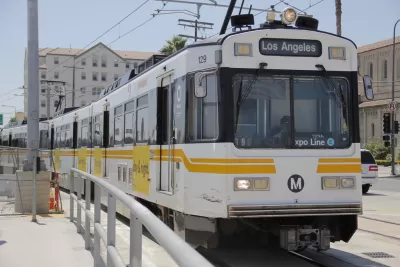
D. J. Waldie looks at L.A.'s efforts to evolve its land use and transportation patterns in light of a new study by Steven Spears, a doctoral candidate at UC Irvine, that shows "fear, class, race, and even shame color the decision to get out of the driver's seat and into a seat on a bus, train, or subway."
Spears's work and other research indicate that "[e]ven if public transit is the best choice, some (many?) potential riders still won't ever ride," notes Waldie. "That will have unfortunate consequences for developers and urban planners who assume, it seems to me, that if you build dense neighborhoods in Los Angeles, then more transit will come, and when it does, people logically will choose to ride it rather than drive."
Read the full story: Race, Class, Fear, and Shame: Transit Barriers

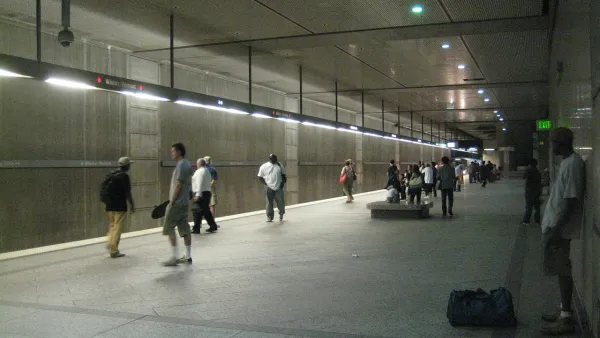
Los Angeles' Metro Launches New Phase in Effort to Curb Sexual Harassment
After first launching its program in the Spring, law enforcement and Metro are reminding riders to report instances of sexual harassment on trains and buses
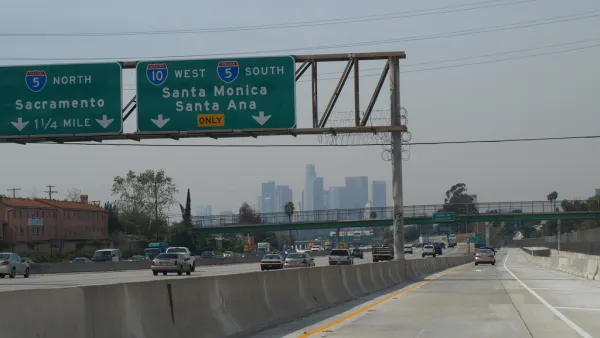
Next Steps for the City of Freeways
It is difficult to imagine a time when Los Angeles' freeways symbolized access, efficiency, and modernity. Now that the city's love affair with freeways is nearly spent, what future do we envision for them?
Poor Suburbs Struggle with Job Sprawl
Although unemployment has declined, according to this report commutes are getting longer. "Job sprawl" often plagues minority and poor areas where housing is more affordable.

Planetizen Federal Action Tracker
A weekly monitor of how Trump’s orders and actions are impacting planners and planning in America.

Amtrak, CN end decades-long dispute with eight-year agreement
The new operating agreement establishes an updated framework for the companies to work together, including processes to resolve disputes.

Judges permit Denver to divert 77,000 acre feet from the Colorado River for reservoir expansion
Overuse and climate change have caused the Colorado River’s water levels to plummet.

NYC DOT wants faster, more permanent street upgrades
The city is examining ways to build more concrete infrastructure without getting entangled in 'decades-long' projects.

'Something we’ve never seen before:' rising utility rates could strain city finances nationwide
Data centers, climate change and other factors have caused utility rates in the United States to increase by 38% since 2020.

Trump to overrule local leaders, lease millions of acres of America’s Pacific Island territories’ seafloors to mining companies
International law says that the Indigenous people of America’s territories have a right to prior and informed consent regarding projects that impact their countries.

FREE Course: Walkable City 1: Why Walkability?
After describing his path towards focusing on walkability as the essence of good planning, Jeff Speck marches through his five principal reasons for making more walkable places.
Reinventing Malls: Planning Alchemy—Turning Gray Fields Into Gold
The course focuses on the opportunities and imperatives that shape reinvention of mall sites.

Harvard University Graduate School of Design
KFH Group Inc.
Greater Baltimore Committee
The Architects Foundation
University of Cincinnati Online
The Pocatello Development Authority
The Urban Renewal Agency of the City of Pocatello