A fleet of 100 self-driving pod cars are set to appear on the streets of the English town of Milton Keynes by 2015.


"Driverless cars which are controlled by a smartphone app are being launched in England for the first time," reports Chris Pleasance. "While the vehicles will initially be given a separate lane from pedestrains, government ministers are so impressed by the technology that the lanes will eventually be removed."
According to Pleasance, the pods will operate between the city's main train station and its commercial heart a mile away. A trip is expected to cost £2.
"David Willetts, the minster for higher education at the business department, is backing the scheme after trying a Google driverless car is California last year," adds Pleasance. "He has labelled that scheme a 'science fiction future' and thinks that people will come to view conventional cars as a huge waste of time."
Read the full story: Welcome to our 'science fiction future'


Friday Funny: Squirrelly Passenger Causes UK Train Cancellation
Planetizen’s Friday Funny stories are often satirical, but this nutty story from Reuters is 100 percent genuine.
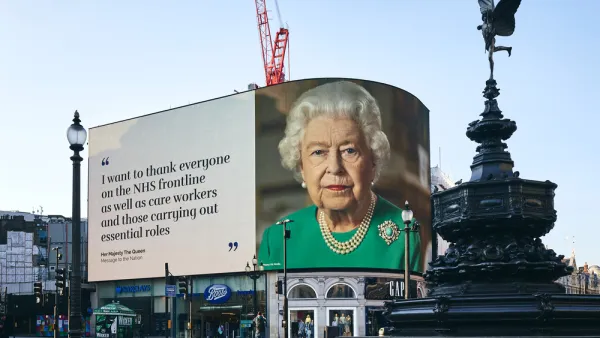
England Begins Second Lockdown to Protect the National Health Service
The day after Election Day in America, the U.K. Parliament voted overwhelmingly to impose a 4-week lockdown in England to ensure that nation's prized healthcare system doesn't collapse due to treating mounting coronavirus infections.
Economic Stimulus in England: Speed Up Planning Approvals
To help jumpstart the economy in England, the country is taking the bureaucracy out of the planning process.

Planetizen Federal Action Tracker
A weekly monitor of how Trump’s orders and actions are impacting planners and planning in America.

Amtrak, CN end decades-long dispute with eight-year agreement
The new operating agreement establishes an updated framework for the companies to work together, including processes to resolve disputes.

Judges permit Denver to divert 77,000 acre feet from the Colorado River for reservoir expansion
Overuse and climate change have caused the Colorado River’s water levels to plummet.

Northwest rail fans eager for Sept. 30 debut of Amtrak’s Airo fleet
Get ready for that new train smell and more seats. But they won’t go faster or run more frequently on the Cascades route in Washington and Oregon.

NYC DOT wants faster, more permanent street upgrades
The city is examining ways to build more concrete infrastructure without getting entangled in 'decades-long' projects.

'Something we’ve never seen before:' rising utility rates could strain city finances nationwide
Data centers, climate change and other factors have caused utility rates in the United States to increase by 38% since 2020.

FREE Course: Walkable City 1: Why Walkability?
After describing his path towards focusing on walkability as the essence of good planning, Jeff Speck marches through his five principal reasons for making more walkable places.
Reinventing Malls: Planning Alchemy—Turning Gray Fields Into Gold
The course focuses on the opportunities and imperatives that shape reinvention of mall sites.

Harvard University Graduate School of Design
KFH Group Inc.
Greater Baltimore Committee
The Architects Foundation
University of Cincinnati Online
The Pocatello Development Authority
The Urban Renewal Agency of the City of Pocatello