Regulations and a natural gas boom have helped reduce America's CO2 emissions to their lowest level since 1994. But CO2, and plenty of other toxic particles, continue to pollute our urban air. Brentin Mock looks at 5 highly polluted urban areas.



"It’s not news that large polluting factories are often concentrated in communities where people of color and of low-income are the primary, if not the exclusive inhabitants. But an EPA report released last week drives this point home. The report, which documents greenhouse gas emissions from large facilities in 2012, is accompanied by interactive maps showing where those facilities are located (at least the ones that actually report to the EPA)."
"Looking at those maps, I located five of the nation’s worst areas where waste processing plants, refineries, and power plants are bundled — much to the detriment of families living close by," writes Mock.
Read the full story: 5 highly polluted urban areas you don’t want to live if you can help it

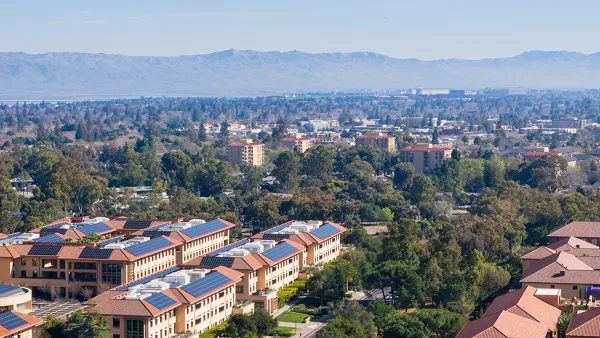
Clean Energy's Impact on Public Health
Because of the coal power it displaces, solar and wind energy generated in the Mid-Atlantic, and Upper Midwest has an outsized impact.

EPA to kill law requiring states to inform the public about new data centers
Over 200 advocacy groups and a dozen states have voiced opposition to this change.
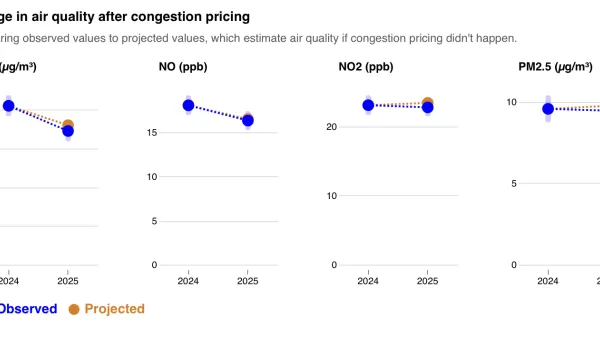
First study of NYC congestion zone’s air quality impact shows improvements
The study also examined air quality around freeways which experts worried would see increased traffic from people avoiding the tolls.

Planetizen Federal Action Tracker
A weekly monitor of how Trump’s orders and actions are impacting planners and planning in America.

‘Going backwards:’ Baltimore mayor, students rally against state's transit funding plan
Maryland's proposed six-year plan provides no funding for Baltimore’s BMORE bus program and reduces its road maintenance funding.

Detroit to transform waterfront with $2.2 billion investment
Developers will convert about 18 acres of unused parking lot space into civic spaces.

25 states, cities sue the EPA over erased power plant emissions limits
The coalition also intends to sue the EPA for not regulating emissions from gas-fired power plants.

Newsom vetoes giving CA tribes greater voice in water projects
In his veto letter, Newsom said the bill would add ‘uncertainty’ to the state’s fight to secure Californians’ water supplies.

Michigan Senate votes to revise 'lax' dam safety laws
A Bridge Michigan investigation found more than 100,000 Michigan residents live in the floodpath of a high or significant-hazard dam.

FREE Course: Walkable City 1: Why Walkability?
After describing his path towards focusing on walkability as the essence of good planning, Jeff Speck marches through his five principal reasons for making more walkable places.
Reinventing Malls: Planning Alchemy—Turning Gray Fields Into Gold
The course focuses on the opportunities and imperatives that shape reinvention of mall sites.

City of Thousand Oaks
City of Wisconsin Rapids
Harvard University Graduate School of Design
The Architects Foundation
University of Cincinnati Online
Northern Illinois Transit Authority (NITA)
The Pocatello Development Authority
The Urban Renewal Agency of the City of Pocatello