For the tenth time in eleven years, Amtrak hit another historic high in ridership in FY 2013. While overall ridership was up one percent, revenues were up more than 4 percent.


Alex Goldmark dives into Amtrak's recently released ridership and revenue numbers for the fiscal year that ended September 30th. Though Hurricane Sandy disrupted operations along the busy Northeast Corridor, company-wide ridership was up one percent to 31.6 million passengers.
A closer look at the line-by-line numbers shows that "Amtrak seems to be operating leaner and more prosperously," says Goldmark. "On just about every route that saw an increase in ridership, the revenues were up more than the ridership, and where ridership fell, revenues fell less than the passenger counts did. That is to say, Amtrak is taking in more money off each passenger trip than in the past. "
Read the full story: Amtrak Ridership and Revenues Both Up, Despite Sandy Damage
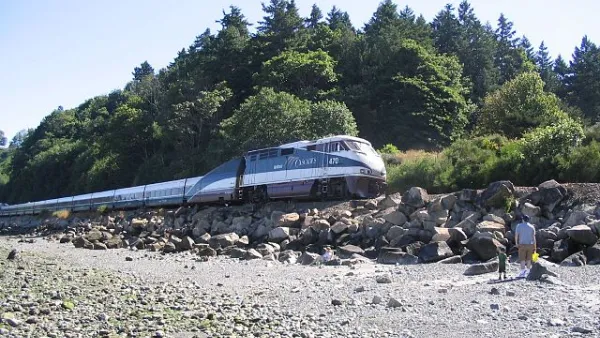
Revised Amtrak Mandate Could Allow for 'Paradigm-Shifting' Changes
Language in the new infrastructure bill calls for the agency to prioritize ridership and service levels over profitability.
Amtrak expands $10 'Night Owl Fares' on Northeast Corridor
Passengers can buy $10-30 tickets for overnight trips between all Northeast Corridor destinations.
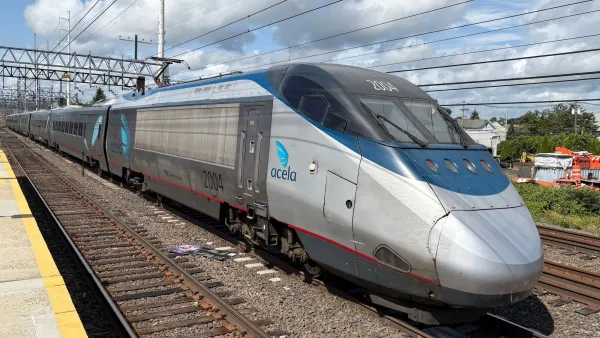
Amtrak cancels over a dozen trains due to extreme heat
The eastern side of the country faces a scorching holiday heat wave.

Planetizen Federal Action Tracker
A weekly monitor of how Trump’s orders and actions are impacting planners and planning in America.

Washington state to charge fee to drivers with fuel-efficient cars
Revenue from the fee will go towards supporting the state’s highways.

Illinois considers spending $1 billion in taxpayer money on data center
A quantum computing campus and data center are currently under construction in Chicago.

People Mover delayed again, LAX and contractor trade barbs
The automated train was last slated to open in January 2027.

Trump to blast ‘hydrocarbon highway’ through ‘world’s longest art gallery’
Environmental and historic preservation groups are suing to stop the project.

25 states cast bids to be the home of U.S. Space Academy
The academy will train scientists, officers and astronauts for the U.S. Space Force.

FREE Course: Walkable City 1: Why Walkability?
After describing his path towards focusing on walkability as the essence of good planning, Jeff Speck marches through his five principal reasons for making more walkable places.
Reinventing Malls: Planning Alchemy—Turning Gray Fields Into Gold
The course focuses on the opportunities and imperatives that shape reinvention of mall sites.

City of Charlotte
City of Rosemead
Rutgers University, Edward J. Bloustein School of Planning and Public Policy
University of Michigan School for Environment and Sustainability (SEAS)
Hunter College, City University of New York (CUNY)
The Architects Foundation
University District Partnership