Far from applying the government's policy of brownfield first, the number of new houses planned for greenfield sites has doubled since reform of the planning system in England reduced protection for greenbelt land.


A report published the Campaign to Protect Rural England (CPRE) has identified that 150,000 houses are to be built on protected greenbelt land across England. This represents an increase of 84% on the previous year. The CRPE estimates that the brownfield* land currently available would accommodate 1.5 million new houses. The CPRE is concerned that changes to planning laws relating to greenbelt land have diminished its protection with the inclusion of a clause claiming the “presumption in favour of sustainable development”.
The CPRE is concerned that the 12.4% of England with this designation will be further eroded by the proposed High Speed 2 train line, new stations and necessary infrastructure, and the 1,000 acres to be used for warehouse and office developments, and mines.
In the article, Robert Watts highlights the scale of the loss of countryside around the Yorkshire cities of Leeds, York and Calderdale to "46,000 dwellings and 607 acres of warehouses". Further large scale developments are planned around Birmingham, Bristol, Bath, Cheltenham, Gloucester, Epping Forest and Oxted. This accompanies larger tracts of land in the Midlands, such as Broxtow near Nottingham, Sheffield, Leeds, York, Manchester, Birmingham and Ruislip in north-west London, earmarked for HS2.
Despite the minister for planning in England, Nick Boles, suggesting "that the large increase in Britain’s population has made modest building on these areas unavoidable" concern has been voiced by leading ministers and the conservative back benches. Twenty MPs have joined an All-Party Parliamentary Group established last month aimed at contesting green belt development. However, with some councils redefining their greenbelt boundaries this will be a challenging task.
Chief executive of the CPRE, Shaun Spiers, stated that with the planning minister and chancellor sending "out signals that [this land] is up for grabs and that the need for growth trumps all other considerations" it was becoming increasingly difficult to challenge greenbelt development proposals, and has called on the Prime Minister David Cameron to "sort this out".
* The definition of brownfield land in England is much broader than in other countries and does not necessarily refer to heavily polluted sites. The UK Government defines brownfield land as "previously developed land which is or was occupied by a permanent structure, including the curtilage of the developed land and any associated fixed surface infrastructure."
Read the full story: Green-belt housing doubles in a year

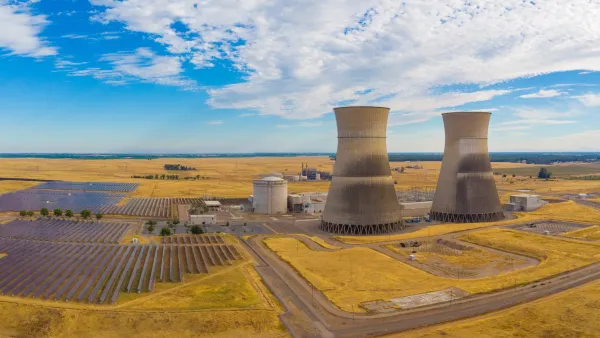
What data center host communities can learn from former nuclear hubs
The sometimes painful process of decommissioning former nuclear facilities offers useful lessons for communities planning to host data centers.
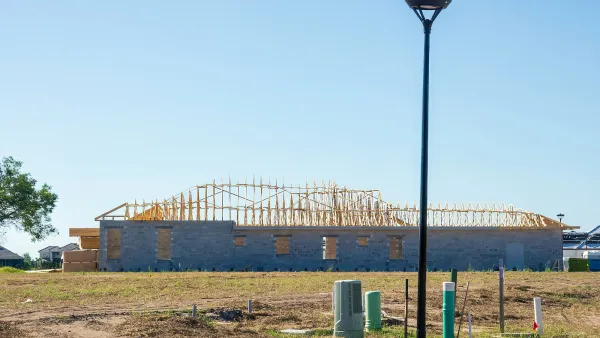
Florida Legislature Passes Bill to Encourage Infill Housing on Brownfields
If signed by the state’s governor, the bill would require cities to allow housing development on lots over 5 acres.

Transforming Brownfields into a Regional Destination: The Rise of Origin Park
River Heritage Conservancy is transforming more than 400 acres of former junkyards, brownfields, and landfills in Southern Indiana into Origin Park, a nature and recreation destination that will honor the site’s history.

Planetizen Federal Action Tracker
A weekly monitor of how Trump’s orders and actions are impacting planners and planning in America.

Amtrak, CN end decades-long dispute with eight-year agreement
The new operating agreement establishes an updated framework for the companies to work together, including processes to resolve disputes.
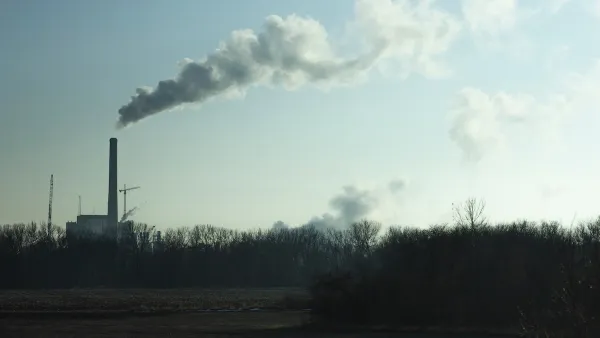
Nation's most wind-powered state turns to coal as data centers increase energy demand
For the first time in decades, Iowa has increased its generation of coal power.

Alabama scores up to $2.5 billion federal loan for largest infrastructure project in state’s history
The Mobile River Bridge and Bayway Project aims to ease congestion at Alabama’s worst bottleneck.

Trump is considering data centers on 6 states' public land — some state officials say they had no idea
If the administration approves the proposed projects, data center and data center-related developments will cover 17,600 acres of public land.

Despite court ruling, Trump is keeping nearly all wind projects in the US on hold
At least 110 wind energy projects have not heard from the government since a federal judge ruled that the Trump administration's freeze on wind turbine clearances was likely illegal.

FREE Course: Walkable City 1: Why Walkability?
After describing his path towards focusing on walkability as the essence of good planning, Jeff Speck marches through his five principal reasons for making more walkable places.
Reinventing Malls: Planning Alchemy—Turning Gray Fields Into Gold
The course focuses on the opportunities and imperatives that shape reinvention of mall sites.

KFH Group Inc.
Greater Baltimore Committee
Eagle County Government
The Architects Foundation
University of Cincinnati Online
The Pocatello Development Authority
The Urban Renewal Agency of the City of Pocatello