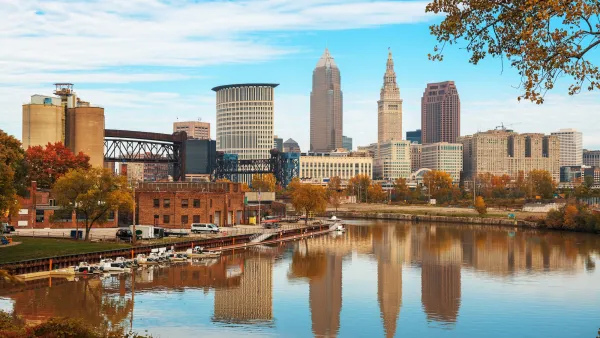
More people live in downtown Cleveland now than at any time in the past 60 years. Yet this revival didn't happen easily, and it wasn't the result of a giant 'silver bullet' project. Sophie Quinton explains how one family contributed to the revival.


"The success of East Fourth Street in once-struggling Cleveland was something few people would have anticipated 20 years ago. It took years of collaboration between developers, businesses, local institutions, and government, but today downtown Cleveland is taking off—and giving the old Rust Belt city a future," writes Quinton. "There wasn't a market for urban living in Cleveland until developers like the Marons built places where young professionals would want to be."
"'Back in the '70s and '80s when we were trying to save our cities, they were constantly coming out with silver bullets,' says Christopher B. Leinberger, a real-estate developer-turned-research-professor at the George Washington University School of Business. But attracting a flashy new stadium or new convention center is only one piece of the puzzle. Those projects—both of which Cleveland has pursued—didn't do for shrinking cities in the 1970s and 80s, when professionals were fleeing to the suburbs en masse. East Fourth Street was the right project at the right time."
Read the full story: How One Family Made Cleveland (Yes, Cleveland) Cool

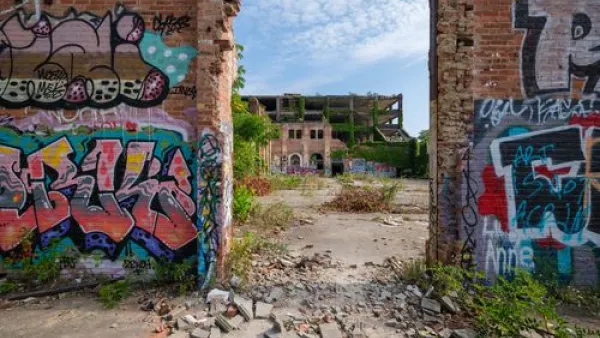
Cleveland is turning abandoned real estate into ‘housing innovation district,’ jobs
The city’s housing innovation district will bring pro-housing policies to disinvested neighborhoods.
Cleveland program has housed 200 people since 2024
The A Home For Every Neighbor initiative successfully moves people into housing in under two weeks.
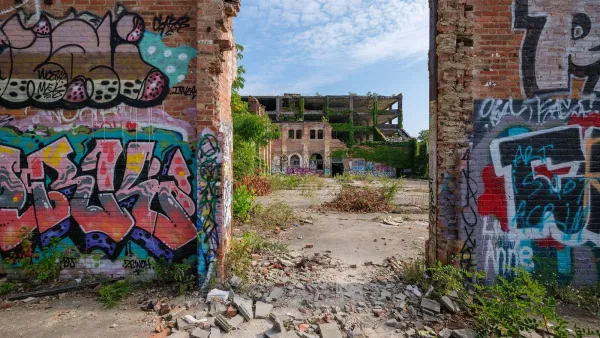
Cleveland announces new Midline industrial investment district
The plan calls for at least 1.5 million square feet of new industrial and commercial space alongside housing.

Planetizen Federal Action Tracker
A weekly monitor of how Trump’s orders and actions are impacting planners and planning in America.

The state-sanctioned urbicide of Austin
People don’t kill cities. Freeways do.

US to reduce Colorado River water deliveries to Mexico
A new Colorado Treaty amendment reduces Mexico’s Colorado River water allocation by 250,000 acre feet.

Nation's most wind-powered state turns to coal as data centers increase energy demand
For the first time in decades, Iowa has increased its generation of coal power.

NYC cools commuters with city's first rain garden above a bus stop
New York City officials say the plants in the rain garden can absorb 16 gallons of rainwater during heavy storms.

Brightline West’s future may rely on $6 billion federal loan
The company has until Nov. 2 to make a $400 million equity investment into its proposed high-speed rail line.

FREE Course: Walkable City 1: Why Walkability?
After describing his path towards focusing on walkability as the essence of good planning, Jeff Speck marches through his five principal reasons for making more walkable places.
Reinventing Malls: Planning Alchemy—Turning Gray Fields Into Gold
The course focuses on the opportunities and imperatives that shape reinvention of mall sites.

Greater Baltimore Committee
Eagle County Government
Harvard University Graduate School of Design
The Architects Foundation
University of Cincinnati Online
The Pocatello Development Authority
The Urban Renewal Agency of the City of Pocatello
Journal of the American Planning Association