The architectural image is the currency of contemporary architecture. It's the means by which projects are envisioned, sold, and judged. But is the quest for the perfect image harming Architecture?


"The idea of the perfect architectural image is not only propagated by professors who prioritize the rendering over its practical implications (causing students to spend hours perfecting visuals instead of perfecting the design), but also by the architecture media (and yes, we include ourselves in that category)," observes Vanessa Quirk. "Architecture media presents a flood of glossy shots that 'sell' an idealized architecture to the public and, frankly, architects themselves."
"In an age in which the rendering (and the architecture media in general) has already set expectations far higher than reality could achieve, is the realistic rendering (forgive the pun) rendered useless? Could a stylized rendering actually be bad for the project, and bad for architecture in general?"
"Should we attempt to present architecture as realistically as possible, in both images and renderings, in order to eliminate unrealistic expectations (for clients and ourselves)?"
Read the full story: Are Renderings Bad for Architecture?

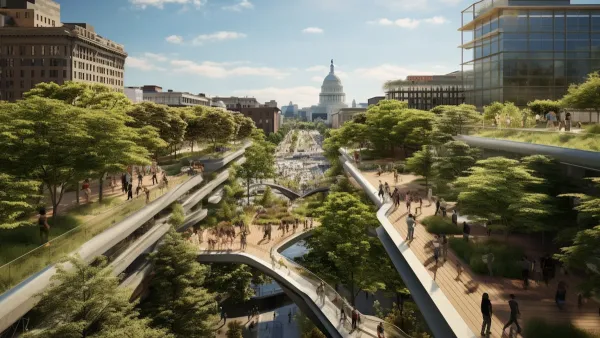
Friday Eye Candy: AI Envisions Solutions to the Challenges Facing Cities
Phoenix reimagined for shade. Los Angeles as a place where everybody walks. San Francisco with affordable housing. AI makes a vision of the future possible.

Friday Eye Candy: 20 AI-Generated Cityscapes
AI-generated images are creating new landscapes and cityscapes, capable of inspiring awe or fear.
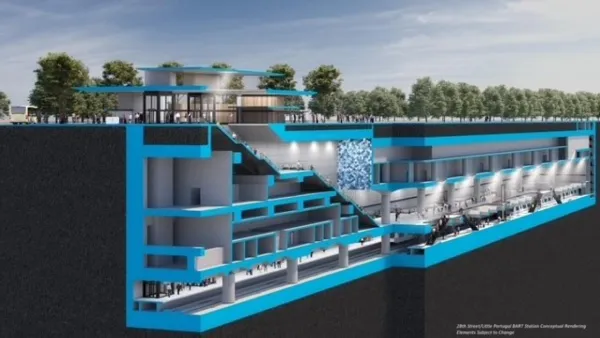
Social Media Critics Roast Plans for Downtown San Jose BART Station
Critics panned new renderings for the 28th Street/Little Portugal station on the planned BART extension into San Jose.

Planetizen Federal Action Tracker
A weekly monitor of how Trump’s orders and actions are impacting planners and planning in America.

Amtrak, CN end decades-long dispute with eight-year agreement
The new operating agreement establishes an updated framework for the companies to work together, including processes to resolve disputes.

Judges permit Denver to divert 77,000 acre feet from the Colorado River for reservoir expansion
Overuse and climate change have caused the Colorado River’s water levels to plummet.

Idaho may see an 18% drop in federal surface transit funding — the largest estimated cut in the US
Transit systems in rural communities are much more reliant on federal funding to provide their services.

How ‘post-disaster gentrification’ alters neighborhoods after natural calamities
After hurricanes, fires or other calamities, the original residents of a community are often replaced by younger, wealthier residents.

Maryland local governments examine if they should have more power to raise property taxes
Maryland’s housing market is out of reach for the majority of moderate-income residents.

FREE Course: Walkable City 1: Why Walkability?
After describing his path towards focusing on walkability as the essence of good planning, Jeff Speck marches through his five principal reasons for making more walkable places.
Reinventing Malls: Planning Alchemy—Turning Gray Fields Into Gold
The course focuses on the opportunities and imperatives that shape reinvention of mall sites.

Harvard University Graduate School of Design
KFH Group Inc.
Greater Baltimore Committee
The Architects Foundation
University of Cincinnati Online
The Pocatello Development Authority
The Urban Renewal Agency of the City of Pocatello