"Minimize description and maximize observation" were among the nuggets of advice delivered by Pulitzer Prize-winning critic Blair Kamin to a recent class of Harvard students eager to learn how to think and write like an activist critic.


"Blair Kamin, the Pulitzer Prize-winning architecture critic for the Chicago Tribune and a current Nieman Fellow, once described architecture—for better or worse—as the 'inescapable art,'" writes Dina Kraft. "One can avoid the play, film or restaurant a critic just trashed, he argued, but not our built surroundings."
"And at Harvard nothing is as architecturally present as the iconic gates that surround the Yard. Kamin calls them 'the architectural DNA' of the university. With "Rate the Gates," a one-week course that he co-taught at Harvard this past January, his aim was to instruct students how to think and write like a critic," explains Kraft.
"In the Internet age, everybody, it would seem, is a critic because everyone has the capacity to express an opinion and post it on the Web, via a comment box or a blog. This shift presents a challenge to traditional critics from the pre-digital age. Why should their voice count more than other voices? Are they out-of-touch elitists? How should they assert authority?" asked Kamin.
Read the full story: Minimize Description, Maximize Observation

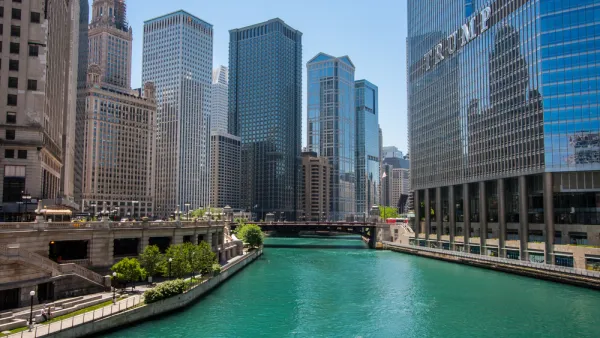
Chicago Tribune Editorial Board Calls for Removal of the Trump Sign
“A deal’s a deal,” wrote the former president of the sign in 2014. The same former president has since called for the “termination of all rules, regulations, and articles, even those found in the Constitution.”

Chicago's Esteemed Architecture Critic, Blair Kamin, Moves On
One of two architecture critics working at major daily newspapers to receive the Pulitzer Prize for Criticism, Blair Kamin announced his retirement last week via Twitter.
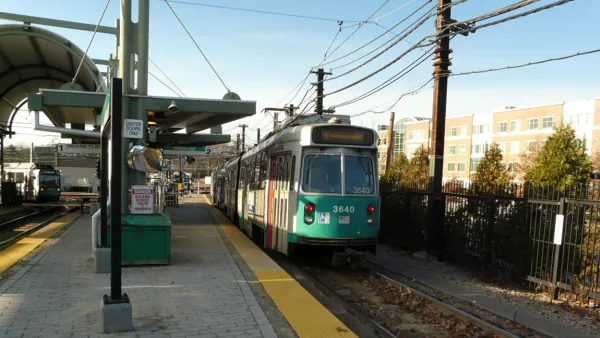
Op-Ed: Postponing Transit in Allston Will Cost Boston
As the state plans a major renovation to the Massachusetts Turnpike, whether an Allston transit hub is built or delayed may determine how effectively the surrounding neighborhood develops.

Planetizen Federal Action Tracker
A weekly monitor of how Trump’s orders and actions are impacting planners and planning in America.

Amtrak, CN end decades-long dispute with eight-year agreement
The new operating agreement establishes an updated framework for the companies to work together, including processes to resolve disputes.

Judges permit Denver to divert 77,000 acre feet from the Colorado River for reservoir expansion
Overuse and climate change have caused the Colorado River’s water levels to plummet.

Boston has spent millions making the Green Line more accessible — and there’s no end in sight
While the city has invested millions into expanding and adding platforms to the Green Line to make it more accessible, new train cars set to arrive next year will be too tall for disabled passengers to board without raising the current platforms.

Idaho may see an 18% drop in federal surface transit funding — the largest estimated cut in the US
Transit systems in rural communities are much more reliant on federal funding to provide their services.

How ‘post-disaster gentrification’ alters neighborhoods after natural calamities
After hurricanes, fires or other calamities, the original residents of a community are often replaced by younger, wealthier residents.

FREE Course: Walkable City 1: Why Walkability?
After describing his path towards focusing on walkability as the essence of good planning, Jeff Speck marches through his five principal reasons for making more walkable places.
Reinventing Malls: Planning Alchemy—Turning Gray Fields Into Gold
The course focuses on the opportunities and imperatives that shape reinvention of mall sites.

Harvard University Graduate School of Design
KFH Group Inc.
Greater Baltimore Committee
The Architects Foundation
University of Cincinnati Online
The Pocatello Development Authority
The Urban Renewal Agency of the City of Pocatello