Experts say the switch to renewables has more to do with political will and market forces than available technologies.


As it stands, New York state's renewable energy comes 20 percent from hydropower, 2 percent from wind and 2 percent from other sources, constituting a renewable energy capacity equivalent to that of the entire Northeast.
A recent joint Cornell and Stanford University study projects that with sufficient investment in renewables, the state could meet all of its energy needs through hydro, wind, solar biomass and landfill gas power by 2030.
To reach this target, the researchers anticipate that New York would have to supply half of its energy from 12,700 off-shore wind turbines, many of which would have to be built off the coast of Long Island.
Wind energy production faced a downturn with the onset of the economic recession and lower natural gas prices, but since 2004, New York has increased its capacity by more than 1500 megawatts.
Read the full story: Ny renewable energy study finds new york could soon be powered by wind, water and sunlight

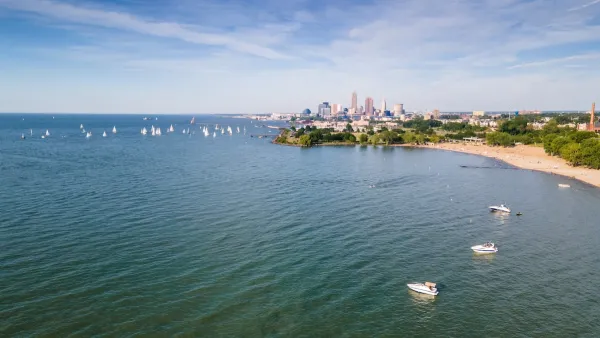
Op-Ed: The Great Lakes Could Be a Key Source of Wind Energy
States, not the federal government, have authority over wind power leases in the Great Lakes.
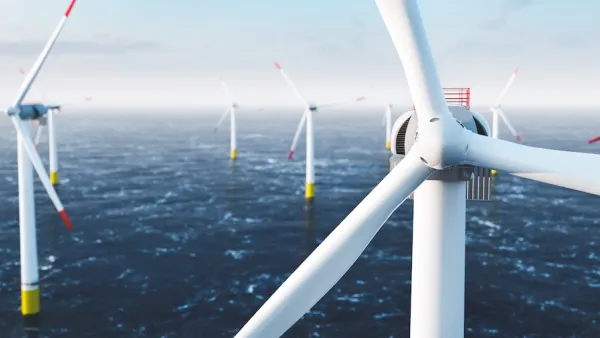
New York Offshore Wind Farm Offers Hope for Nascent Industry
The first commercial-scale offshore wind installation in the United States is powering roughly 70,000 homes in Long Island, New York.
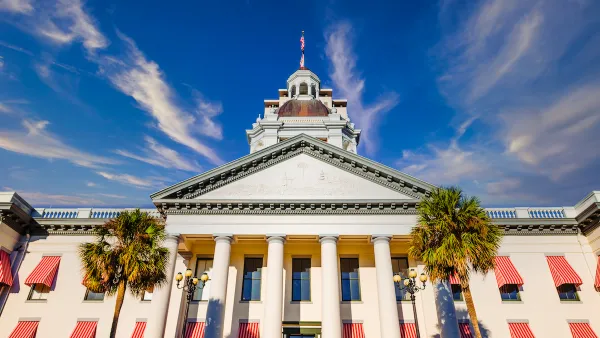
Florida Rolls Back Renewable Energy Goals
A new state law eliminates language calling for a reduction in greenhouse gas emissions and makes it easier to build natural gas pipelines.

Planetizen Federal Action Tracker
A weekly monitor of how Trump’s orders and actions are impacting planners and planning in America.

Amtrak, CN end decades-long dispute with eight-year agreement
The new operating agreement establishes an updated framework for the companies to work together, including processes to resolve disputes.

Judges permit Denver to divert 77,000 acre feet from the Colorado River for reservoir expansion
Overuse and climate change have caused the Colorado River’s water levels to plummet.

Philadelphia to invest $2 billion into upgrading city airports as PHL places last in customer satisfaction
Modernizations to Philadelphia's airports will include baggage system upgrades and a new automated parking garage guidance system.

The LA housing policies making developers turn away from the city
Despite LA’s housing shortage, developers say the city’s "mansion-tax" and pandemic-era policies make it an unappealing place to build housing.

New density bill would require 7 California cities to establish regional transit hubs
The bill would also require major cities in California to permit high-rise residential buildings.

FREE Course: Walkable City 1: Why Walkability?
After describing his path towards focusing on walkability as the essence of good planning, Jeff Speck marches through his five principal reasons for making more walkable places.
Reinventing Malls: Planning Alchemy—Turning Gray Fields Into Gold
The course focuses on the opportunities and imperatives that shape reinvention of mall sites.

City of Wisconsin Rapids
Harvard University Graduate School of Design
KFH Group Inc.
The Architects Foundation
University of Cincinnati Online
The Pocatello Development Authority
The Urban Renewal Agency of the City of Pocatello