A novel approach to land conservation is emerging in the American West, where environmental advocates, ranchers, hunters and rich landowners, are utilizing the free market, rather than the courts, to preserve public landscapes.


Rather than making their case with the government or the courts to prevent drilling for and gas in scenic public landscapes, environmental advocates and their partners in the West are taking a novel approach, reports Jack Healy: they're buying out their opponents.
"For years, conservation groups across the country have hammered out deals to preserve private ranches and old homesteads as parks and open space, rather than see them sold off to become mini-malls or subdivisions. But the federal government is the biggest landlord in the West, and one cannot simply buy a forest or mountain to keep it from being drilled."
"Instead, conservation groups are trying to buy the mineral leases that oil and gas companies purchase from the federal government at regular energy auctions, sometimes for as little as $2 an acre. Conservation groups pay the companies a premium to buy up the leases. Then elected officials draw up laws to ensure that nobody else will be able to drill there in the future. And the land is forever enshrined as open country, locking away whatever resources may lie beneath."
Read the full story: On Western Lands, a Free-Market Path
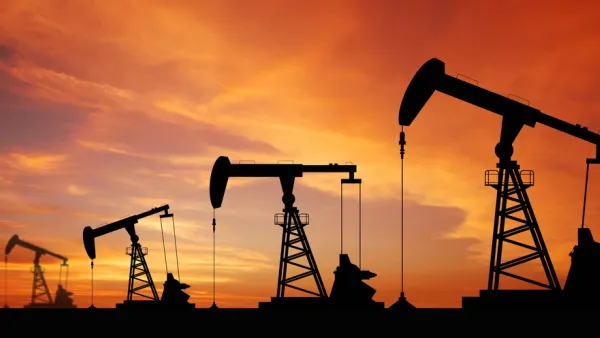
Can Climate Change be Addressed by Halting Drilling on Federal Lands?
A production-side approach to tackling climate change is the basis of new legislation by Sen. Jeff Merkley (D-Ore.). The "Keep it in the Ground Act" would prevent new drilling for any fossil fuel on federal lands or renewal of nonproductive leases.
EPA Proposes Rule to Reduce Methane Emissions from New Oil and Gas Wells
On the heels of President Obama's Clean Power Plan rule that reduces carbon dioxide emissions from power plants, the new rule focuses on the other major greenhouse gas, methane, and rather than coal, it is focused on oil and gas drilling.
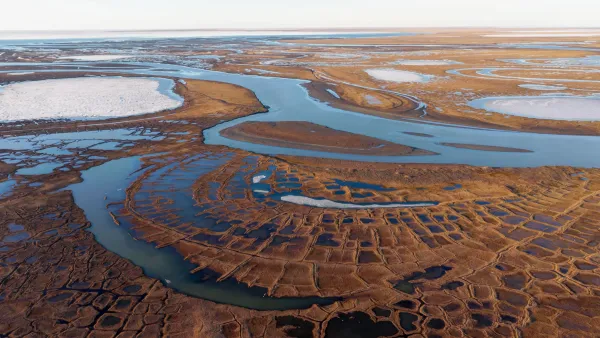
Drilling, seismic surveys in Alaska would require no environmental review under new Trump proposal
Seismic surveys can scar tundra and disturb wildlife, including female polar bears, and drilling has been known to alter caribou behavior and Arctic migration patterns.

Planetizen Federal Action Tracker
A weekly monitor of how Trump’s orders and actions are impacting planners and planning in America.

California plans to bury El Niño’s downpour
If the state plays its cards right, it may be able to store a billion acre-feet of El Niño’s water in aquifers.

Desperate measures: Advocates weigh draining Lake Powell to fill Colorado River
Draining the reservoir could reduce evaporation losses by a couple hundred thousand acre-feet.

Los Angeles just elected an urban planner as its mayor
Transportation analysts are optimistic that Raman will be more aggressive in addressing transit issues than Bass.

Mamdani’s pied-à-terre tax survives legal challenge
A panel of judges found that the plaintiffs failed to demonstrate injury as a result of New York City's implementation of the tax.

Eastern Nebraska is running out of electricity
Data centers and electrification are straining eastern Nebraska’s grid, throttling economic development.

FREE Course: Walkable City 1: Why Walkability?
After describing his path towards focusing on walkability as the essence of good planning, Jeff Speck marches through his five principal reasons for making more walkable places.
Reinventing Malls: Planning Alchemy—Turning Gray Fields Into Gold
The course focuses on the opportunities and imperatives that shape reinvention of mall sites.

City of Rosemead
Rutgers University, Edward J. Bloustein School of Planning and Public Policy
One Hundred Miles
University of Michigan School for Environment and Sustainability (SEAS)
Hunter College, City University of New York (CUNY)
The Architects Foundation
City of Cambridge
Montrose County
The Pocatello Development Authority