With dozens of riverfront revitalization projects completed across the world in the past couple of decades, lessons abound for how Chicago can best integrate its waterfront and downtown. Whet Moser considers three examples.


Although the challenges to transforming the Chicago River into a "civic treasure" are numerous, with Mayor Rahm Emanuel focused on enlivening the downtown riverfront as "one of the 'legacy' showpieces the city will remember him by," the prospects for transforming six waterside blocks between State and Lake Streets are promising. As Emanuel works to "drum up the $100 million or so needed to make the plan a reality," Moser looks to similar projects in Indianapolis, San Antonio, and London for lessons on what worked, and what didn't.
His key takeaways from:
- Indianapolis: "Don’t turn your back on the rest of the city."
- San Antonio: "Go mixed-use or go home."
- London: "Think beyond downtown."
Read the full story: What Chicago Can Learn From Three Other Urban River Walks

Chicago River Clean Enough for Swimming for the First Time in 98 Years
A historic two-mile river race through downtown highlighted the success of decades-long efforts to clean up the city’s river.
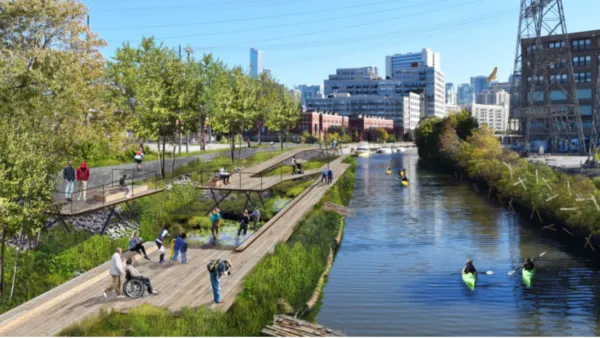
North Branch of the Chicago River Transforming Into a ‘Wild Mile’
A remarkable transformation is underway along the North Branch of the Chicago River, after being channelized and brutalized for well over a century.
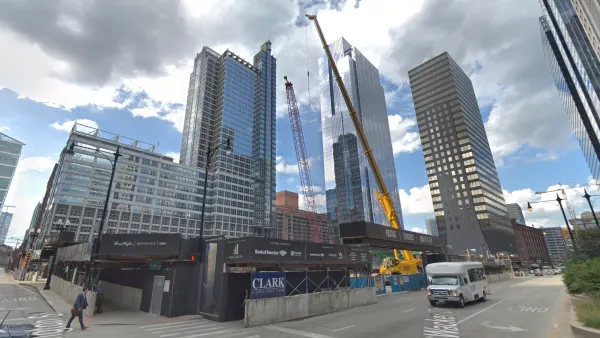
New Skyscraper Added to Chicago's Skyline in Uncertain Times for Downtown Commercial Uses
A riverfront revival was well underway in Chicago. Then the pandemic hit. How can a splashy new downtown commercial development expect to fare in Covid's world?

Planetizen Federal Action Tracker
A weekly monitor of how Trump’s orders and actions are impacting planners and planning in America.

Eastern Nebraska is running out of electricity
Data centers and electrification are straining eastern Nebraska’s grid, throttling economic development.

Study reveals best places in the U.S. for cycling, walking
New research from Streetlight Data examines bicycle and pedestrian miles per capita in the 100 largest U.S. cities by population.

DSA members accuse Mamdani of 'abandoning values' over housing redevelopment
New York City's mayor plans to replace about 2,000 units of public housing with private, mixed-income housing.

All sides of BRT debate unhappy with CDOT’s most recent move
The Colorado Department of Transportation is no longer considering center-running bus lanes for Colorado Boulevard.

Massachusetts bogs generate both power, and cranberries
Putting solar panels above farmland is one way Massachusetts is advancing toward its goal of net-zero carbon emissions by 2050.

FREE Course: Walkable City 1: Why Walkability?
After describing his path towards focusing on walkability as the essence of good planning, Jeff Speck marches through his five principal reasons for making more walkable places.
Reinventing Malls: Planning Alchemy—Turning Gray Fields Into Gold
The course focuses on the opportunities and imperatives that shape reinvention of mall sites.

City of Rosemead
Rutgers University, Edward J. Bloustein School of Planning and Public Policy
One Hundred Miles
University of Michigan School for Environment and Sustainability (SEAS)
Hunter College, City University of New York (CUNY)
The Architects Foundation
City of Cambridge
The Pocatello Development Authority
The Urban Renewal Agency of the City of Pocatello