A historic two-mile river race through downtown highlighted the success of decades-long efforts to clean up the city’s river.


Over 250 people participated in the first open-river swim in the Chicago River for the first time in almost 100 years, marking a milestone in the city’s efforts to clean up the river and make it safe for swimming.
As Leigh Giangreco explains in Inside Climate News, “A local nonprofit, A Long Swim, organized the historic 2-mile race through the river’s downtown branch, which raised funds for ALS research at Northwestern University’s Feinberg School of Medicine and swim safety education for at-risk children in Chicago.” Chicago joins a list of other world cities, including Paris, that are working to improve water quality in their iconic rivers and make them safe for human recreation.
In the 19th and 20th century, the Chicago River served as a dumping ground for waste from the city’s meatpacking industry. Now, decades of work and investment have dramatically improved the water quality. According to Chicago Department of Environment Commissioner Angela Tovar, the Chicago Metropolitan Water Reclamation District’s Tunnel and Reservoir Plan (TARP) “added a massive amount of storage for stormwater and sewage to prevent bacteria and harmful nitrogen compounds from running into the river.”
FULL STORY: ‘A Really Monumental Day’ for Chicago River: Clean Enough for Hundreds to Swim In

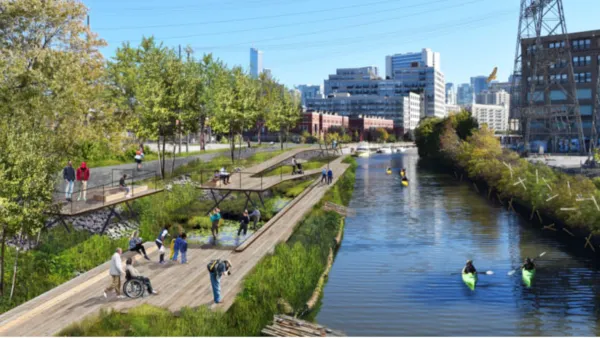
North Branch of the Chicago River Transforming Into a ‘Wild Mile’
A remarkable transformation is underway along the North Branch of the Chicago River, after being channelized and brutalized for well over a century.
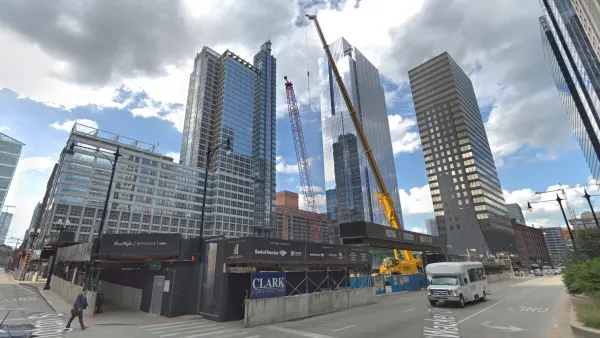
New Skyscraper Added to Chicago's Skyline in Uncertain Times for Downtown Commercial Uses
A riverfront revival was well underway in Chicago. Then the pandemic hit. How can a splashy new downtown commercial development expect to fare in Covid's world?
Chicago's Tallest Office Building Since 1990 Cracks the Top 20 Tallest in the City
The Bank of America Tower is the newest skyscraper to line the Chicago River.

The state-sanctioned urbicide of Austin
People don’t kill cities. Freeways do.

US to reduce Colorado River water deliveries to Mexico
A new Colorado Treaty amendment reduces Mexico’s Colorado River water allocation by 250,000 acre feet.

New Jersey’s second-largest city bans standalone data centers
Jersey City will continue to allow co-location facilities, such as those meant for research institutions that store their own data.

Amtrak not solely to blame for New Jersey commuter rail's unreliability, report finds
A new study from the Garden State Initiative found that NJ Transit’s budget grew 20% across a 4 year period, but reliability declined significantly over the same period.

EPA erases limits on planet-warming pollution from power plants
Under Monday’s plan, power plants would still have some limits on how much mercury, arsenic and other contaminants they can emit.

Phoenix announces new on-demand transit service, more frequent RAPID buses
Both new services will launch in October, and are part of Phoenix's Project Effective Access Solutions for Easing Congestion.

FREE Course: Walkable City 1: Why Walkability?
After describing his path towards focusing on walkability as the essence of good planning, Jeff Speck marches through his five principal reasons for making more walkable places.
Reinventing Malls: Planning Alchemy—Turning Gray Fields Into Gold
The course focuses on the opportunities and imperatives that shape reinvention of mall sites.

Eagle County Government
Harvard University Graduate School of Design
Nashville Planning Department
The Architects Foundation
University of Cincinnati Online
The Pocatello Development Authority
The Urban Renewal Agency of the City of Pocatello
Journal of the American Planning Association