Three months after Sandy struck New York, the city took an important step in the recovery process by waiving select zoning rules rules to speed rebuilding, reports Matt Chaban.


Following on Monday's release of FEMA's new provisional flood maps, the Bloomberg administration "issued an executive order suspending certain zoning restrictions, such as building heights, which might hinder property owners in their rebuilding efforts as they try to negotiate conflicting demands between local and federal regulations."
"We are beginning the process of updating our building code and zoning regulations so that new construction meets standards that reflect the best available data about flood and climate risks," Mayor Michael Bloomberg said in press release. "This is particularly important for homes and businesses damaged or destroyed by Hurricane Sandy—and the rules we are putting in place today will enable them to rebuild and re-open safely."
"City Planning Commissioner Amanda Burden made it clear what the administration hopes to accomplish with the new rules," writes Chaban.
"Homeowners need to be able to rebuild to sound flood protection standards without facing conflicts with current zoning regulations," she said. "This limited and targeted suspension of zoning regulations in the flood zones shown on the newly issued FEMA flood-risk maps will help ensure that new and rebuilt homes and businesses and other buildings will be safeguarded from coastal flood waters."
Read the full story: City waives some rules to speed rebuilding
With NYC's Plan to Elevate Buildings, Chaban Asks 'Will Jane Jacobs Float?'
Hurricane Sandy made New York's increasing vulnerability to extreme storms apparent, and the need elevate buildings in flood-prone areas imperative. This task is made particularly challenging due to the prevalence of multistory buildings.
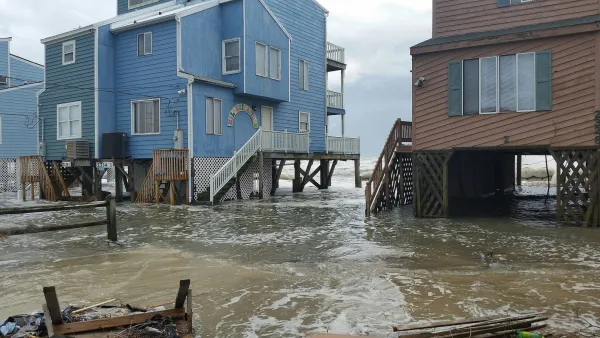
Looking Beyond FEMA Flood Maps, Cities Raise the Bar for Buildings in Floodplains
Cities across the country are developing floodplain construction standards that are more stringent than those required by FEMA.
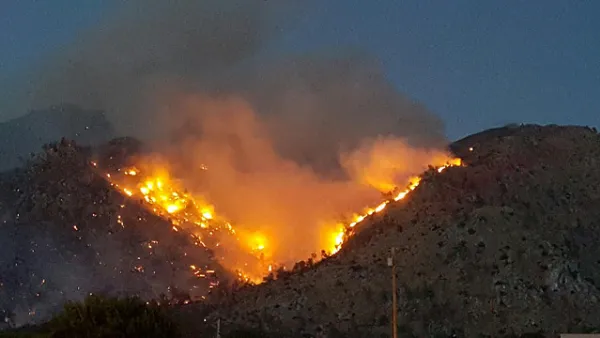
In California, Policies Spur Rebuilding in the Wildland-Urban Interface
After the worst wildfire season ever, changes to local land use and state insurance rules essentially ensure that the same thing will happen again.

Planetizen Federal Action Tracker
A weekly monitor of how Trump’s orders and actions are impacting planners and planning in America.

California plans to bury El Niño’s downpour
If the state plays its cards right, it may be able to store a billion acre-feet of El Niño’s water in aquifers.

Desperate measures: Advocates weigh draining Lake Powell to fill Colorado River
Draining the reservoir could reduce evaporation losses by a couple hundred thousand acre-feet.

US buildings threatened, destroyed by fires set to triple by 2060
Researchers found a high fire risk for socioeconomically vulnerable neighborhoods in the American West.

LA residents may be allowed to paint their own crosswalks
Councilwoman Katy Yaroslavsky put out a motion instructing the Los Angeles Department of Public Transportation to study the feasibility of allowing volunteers to paint crosswalks.

Dallas moves to overhaul its zoning code
The city's zoning reform will allow more multi-family and mixed-use developments.

FREE Course: Walkable City 1: Why Walkability?
After describing his path towards focusing on walkability as the essence of good planning, Jeff Speck marches through his five principal reasons for making more walkable places.
Reinventing Malls: Planning Alchemy—Turning Gray Fields Into Gold
The course focuses on the opportunities and imperatives that shape reinvention of mall sites.

City of Rosemead
Rutgers University, Edward J. Bloustein School of Planning and Public Policy
One Hundred Miles
Hunter College, City University of New York (CUNY)
The Architects Foundation
University of Cincinnati Online
City of Cambridge
Montrose County
The Pocatello Development Authority