New York's Municipal Arts Society has released a list of 17 historic buildings it believes are threatened by the Bloomberg administration's plans to re-zone a significant portion of the area surrounding Grand Central Terminal.


Matt Chaban looks at the seemingly intentional consequences of the Bloomberg Administration's Midtown East rezoning plan, which in incentivizing the redevelopment of obsolete office buildings, threatens some of the city's landmarks. Better know buildings such at the Yale Club and the Gordon Bunshaft designed Union Carbide Building, as well as lesser known treasures such as the neo-Gothic former New York Bible Society building, are threatened.
“City Planning’s proposed East Midtown re-zoning has the potential to dramatically change the area and threaten the mix of old and new buildings that define the neighborhood as uniquely New York,” MAS president Vin Cipolla wrote in a release. “A holistic vision for the future of East Midtown must support a mix of businesses, people and buildings. Retaining the diverse, and historic, building stock is a critical component of maintaining a vibrant and successful business district.”
"The problem the city and the activists encounter when pursuing such a program," explains Chaban, "is that development and preservation are inherently at odds. Consider 445 Park Avenue, a late 1940s office tower designed by Kahn & Jacobs. In its plea to the city, MAS describes it as, 'The first post-war office building on Park Avenue–and the first fully air-conditioned commercial structure in New York City–445 Park Avenue set the stage for future development along Park Avenue.'”
"This is certainly some sacred history, but it underscores the very reason the administration has undertaken this plan. It wants to do away with old, obsolete offices like this very one, with outdated mechanicals and inferior (by modern standards) ceiling heights. In fact, in the Department of City Planning’s presentation on the subject, we see a number of old buildings that look quite a lot like 445 Park Avenue."
Read the full story: No Midtown for Old Men: MAS Wants 17 Buildings Saved in Face of Bloomberg’s Big Rezoning
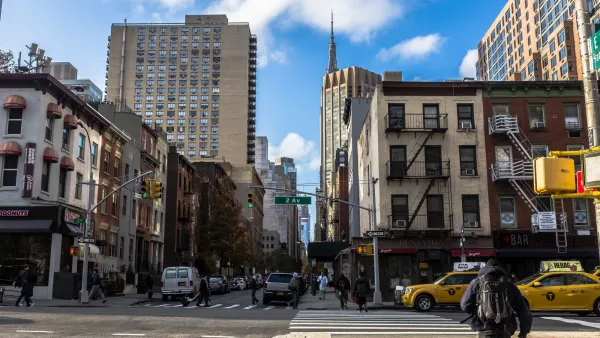
Property Owners Jostle for Deals After Midtown East Rezoning
A flurry of air rights purchases have already begun as large property owners take advantage of Midtown East's upzoning. Some big names include JPMorgan Chase and the Archdiocese of New York.
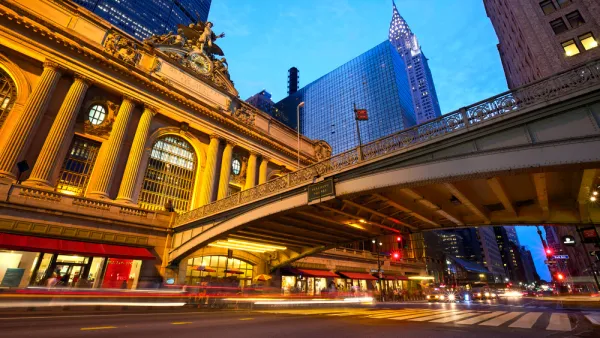
Manhattan's Midtown East Rezoning Wins Critical Approval
A City Council committee's approval of a proposed rezoning of Midtown East represents a big win for the de Blasio Administration. The Bloomberg Administration fell short in an efforts to upzone the neighborhood in 2013.
Controversy Follows Proposed Midtown East Plan
A very public spat over proposed Midtown East plan took place in the pages of Crain's this week.

Desperate measures: Advocates weigh draining Lake Powell to fill Colorado River
Draining the reservoir could reduce evaporation losses by a couple hundred thousand acre-feet.

Eastern Nebraska is running out of electricity
Data centers and electrification are straining eastern Nebraska’s grid, throttling economic development.

Move over, LA: St. Louis gears up for Olympics, invests millions in downtown redevelopment
The Missouri city will host the 2028 Olympic soccer group stage and knockout matches.

Mass. votes against statewide minimum lot size for single-family homes
Over 2 million residents voted on Question 7; it was decided by just over 30,000 votes.

Maryland’s $15 billion bridge project gains key approval
The Maryland Transit Authority said the project will create over 60,000 jobs and add $23 billion to the local economy.

‘No clear next steps’ for Chicago's permanent festival grounds
Eleventh Ward Ald. Nicole Lee has suggested Soldier Field as a possible location for the permanent event space.

FREE Course: Walkable City 1: Why Walkability?
After describing his path towards focusing on walkability as the essence of good planning, Jeff Speck marches through his five principal reasons for making more walkable places.
Reinventing Malls: Planning Alchemy—Turning Gray Fields Into Gold
The course focuses on the opportunities and imperatives that shape reinvention of mall sites.

City of Rosemead
Rutgers University, Edward J. Bloustein School of Planning and Public Policy
One Hundred Miles
University of Michigan School for Environment and Sustainability (SEAS)
Hunter College, City University of New York (CUNY)
The Architects Foundation
City of Cambridge
Montrose County
The Pocatello Development Authority