Over the weekend, a 100-mile long traffic jam caused by snow, questionable decisions, and underinvestment on Soviet-era infrastructure, left 10,000 vehicles stranded on the M10 highway between Moscow and St. Petersburg.


Andrew Roth reports on the mega traffic jam, which stranded travelers in subfreezing temperatures, and put Russia's leaders and the country's sub-par roads in the spotlight. "The din of complaints in the news media and on social networks refocused attention on the fragile state of Russia’s roads, which are prone to gridlock, even in the region around the Russian capital and the second-largest city, St. Petersburg."
"Years of underinvestment on Soviet-era infrastructure have left the M10, rarely free of traffic jams on the best of days, prone to nasty bottlenecks in several small towns that lack bypasses," notes Roth. "As the M10 gradually reopened on Monday, [Prime Minister ] Medvedev and his deputies discussed a flurry of initiatives, including mobilizing Russian military engineers to avoid similar traffic jams or aid stranded drivers."
“'Let’s say that this is not a European road — it’s kind of a Russian road, forested, dark and covered in snow,' Deputy Prime Minister Dmitri O. Rogozin said at a meeting with Mr. Medvedev on Monday. 'So you can imagine the level of despair for some drivers.'”
Read the full story: Neglect Catches Up to Russians in Three-Day Traffic Jam

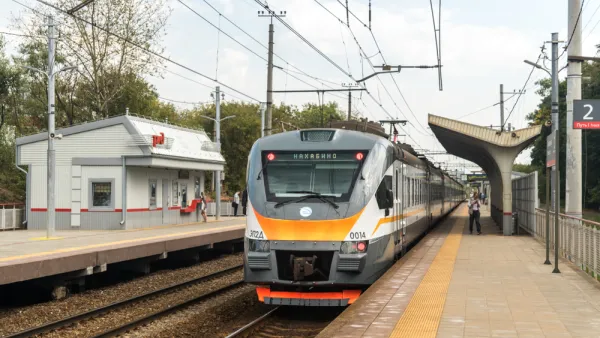
A New Suburban Rail System for Moscow
Two of a planned five new suburban rail routes, modeled on examples in Paris and Berlin, opened last week in Russia.

Muscovites Revolt Against Relocation Plan
Plans to decommission existing public housing blocks and replace them with newer high-rises has angered middle-class residents in Moscow who fear the loss of their homes and investments.
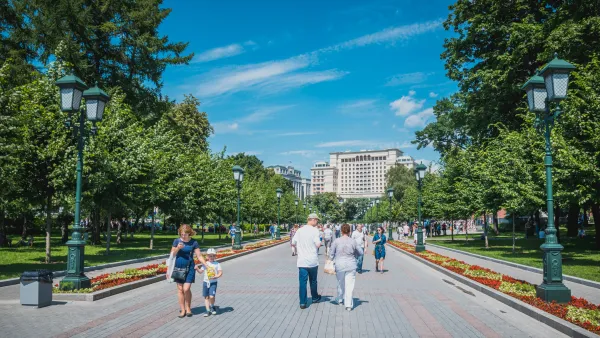
Moscow's Erratic Shift Towards a Walkable City
Moscow's Mayor has pushed an agenda to beautify the city, create social spaces, and make the city more walkable, but critics see the move towards walkability as more of a forced march.

Planetizen Federal Action Tracker
A weekly monitor of how Trump’s orders and actions are impacting planners and planning in America.

California plans to bury El Niño’s downpour
If the state plays its cards right, it may be able to store a billion acre-feet of El Niño’s water in aquifers.

Desperate measures: Advocates weigh draining Lake Powell to fill Colorado River
Draining the reservoir could reduce evaporation losses by a couple hundred thousand acre-feet.

California city breaks ground on transit connector
The project includes three mobility hubs and a pedestrian bridge.

After public outcry, Massachusetts city releases housing development tracker
Cambridge’s tracker currently shows 250 housing projects in various stages of development.

40 years after approval, Chicago breaks ground on new park
The park honors Jean Baptiste Point du Sable, the city’s first permanent non-native settler.

FREE Course: Walkable City 1: Why Walkability?
After describing his path towards focusing on walkability as the essence of good planning, Jeff Speck marches through his five principal reasons for making more walkable places.
Reinventing Malls: Planning Alchemy—Turning Gray Fields Into Gold
The course focuses on the opportunities and imperatives that shape reinvention of mall sites.

City of Rosemead
Rutgers University, Edward J. Bloustein School of Planning and Public Policy
One Hundred Miles
Hunter College, City University of New York (CUNY)
The Architects Foundation
University of Cincinnati Online
City of Cambridge
Montrose County
The Pocatello Development Authority