Chicago's backyards may turn into oases of sustainability with a new program aimed at creating incentives for 'greener' practices in the city's private gardens.


Like many other U.S. cities working to create sustainability at the local level, Chicago's new program, Sustainable Backyards, creates a set of financial incentives for local homeowners to make their backyards all the bit more 'greener.' Switchboard's Kaid Benfield reports on the new program: "...the genius of it is that it's educational, participatory, and effective at the same time. Basically, the city provides financial assistance in the form of rebates that reimburse citizens for up to 50 percent of the cost of installing trees, native plants, compost bins, and/or rain barrels."
The City hopes sustainable backyards will help to reduce the heat-island effect, absorb more carbon dioxide, and slow urban runoff into overburdened sewers and water bodies. As Benfield notes, "Chicago was one of the cities profiled in NRDC's study of water pollution and green infrastructure solutions, Rooftops to Rivers II. NRDC's water program attorney Larry Levine says that 'stopping runoff with green infrastructure on private property is a crucial part in the solving [a] city's stormwater problems and improving the health of our communities.'"
Read the full story: Cleaning the urban environment with "sustainable backyards"
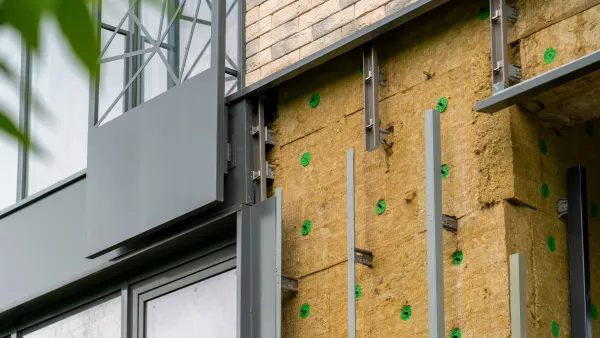
‘Passive House’ Standard Gaining Ground in Multifamily Housing
Developers in Chicago and around the country are taking notice of a design standard that encourages energy efficiency and sustainable materials.
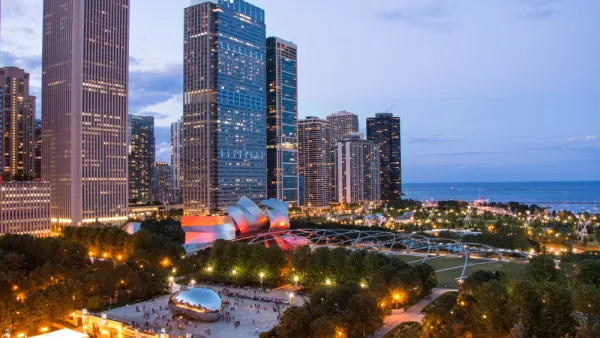
Chicago To Issue Climate Resilience Grants
Small businesses and nonprofits are eligible for a $5 million fund designed to help the city reach its emissions reduction goals.
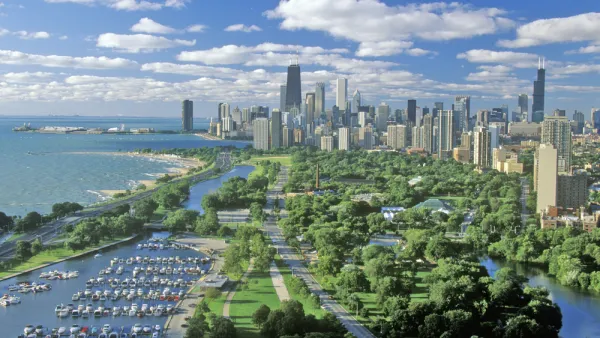
Protecting Chicago’s Tree Canopy
Advocates for urban greening are asking the city to boost its tree planting efforts and protect existing trees, which are a key tool for fighting the effects of climate change and worsening heat waves.

Desperate measures: Advocates weigh draining Lake Powell to fill Colorado River
Draining the reservoir could reduce evaporation losses by a couple hundred thousand acre-feet.

Eastern Nebraska is running out of electricity
Data centers and electrification are straining eastern Nebraska’s grid, throttling economic development.

Move over, LA: St. Louis gears up for Olympics, invests millions in downtown redevelopment
The Missouri city will host the 2028 Olympic soccer group stage and knockout matches.

Mass. votes against statewide minimum lot size for single-family homes
Over 2 million residents voted on Question 7; it was decided by just over 30,000 votes.

Maryland’s $15 billion bridge project gains key approval
The Maryland Transit Authority said the project will create over 60,000 jobs and add $23 billion to the local economy.

‘No clear next steps’ for Chicago's permanent festival grounds
Eleventh Ward Ald. Nicole Lee has suggested Soldier Field as a possible location for the permanent event space.

FREE Course: Walkable City 1: Why Walkability?
After describing his path towards focusing on walkability as the essence of good planning, Jeff Speck marches through his five principal reasons for making more walkable places.
Reinventing Malls: Planning Alchemy—Turning Gray Fields Into Gold
The course focuses on the opportunities and imperatives that shape reinvention of mall sites.

City of Rosemead
Rutgers University, Edward J. Bloustein School of Planning and Public Policy
One Hundred Miles
University of Michigan School for Environment and Sustainability (SEAS)
Hunter College, City University of New York (CUNY)
The Architects Foundation
City of Cambridge
Montrose County
The Pocatello Development Authority