Most Montrealers haven't heard of pioneering architects Blanche Lemco van Ginkel and Daniel van Ginkel, without whom Old Montreal may not exist today. But with several events honoring the legacy of this visionary couple, that may soon change.


Marian Scott profiles the contributions to creating, and protecting, Motreal's built history that Blanche Lemco van Ginkel and her late husband, Daniel van Ginkel made during the second half of the 20th century. From protecting Montreal's historic district from destruction to guiding Expo 67, their legacy is imprinted throughout the city's built environment.
"Without their intervention in Le Vieux Port, I don't know what Montreal
would be today," says Phyllis Lambert, founder of the Canadian Centre
for Architecture and Heritage Montreal, and a longtime friend.
"It is
such a significant, fantastic place," Lambert says. "The quality of a
place like this goes from the 17th century to the 19th century. It
embodies the whole history of the development of Montreal and really
Quebec in many ways."
According to Scott, with the current issue of ARQ/Architecture Québec magazine entirely devoted to their work, and an exhibition at the Museum of Modern Art displaying one
of Blanche's early commissions, "awareness of the van Ginkels' legacy is growing."
Read the full story: Urban planners were saviours of our city
Montreal Artist Envisions What Cities Would Sound Like if we Deprioritized Cars
What would a city sound like without the noise of vehicles?
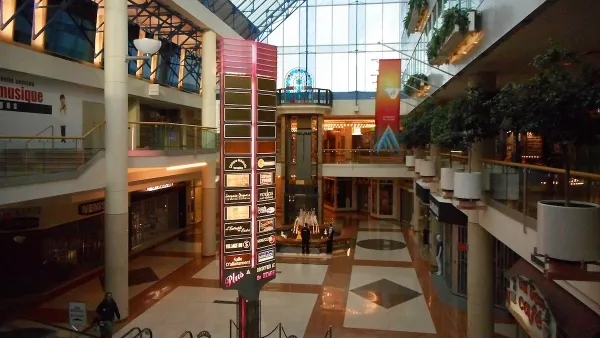
Montreal Mall to Become 6,000 Housing Units
Place Versailles will be transformed into a mixed-use complex over the next 25 years.
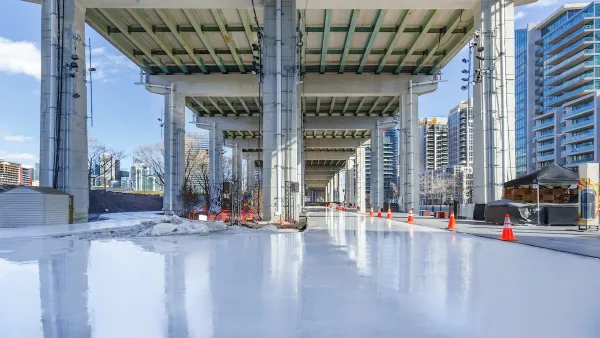
Montreal’s Gorilla Park Repurposes Defunct Railway Track
The park is part of a global movement to build public spaces that connect neighbors and work with local elements to serve as key parts of a city’s green infrastructure.

Planetizen Federal Action Tracker
A weekly monitor of how Trump’s orders and actions are impacting planners and planning in America.

California plans to bury El Niño’s downpour
If the state plays its cards right, it may be able to store a billion acre-feet of El Niño’s water in aquifers.

Desperate measures: Advocates weigh draining Lake Powell to fill Colorado River
Draining the reservoir could reduce evaporation losses by a couple hundred thousand acre-feet.

In Texas, data centers are swallowing promised parkland
Residents who moved to Taylor, Texas for a rural community now have to contend with three data centers in their backyard.

How a Chicago-sized wind farm beat the odds and powered on
The project spanned five presidential administrations and a standoff with a U.S. military base.

MTA gives itself 30 days to transform pit into basketball court
The site has been under construction since 2022; the city originally estimated it would finish the court in 2024.

FREE Course: Walkable City 1: Why Walkability?
After describing his path towards focusing on walkability as the essence of good planning, Jeff Speck marches through his five principal reasons for making more walkable places.
Reinventing Malls: Planning Alchemy—Turning Gray Fields Into Gold
The course focuses on the opportunities and imperatives that shape reinvention of mall sites.

City of Rosemead
Rutgers University, Edward J. Bloustein School of Planning and Public Policy
One Hundred Miles
Hunter College, City University of New York (CUNY)
The Architects Foundation
University of Cincinnati Online
City of Cambridge
Montrose County
The Pocatello Development Authority