Chuck Marohn opines on the oddly empty, and unnecessarily wide, streets of Kansas City, Missouri. With no traffic to speak of, Marohn argues that by building roads simply to move cars quickly, "We're fighting a beast that does not exist."


With little traffic apparent to Marohn during his jaunts through the city, you would think that Kansas City's streets represent the ultimate transportation engineering success story. While they might, they certainly don't make for a lively and attractive downtown.
"While there are many things that really depress me about America's
cities, particularly those in the Midwest," says Marohn, "there is one thing that
stands out above the rest: our misunderstanding of what a street is. If
you were from Kansas City, you would be excused for believing that
streets are corridors for moving automobiles quickly from one parking
lot to another. You would be excused because that is all you see."
Marohn makes note of the ramifications of such an investment, such as wasting valuable developable space, limiting the overall desirability of the downtown and the construction of an inefficient and unsafe transportation system, and offers some ideas for how to fix the problem.
Read the full story: Streets with no cars
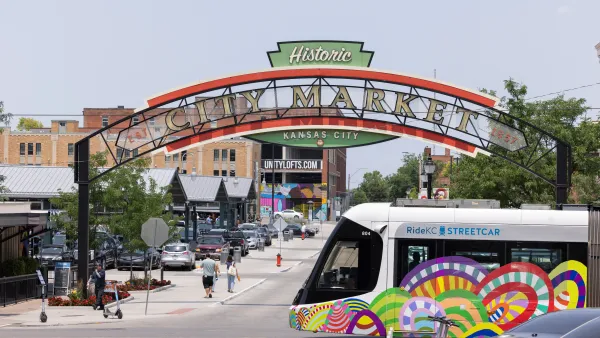
How Kansas City quietly built one of the best streetcars in America
A detailed and completely unbiased history of one of American transit's greatest comebacks.

In the 1990s, Kansas City's Womontown offered queer women community and independence
A group of women created a safe space that gave them the opportunity to buy homes and build wealth in a supportive community.
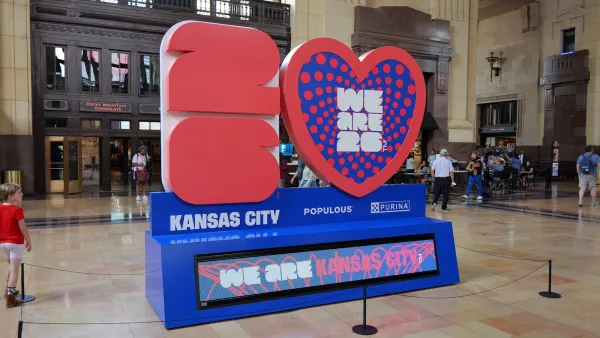
World Cup crowds offer 'stress test' for Kansas City transit planners
Transportation officials are closely monitoring travel patterns during the World Cup to understand how the city's transit system can be improved as the population grows.

Planetizen Federal Action Tracker
A weekly monitor of how Trump’s orders and actions are impacting planners and planning in America.

Eastern Nebraska is running out of electricity
Data centers and electrification are straining eastern Nebraska’s grid, throttling economic development.

Study reveals best places in the U.S. for cycling, walking
New research from Streetlight Data examines bicycle and pedestrian miles per capita in the 100 largest U.S. cities by population.

DSA members accuse Mamdani of 'abandoning values' over housing redevelopment
New York City's mayor plans to replace about 2,000 units of public housing with private, mixed-income housing.

All sides of BRT debate unhappy with CDOT’s most recent move
The Colorado Department of Transportation is no longer considering center-running bus lanes for Colorado Boulevard.

Massachusetts bogs generate both power, and cranberries
Putting solar panels above farmland is one way Massachusetts is advancing toward its goal of net-zero carbon emissions by 2050.

FREE Course: Walkable City 1: Why Walkability?
After describing his path towards focusing on walkability as the essence of good planning, Jeff Speck marches through his five principal reasons for making more walkable places.
Reinventing Malls: Planning Alchemy—Turning Gray Fields Into Gold
The course focuses on the opportunities and imperatives that shape reinvention of mall sites.

City of Rosemead
Rutgers University, Edward J. Bloustein School of Planning and Public Policy
One Hundred Miles
University of Michigan School for Environment and Sustainability (SEAS)
Hunter College, City University of New York (CUNY)
The Architects Foundation
City of Cambridge
The Pocatello Development Authority
The Urban Renewal Agency of the City of Pocatello