On this sombre anniversary, we bring you an article that was published last year by Kaid Benfield, looking at the legacy of 9/11 for community & the built environment.


Published on the tenth anniversary of the terrorist attacks that indelibly altered America's trajectory, Benfield looks at the ways in which efforts to protect public and private buildings have impacted the built environment around the country, and particularly in his home city of Washington D.C.
"I think our public realm, and our comfort within it, have suffered
lasting negative effects as a result of the September 11 attacks (and,
in my opinion, as a result of our government's belligerent and
exploitative foreign policy reactions that have made us less safe, but
that's another story for another day)," argues Benfield.
"Have we made the security measures a little less ugly in some places
over the last decade? Probably. Is my city safer and more beautiful? I
say definitely no as to the second count; I can certainly hope so as to
the first, but I wish I were more sure that we are safer today than we
were, say, on the first or fifth anniversary of the 2011 [sic] tragedy."
Read the full story: The legacy of 9/11 for community & the built environment

Pedestrian Barriers Installed on London's Bridges Endanger Cyclists
In the wake of two terrorist attacks on London bridges that killed pedestrians, concrete barriers were installed on three crossings to prevent repeat rampages. The only problem is that they were installed in bicycle lanes.

Building Secure Yet Welcoming Public Spaces
Strategies for securing public spaces from vehicle attacks and other acts of terrorism without sacrificing accessible, vibrant urban places.
Bikeway Terrorism Was Both Foreseeable and Preventable
The horrific carnage caused by a terrorist on Halloween, killing eight cyclists and injuring 12, was preceded by a similar, though unintentional, bike fatality in 2006 on the same bikeway.

Planetizen Federal Action Tracker
A weekly monitor of how Trump’s orders and actions are impacting planners and planning in America.

Chicago breaks ground on $3 billion megadevelopment
The new neighborhood, titled Foundry Park, will one day host 3,700 residences.
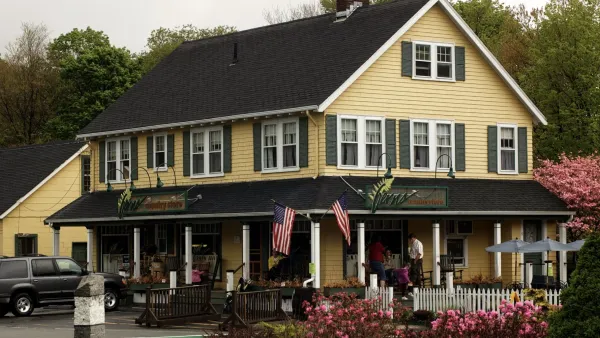
This MA town is drowning in its own sewage — and residents like it that way
Susan Murcott, a waste water expert, said if Carlisle didn't address their leaking sewage, the problem could turn “deadly.”

Iowa taxpayers are paying thousands to clean manure out of their water
While the Clean Water Act makes states responsible for regulating factory farms that discharge pollutants, Iowa has turned a blind eye to the polluting farms.

Amtrak cuts ribbon on Seattle Airo maintenance facility
The $250 million, nearly 100,000-square-foot building can house an entire Cascades Airo trainset.

To power data centers, Google seeks autonomous control of thousands of homes’ electricity
The tech company has signed a deal to indirectly pay Mid-Atlantic residents to reduce their power demand when the grid is strained.

FREE Course: Walkable City 1: Why Walkability?
After describing his path towards focusing on walkability as the essence of good planning, Jeff Speck marches through his five principal reasons for making more walkable places.
Reinventing Malls: Planning Alchemy—Turning Gray Fields Into Gold
The course focuses on the opportunities and imperatives that shape reinvention of mall sites.

City of Rosemead
Rutgers University, Edward J. Bloustein School of Planning and Public Policy
One Hundred Miles
The Architects Foundation
University of Cincinnati Online
Montrose County
The Pocatello Development Authority
The Urban Renewal Agency of the City of Pocatello